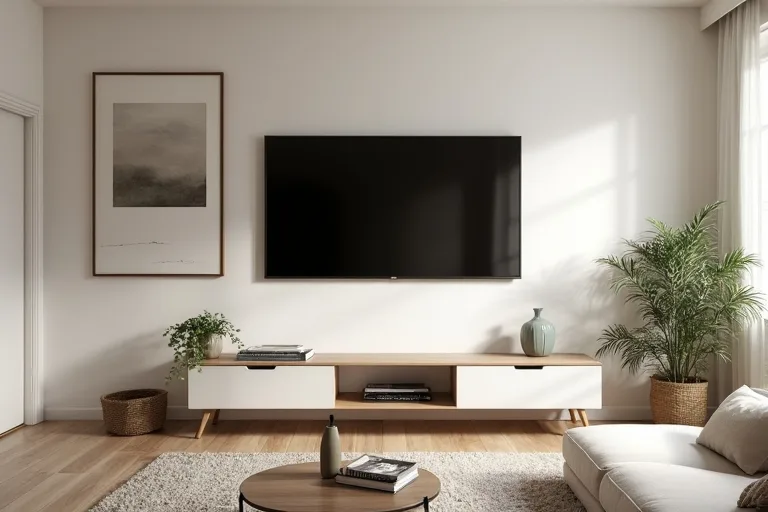
TV walls can go wrong in two opposite ways: they feel flat and unfinished, or they become crowded with too many finishes trying to do too much. The better approach is quieter. Start with the screen placement, then build in depth with only a few elements that support the room.
If you want the wall to feel intentional, the layout needs to do most of the work. Once the TV size, viewing distance, and wall position make sense, the styling becomes much easier. That is usually what creates a layered look without the clutter.
Keep the TV wall simple, then add depth with balanced art, lighting, and a few well-placed finishes. A full motion mount, a low console, and one or two neutral framed pieces are usually enough to make the wall feel finished without looking busy.
Start with the wall, not the decor
A good TV wall begins with a practical decision: where the screen should actually sit. If the TV is too high, too large for the wall, or pushed into an awkward corner, no amount of styling will make the arrangement feel calm. The room reads as compromised before the decor even starts.
Before buying anything, think about how the wall connects to the sofa, the main walking path, and any windows nearby. The TV should feel like part of the room plan, not something added at the end. That usually means centering on the viewing zone first, then deciding how much wall space should stay open around it.
If you are still working out the room itself, the room layout planner is a sensible starting point. It helps you see whether the wall can handle a larger media setup or whether a simpler arrangement will work better.

The real decision is not whether the wall looks empty. It is whether the TV placement, viewing height, and surrounding furniture work together. If the setup is comfortable first, the styling only needs to finish the room.
Use the TV position to create breathing room
A wall feels cluttered when every surface competes for attention. One of the easiest ways to avoid that is to give the TV enough breathing room and let the mount do part of the work. A full motion tv wall mount is useful when you need flexibility for glare, side seating, or a slightly tricky room angle.
That flexibility can also help the wall feel less forced. When the TV can be adjusted to suit the room, you do not need to overbuild the area around it to make it feel intentional. The wall can stay simpler, with the arrangement doing the visual balancing instead of extra objects.
For the basics of screen size and distance, check the TV size distance calculator before you choose a mount or console. It is much easier to style the wall when the screen scale already makes sense for the room.
Add layers with a few calm elements
Layering does not mean filling every inch of the wall. A better approach is to use a few pieces that create depth in different ways: one grounded element below the TV, one softer element beside or above it, and a material change that adds interest without noise.
- A low media console to anchor the screen visually.
- Neutral framed wall art set for living room styling to soften the hard edges around the TV.
- Simple shelving or paneling only if the room still needs more structure.
When these pieces are kept quiet in tone and scale, they can make the wall feel layered without making it feel busy. The key is restraint. If the TV wall already has strong lines, keep the surrounding decor softer and more minimal. If the furniture is plain, you can add a little more texture through art or panel detail.

Leave enough visual pause around the TV so the eye can rest. If every side of the screen is filled with shelves, frames, and accessories, the wall stops feeling layered and starts feeling crowded.
Finish with symmetry, lighting, and a final reality check
The last stage is usually where a TV wall either settles into place or starts to feel overworked. Small, balanced choices matter here. Matching table lamps, one consistent finish on the console, or a pair of framed pieces can make the wall feel complete without turning it into a display wall.
Lighting also changes how layered the wall feels. A lamp, picture light, or soft indirect source can help separate the TV from the background so the wall has depth after dark as well as during the day. That is often more effective than adding more decor.
If you are planning a broader update, the room layout planner is worth using again before you buy wall art, shelves, or a new console. It helps you confirm that the wall will still feel balanced once everything is in place.

Best next step
Before you buy decor or a mount, check the TV size and viewing distance first, then map the wall with a simple layout tool. That keeps the styling decisions grounded in the room you actually have.
- Mounting the TV too high and then trying to disguise the height with decor.
- Adding shelves, frames, and accessories before checking scale.
- Using too many finishes at once, which makes the wall feel busy instead of layered.
- Choosing art that is too small to balance the TV.
- Skipping layout planning and hoping styling will fix the room later.
The calmest TV walls are usually the simplest ones. Get the placement right, use a flexible mount if the room needs it, and add just enough art, texture, and lighting to make the wall feel finished. If you plan the layout first, layering becomes much easier and clutter becomes much less likely.
Helpful next tools and planners
If you want to make the decision easier before you buy
A few practical tools can help you avoid expensive guessing. Use them to check the room plan, then choose the few styling pieces that actually suit the wall.
FAQ
How do I make a TV wall look finished without adding too much decor?
Use one main anchor below the TV, one or two quiet wall pieces, and simple lighting. The wall will feel intentional if the sizes are balanced and the materials are consistent.
Is a full motion mount worth it for a TV wall?
It can be, especially if glare, side seating, or room angles make a fixed position awkward. The main value is flexibility, which can help the wall stay visually clean.
What kind of art works best around a TV?
Neutral framed pieces usually work well because they soften the screen without fighting it. Keep the scale generous enough to balance the TV rather than using lots of small pieces.
What should I check before buying wall decor for a media wall?
Check TV size, viewing distance, and the room layout first. If those basics are right, the styling choices are much easier to make.
Three sensible next steps
Some links in this article may be affiliate links. Read more in the Affiliate Disclosure.