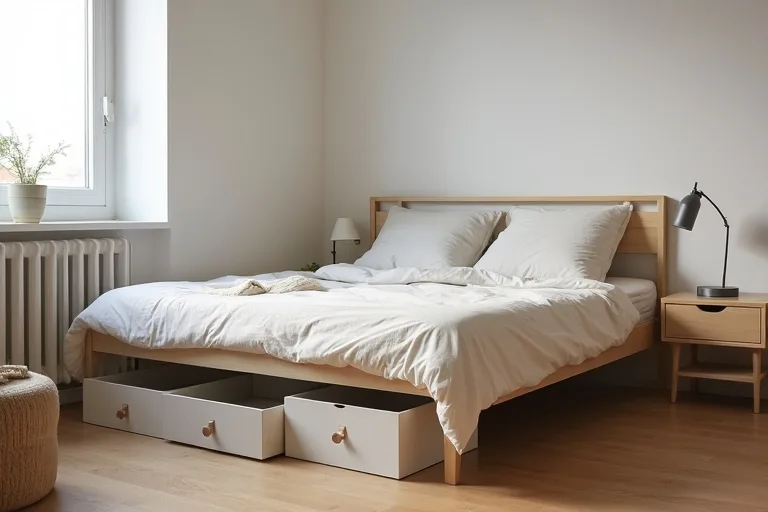
Under bed storage works best when it solves one clear problem. Sometimes you need a place for off-season clothes. Sometimes you need a home for linens, shoes, or extra bedding. And sometimes the real issue is not storage at all, but a bedroom layout that leaves too little room to open anything comfortably.
This checklist helps you make the choice before you buy. Instead of guessing between bins, shelves, or cabinets, you can compare the practical details that matter: clearance, access, dust protection, and how the bed fits the room.
Measure your bed clearance and decide what you need to store, then choose the simplest option that fits access, dust protection, and room flow. In many small bedrooms, a low, easy-to-pull bin is more useful than a taller organizer that looks efficient but is awkward to reach.
Start with what you need to store
Before you compare products, sort the items you want to keep under the bed. This makes the choice clearer right away. Long, flat items such as spare bedding or winter clothes suit low bins. Smaller mixed items may need dividers or a cube-style organizer. If the items are bulky, a cabinet-style solution may be more practical than several loose containers.
A simple way to decide is to group what you are storing by how often you use it:
- Daily or weekly access: keep this elsewhere if possible.
- Seasonal access: under bed storage can work well.
- Rarely used items: this is the best match for deeper or less open storage.
If the items are scattered across drawers, baskets, and corners, the first fix is not buying more containers. It is choosing one storage zone that can handle the full category cleanly. That is where a small space planner can help you see whether the bed zone is actually the right place for them.

If you cannot describe the storage job in one sentence, pause before buying. “I need a home for extra bedding that I only access a few times a year” is a clear use case. “I think bins might help” usually means the real decision has not been made yet.
Measure clearance, access, and floor space
Under bed storage only works when the bed frame, flooring, and container all fit together. Clearance matters, but access matters just as much. A container that technically fits may still be frustrating if it catches on carpet, blocks a baseboard, or leaves too little room to pull it out smoothly.
Check these points before you shop:
- Bed clearance from floor to frame.
- Space needed to pull the storage in and out.
- Room width beside the bed for opening drawers or lids.
- Any floor slopes, carpet thickness, or bed legs that reduce usable height.
If your bed sits low, shallow bins often make more sense than a shelf system. If the clearance is generous and the room layout allows it, a more structured option can work. But the best-looking product is not the right choice if you cannot open it without moving furniture.
Compare bins, shelves, and cabinets honestly
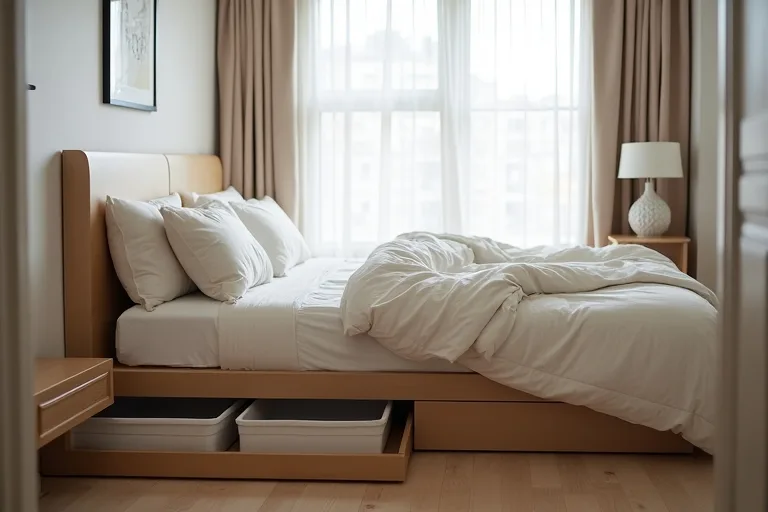
Each under bed storage type solves a different problem. Bins are usually the simplest and easiest to move. Shelves or cube-style organizers can be useful if you want a more segmented system. Cabinets or enclosed units make sense when you need a neater look and stronger dust protection, but they usually need more room and more careful planning.
Think through the tradeoffs before you buy:
- Bins: best for flexibility, easy access, and seasonal storage.
- Shelves or cube organizers: useful when you want categories to stay separated.
- Cabinets: better for concealment and a more built-in feel, but less forgiving in tight rooms.
This is also the point where a simple cube organizer can be worth considering if you want a more structured storage system beyond loose bins. For some rooms, an 8 cube storage organizer is less about the bed itself and more about creating a nearby storage zone that keeps the room from becoming cluttered. If you already know you need soft-sided compartments, a fabric storage bins set for cube organizer can keep the whole setup more consistent.
Match the storage to the room layout before you spend
The right under bed storage should fit the bedroom, not just the item list. In a small room, the best solution is often the one that keeps walking paths open and avoids crowding the bed side. If the room already feels tight, a large cabinet under the bed may make the space feel heavier rather than more organized.
Use the room layout as the final filter. Ask whether the bed is the main storage anchor or whether another part of the room should carry the load. A nearby wardrobe, dresser, or cube organizer can sometimes do a better job than forcing everything under the frame. If you want to map that out before buying, the Room Layout Planner is a useful next step. For a more general planning reference, the Small Spaces & Storage hub is a helpful place to compare storage ideas without losing track of the room plan.
For readers who prefer a structured buying step after planning, a digital layout tool can help before any order goes in. The Small Space Furniture Planner, Room Layout Spreadsheet (Digital Download) is one option if you want to test the room on paper first.
Best next step
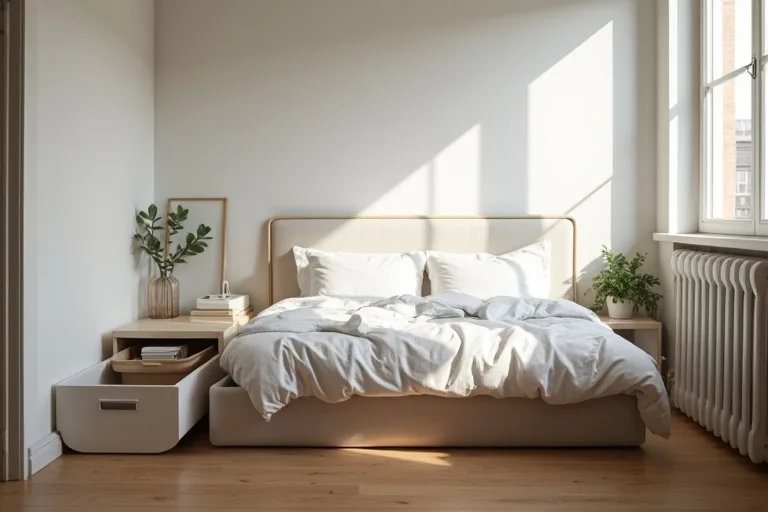
If you are still deciding between bins, shelves, or a more built-in option, pause before buying and test the room layout first. A few minutes spent mapping the space can save you from choosing storage that fits the bed but not the bedroom.
- Buying storage before measuring bed clearance.
- Choosing a container that fits under the bed but does not fit beside the bed when pulled out.
- Using enclosed storage when you really need quick, frequent access.
- Adding too many compartments and making the system harder to use.
- Letting under bed storage solve a layout problem that should be handled by a better furniture plan.
The smartest under bed storage choice is usually the simplest one that fits your clearance, your access needs, and your room flow. Start with what you are storing, measure the space carefully, and then choose the lightest system that does the job without making the bedroom harder to use.
Helpful next tools and planners
If you want to make the decision easier before you buy
A planning tool can help you confirm whether under bed storage is the right fix, while a storage organizer can make the final setup cleaner once the layout is settled.
FAQ
How do I know if under bed storage will actually fit?
Measure from the floor to the bed frame and compare that with the height of the container, then leave space for pulling it out without scraping the floor or catching on the frame.
Are bins better than cabinets for under bed storage?
Bins are usually easier in small bedrooms because they are lighter and more forgiving. Cabinets can look neater, but they need more room and more precise planning.
What should I store under the bed?
Seasonal items, spare bedding, and rarely used belongings are the most practical choices. Things you need often are usually better kept somewhere easier to reach.
Do I need a planner before buying storage?
You do not always need one, but it helps if the bedroom already feels tight or if you are deciding between several storage types. A layout check often prevents buying the wrong size.
Three sensible next steps
Some links in this article may be affiliate links. Read more in the Affiliate Disclosure.