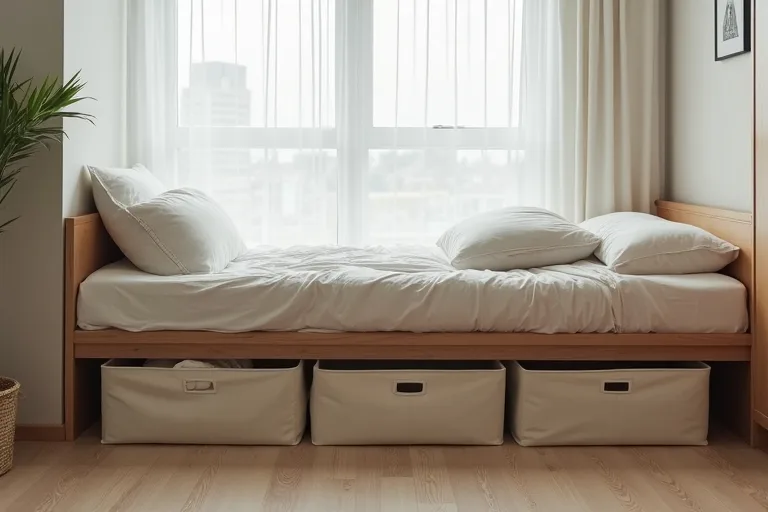
Under bed storage can be one of the most helpful ways to free up a small bedroom, but only when the storage stays visually quiet. If the containers are the wrong size, the wrong color, or too easy to see, the solution starts to look like extra clutter instead of hidden storage.
The goal is not to pack every inch under the bed. It is to choose a setup that fits the room, is easy to use, and keeps the floor line looking calm. That usually means measuring first, sorting by category, and choosing one storage style that works with the bed height and the room layout.
The biggest mistake is using mismatched, oversized, or exposed storage that makes the room look busier instead of more organized.
Why under bed storage can help or hurt visual calm
Under bed storage works best when it disappears into the room rather than drawing attention to itself. In a small bedroom, the area under the bed is part of the visual field, so anything bright, bulky, or awkwardly placed can make the whole room feel less settled.
That is why the bed height matters so much. If the bed is low, you may only have room for shallow bins or slim drawers. If the bed sits higher, you may have more flexibility, but you also have a greater risk of showing too much of the storage from the side. The right solution depends on the bed frame, the floor clearance, and how often you need to reach the items.
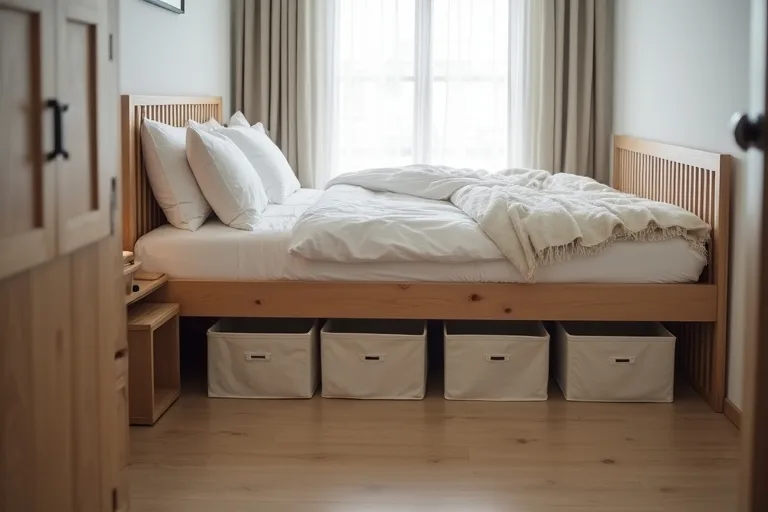
Before you buy anything, decide what the storage needs to do. If it is for seasonal items, you can prioritize hidden capacity. If it is for daily-use items, access matters more than maximum storage. The best choice is the one that fits your room layout and your habits, not just the one that holds the most.
Mistake 1: using containers that are too tall or visible
One of the fastest ways to make under bed storage look messy is to choose containers that stick out too far. Even if the bins are tidy, a visible edge can break up the clean line of the bed and make the room feel crowded. This is especially noticeable in small bedrooms where every visual detail counts.
Containers that are taller than the bed clearance may also catch on the frame, sit unevenly, or make it harder to slide them in and out. That extra friction usually leads to daily annoyance, which is when storage starts getting left half out or pushed aside in a way that looks untidy.
- Measure the clear space under the bed, not just the bed height.
- Check whether the container needs wheels, handles, or a flat top.
- Leave enough room for easy movement so the bin does not scrape the floor or frame.

Mistake 2: choosing mismatched bins and colors
Mixing random bins often creates more visual mess than the items themselves. Different heights, materials, and colors can make the under-bed area look unfinished, even if the contents are organized. A room feels calmer when the storage reads as one system rather than a collection of separate fixes.
Matching fabric bins are usually easier on the eye because they soften the look of the storage and reduce contrast. If you want a more structured setup, a cube-style organizer can also help create visual consistency in the room when the layout allows it. The key is choosing one approach and repeating it, instead of mixing several styles.
If you are deciding between loose bins and a more defined storage system, look at the room as a whole. A cleaner solution often comes from fewer visible pieces, not more decorative storage containers.
Mistake 3: overfilling the space and blocking access
It is tempting to use every inch under the bed, but overfilling the space often creates a harder problem later. When bins are packed too tightly, they become difficult to slide out, harder to label, and more likely to end up half hidden or out of line. That makes the bedroom feel busy even when the storage itself is out of sight.
Good under bed storage leaves room for access. You should be able to remove one bin without disturbing everything beside it. That is one reason a category-based setup works better than a general catch-all pile. Grouping items by purpose keeps the system simpler and reduces the chance that the space becomes a hidden dumping ground.
A small planning step can save a lot of frustration. Before buying, sort what you want to store into clear groups and then decide whether the bed space can handle it neatly. Sometimes the better answer is fewer items under the bed and a second storage spot elsewhere in the room.
Best next step
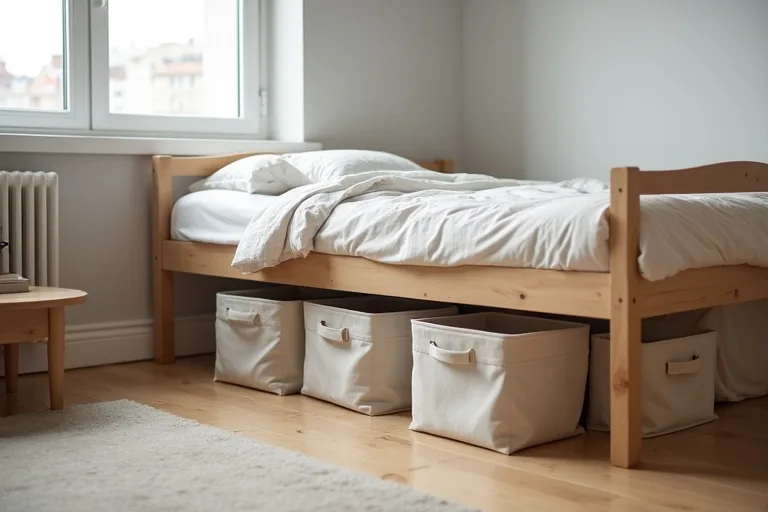
If you want the storage to look calmer, start with the room layout before you shop. Measure the bed clearance, decide what should live under the bed, and then choose a storage solution that fits that plan. For many rooms, that means checking whether an 8 cube storage organizer or a set of matching bins will work better than loose containers.
- Using bins that are too tall for the bed clearance.
- Mixing colors and container styles so the storage reads as visual noise.
- Packing the space so tightly that bins are hard to remove.
- Storing unrelated items together without a clear category system.
- Choosing storage before measuring the room layout.
Under bed storage should make a bedroom feel lighter, not busier. The cleanest setup is usually the one that fits the bed height, uses one consistent storage style, and leaves enough room to access everything without shifting the rest. If you are unsure, start with measurements and room planning first, then shop for storage that matches the layout instead of forcing the layout to fit the storage.
Helpful next tools and planners
If you want to make the decision easier before you buy
A practical storage choice usually starts with layout. These options can help you plan the space, compare container styles, and keep the bedroom system simple.
FAQ
What is the biggest mistake people make with under bed storage?
Using containers that are too large, too visible, or too mixed in style usually creates the most visual clutter.
Are fabric bins better than plastic bins under a bed?
Fabric bins often look softer and less noticeable, which can help a bedroom feel calmer. Plastic can work too, but it tends to read as more visible unless it is fully hidden.
How do I know if my bed is high enough for storage?
Measure the clear space under the frame and compare it with the height of the container you want to use. Leave a little room for easy sliding and removal.
Should I buy storage first or plan the layout first?
Plan the layout first. Once you know what the space can actually hold, it is much easier to choose storage that fits and looks neat.
Three sensible next steps
Some links in this article may be affiliate links. Read more in the Affiliate Disclosure.