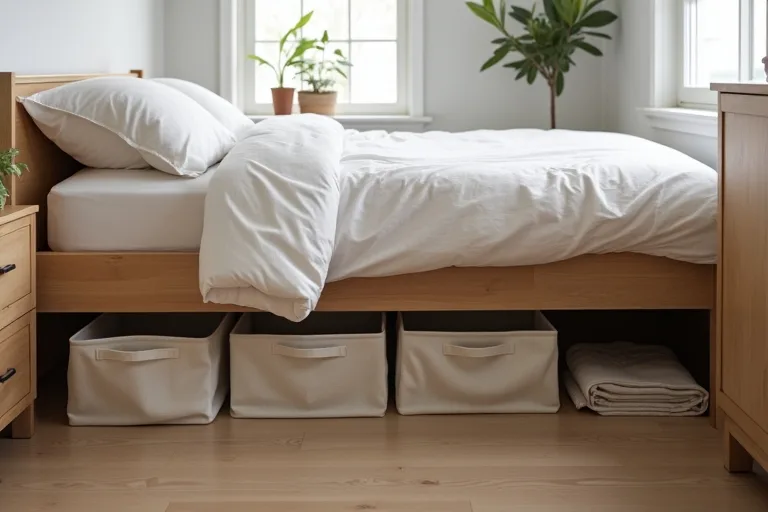
Under bed storage works best when it solves a real space problem, not when it simply adds more containers to the room. The right choice depends on bed clearance, what you want to store, and how often you need to get to it.
If you keep the decision practical, under bed storage can help a small bedroom feel calmer and easier to use. It can also stop clutter from spreading into the rest of the room.
The best under bed storage is low, easy to access, and sized for your bed clearance and what you need to store. If you only want to hide seasonal items, soft bins or vacuum bags may be enough. If you want a more structured setup, a low organizer or divided storage system is usually the better long-term choice.
Start with what actually needs to fit
Before you look at bins or drawers, decide what belongs under the bed. That simple step usually makes the rest of the choice easier. Seasonal bedding, off-season clothing, shoes, spare linens, wrapping supplies, and luggage each behave differently in storage. Some items need protection from dust. Others need quick access. Some need structure so they do not slide around.
It helps to sort your items into two groups: things you rarely need and things you want to reach without pulling apart the whole bed. The first group can live in deeper or less accessible containers. The second group works better in low bins, boxes with handles, or a system you can pull out smoothly.
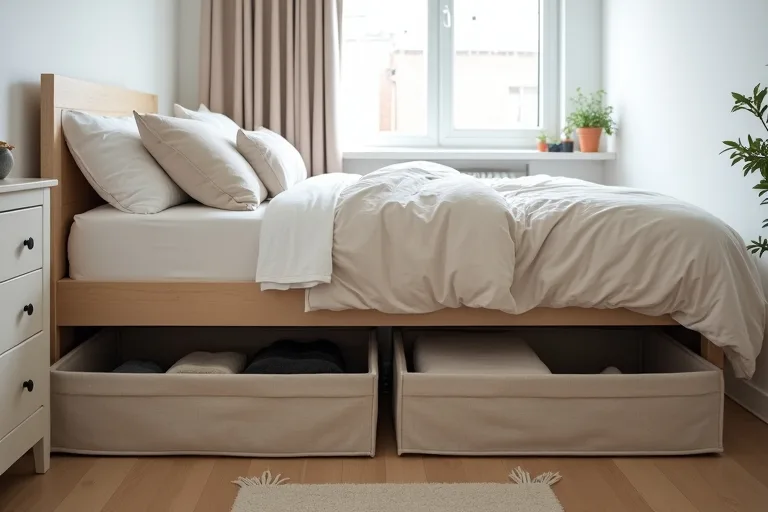
If your room already feels tight, the goal is not to store everything under the bed. It is to move the right items there so the rest of the room stays clear. That is often the difference between storage that feels helpful and storage that becomes a hidden mess.
The real decision is not which container looks neat. It is whether the container fits your bed height, lets you reach what you need, and keeps the room easy to move around in. If one of those three parts fails, the storage will probably frustrate you later.
Compare the main under bed storage types
Once you know what needs to fit, you can choose the storage style that matches the job. Each option has strengths, and the best one depends on how often you use the items and how much structure you want.
Here is a simple way to think about the common choices:
- Low fabric bins: Good for soft items, seasonal bedding, and light storage that does not need hard sides.
- Rolling boxes: Useful if you want easy pull-out access and a more rigid shape.
- Vacuum bags: Best for compressing bulky textiles when space is the main issue.
- Drawer-style units: Helpful when you want a cleaner, more permanent system and your bed clearance allows it.
- Cube-style organizers: Better when you want the storage plan to feel structured instead of improvised.
If you prefer a tidy, modular setup, a cube organizer can be a good bridge between open bins and fully built-in storage. The 8 cube storage organizer is worth considering when you want one system that can support folded bedding, baskets, or mixed bedroom storage.
Make access, dust protection, and room flow work together
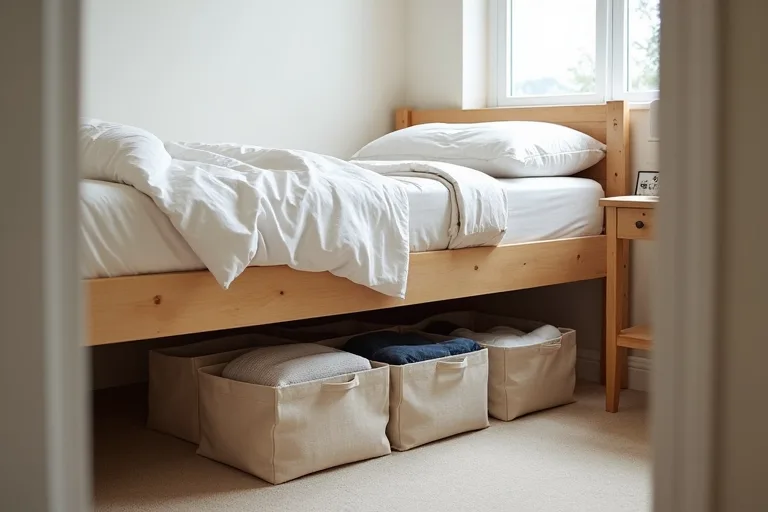
Storage under the bed should be easy enough to use that you keep using it. If a bin catches on the frame, drags on the floor, or blocks the walkway, it will not stay practical for long. That is why access matters as much as capacity.
When you are choosing a setup, look at three things at once: how the storage pulls out, whether the contents need dust protection, and whether the bed still leaves enough open space around the room. A small bedroom usually feels better with fewer, more deliberate pieces than with lots of undersized containers.
If dust is a concern, choose lidded bins, zippered fabric storage, or sealed bags for the items you do not need often. If access is more important, choose containers with handles or a shape that slides cleanly on your floor. For shoes or everyday extras, clear labeling helps more than extra volume.
The best systems are simple to live with. If you can reach a box without moving half the room, you are more likely to keep the storage organized.
Plan the room around the storage, not just the bed
Under bed storage is most useful when it supports the wider room layout. In a small bedroom, that usually means checking how the bed position affects circulation, bedside access, and where other storage has to go. If the bed is too low for the containers you want, it may be worth adjusting the plan before you buy more pieces.
This is also where a layout tool can save time. If you are deciding between storage types, it helps to look at the room as a whole so you can see whether the bed should stay where it is or whether another arrangement would free up more useful space.
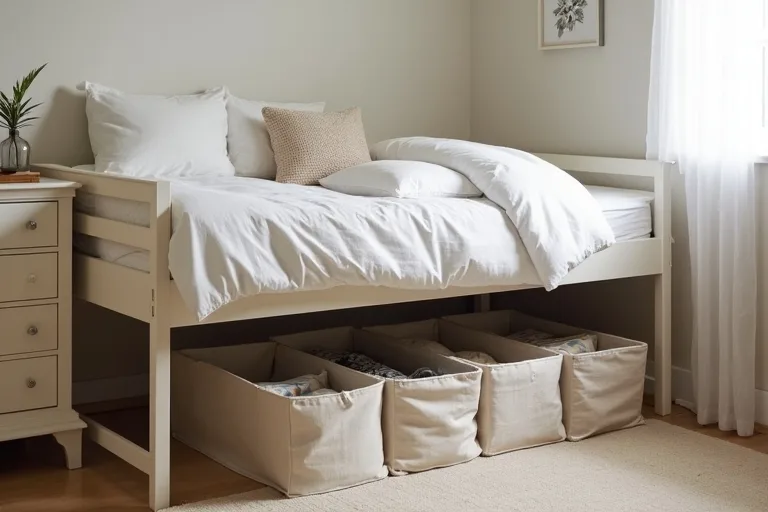
For broader room planning, the Small Spaces & Storage hub is a sensible place to continue. If the bedroom itself needs a wider rethink, the Bedroom Ideas page can help you make cleaner layout decisions before you buy.
Best next step
If you want the easiest decision, start by matching your bed height and the items you need to store. Then use a simple layout check so the storage fits the room, not just the space under the frame. After that, a structured organizer can help keep the system easy to maintain.
- Choosing storage before checking bed clearance
- Using containers that are too tall to slide in and out comfortably
- Storing items that need frequent access in hard-to-reach boxes
- Ignoring dust protection for bedding, clothing, or long-term storage
- Filling the under-bed area so completely that the room feels crowded
- Buying mixed containers that do not work together as a system
The best under bed storage is low, easy to access, and chosen for the items you actually need to store. Start with bed height, decide how often you need each item, and keep the setup simple enough to use every day. If you want a more structured option after the planning step, an 8 cube storage organizer can be a practical next buy for bedroom storage that feels more orderly. If you need help mapping the room before you shop, the Room Layout Planner is a useful next step.
Helpful next tools and planners
If you want to make the decision easier before you buy
These are best used after you have checked clearance and decided what needs to live under the bed. That way you are choosing a product that supports the room plan instead of guessing at a container first.
FAQ
How do I know if under bed storage will fit?
Measure the clearance from the floor to the bottom of the bed frame, then leave a little room for easy sliding. If you have to force the container in, it is usually too tall for practical use.
What is best to store under the bed?
Seasonal bedding, spare linens, off-season clothes, and other items you do not need every week are usually the best fit. Things you use often are better kept somewhere easier to reach.
Are vacuum bags a good idea?
Yes, if your main goal is saving space and the items are bulky textiles. They are less helpful for things you need to access often or keep neatly organized.
Should under bed storage be visible or hidden?
That depends on the room. Hidden storage usually feels calmer, but visible bins can still work if they are neat, low, and easy to pull out without disrupting the room.
Three sensible next steps
Some links in this article may be affiliate links. Read more in the Affiliate Disclosure.