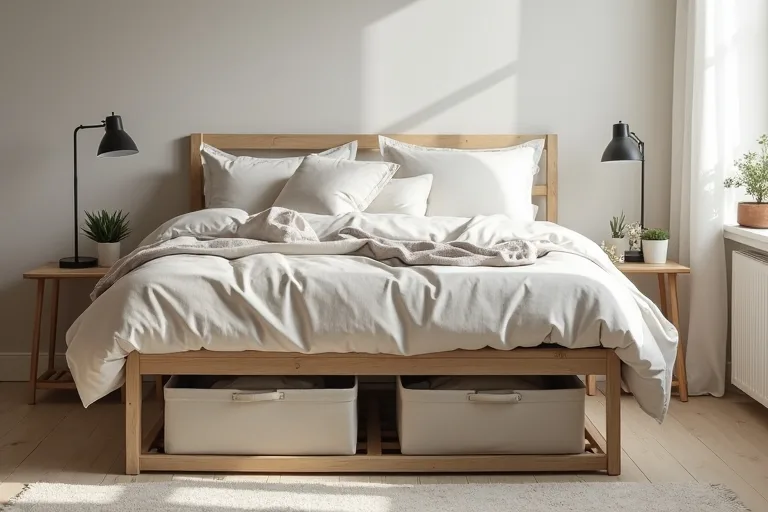
Under-bed storage works best when it solves a real room problem instead of becoming another place to hide clutter. In a small bedroom, the goal is not to pack every inch under the bed. It is to create storage that helps the room stay calm, easy to move through, and simple to keep tidy.
The right setup depends on what you need to store, how much clearance you have, and how much you want to see when you walk into the room. A good plan should disappear visually and still be easy to live with.
Use low-profile, clearly labeled storage that fits the bed height and keeps visual bulk hidden. The best under-bed setup is usually one that is shallow, easy to pull out, and matched to the items you actually need to store.
Start with the bed clearance and the storage job
The first step is to decide what under-bed storage needs to do. If you are trying to clear everyday clutter, you need a different setup than if you are storing off-season clothes, spare bedding, or shoes. When the job is unclear, under-bed space fills up with mixed items and becomes hard to manage.
Measure the space under the bed before buying anything. Check the height from the floor to the lowest point of the bed frame, and think about the usable depth from front to back. A storage box that barely fits will be frustrating to move, and a container that is too short wastes valuable space.
If you want help thinking through the whole room layout before you commit to storage, the Room Layout Planner can help you make better sizing decisions first. For broader storage ideas across the room, the Small Spaces & Storage hub is a useful starting point.
The real decision is not whether you can fit something under the bed. It is whether the storage will be easy to reach, easy to label, and easy to keep out of sight. If you have to drag everything out to find one item, the setup is too complicated for a small room.
Choose the container type that stays visually quiet
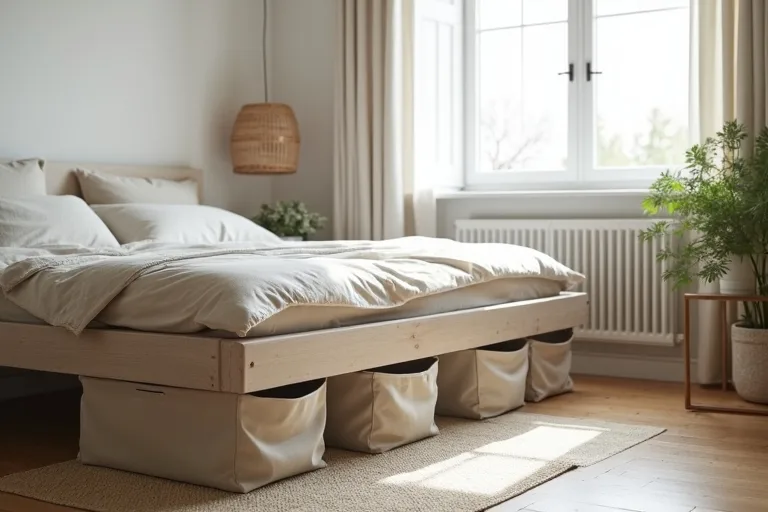
For most small bedrooms, the best under-bed storage is low, simple, and plain enough to disappear. Transparent bins can be useful when you need quick identification, but they can also make the space look busier. Opaque fabric bins usually feel softer and calmer, especially in bedrooms where visual clutter is already a concern.
A container with a lid is helpful if dust is an issue or if the items are not used often. An open bin can work for things you access regularly, but it should still look tidy from the side of the bed. If the container is visible, think about its shape and color as part of the room, not just as storage.
For people who want a simple structure without overthinking the layout, an 8 cube storage organizer can be a practical bridge when the room needs one organized system rather than several loose bins. It is not the only option, but it can help create a more disciplined setup in a small space.
- Use fabric bins if you want a softer look and less visual noise.
- Use rigid bins if you need better stacking or more defined shape.
- Use low drawers or organizer systems if access matters more than flexibility.
- Skip oversized containers that make the bed area feel crowded.
Set up under-bed storage so it is easy to use
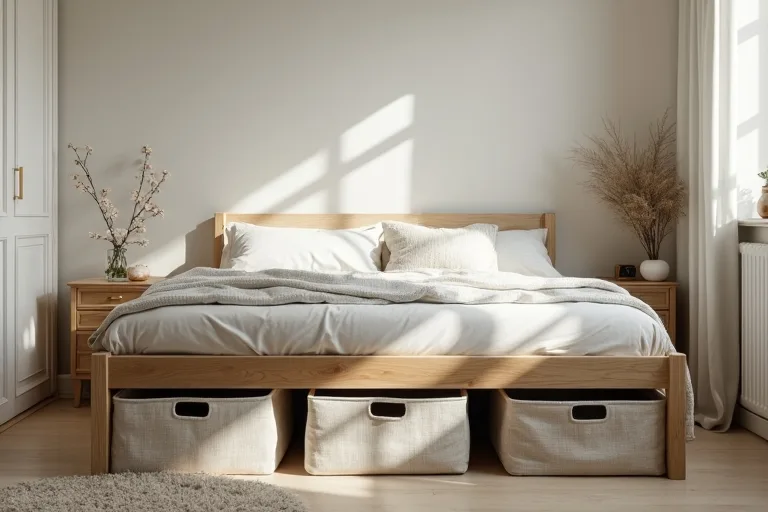
Under-bed storage only helps if you can reach it without turning the room into a daily project. That usually means keeping categories simple and storing similar items together. Bedding belongs with bedding, seasonal items with seasonal items, and rarely used extras in their own place. The more mixed the contents become, the less likely you are to keep using the system.
A good setup often works best in this order:
- Decide what lives under the bed and what should stay elsewhere.
- Choose containers that match the bed clearance and the amount of access you need.
- Label the front or top clearly so you do not have to reopen everything.
- Leave a little space for pulling bins in and out without scraping the floor.
If your bedroom tends to collect loose items, a pair of fabric storage bins set for cube organizer can make the system easier to maintain. When the storage looks consistent, it is usually easier to keep the room calm.
For a more structured planning step, the Small Space Furniture Planner, Room Layout Spreadsheet (Digital Download) can be useful if you want to test furniture placement and storage choices before buying anything.
Keep the area looking calm after the storage is in place
The final step is styling, but only in the practical sense. In a small room, the best styling choice is usually restraint. Keep the bed skirt, frame finish, and storage containers visually simple so the under-bed area does not draw attention. If the room already feels full, reducing contrast can help more than adding decor.
It also helps to keep the floor around the bed as open as possible. When the path beside the bed stays clear, the storage feels intentional rather than crowded. This is one reason under-bed storage often works best in rooms with a lower bed frame and a limited number of visible containers.
If you are updating the rest of the room after fixing the clutter issue, browse the Bedroom Ideas page for calmer layout and styling direction that supports the storage plan rather than competing with it.
Best next step
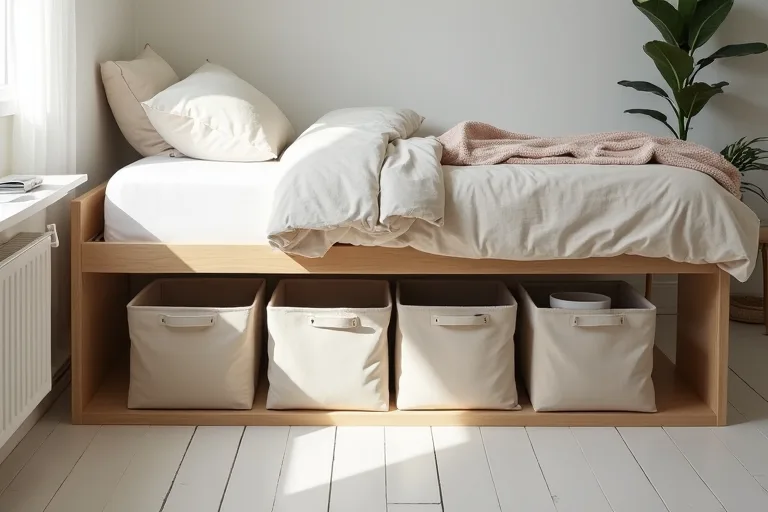
If you are deciding between a few under-bed setups, make the choice based on clearance, access, and how much visual bulk you are willing to see in the room. A simple plan usually works better than a clever one. Start with the layout, then choose storage that fits it.
- Buying containers before measuring bed clearance.
- Using mixed storage styles that make the room look busier.
- Storing too many categories under the bed and losing track of what is inside.
- Choosing bins that are hard to pull out or slide back in.
- Letting under-bed storage become a catchall for items that belong somewhere else.
The calmest under-bed storage is usually the simplest one: low-profile, clearly labeled, and matched to the space under your bed. If the containers are easy to access and visually quiet, they can reduce clutter without making the room feel busy. Measure first, choose the right format second, and keep the system limited to items that genuinely belong there.
Helpful next tools and planners
If you want to make the decision easier before you buy
These options fit the planning-first approach: one practical storage bridge, one simple bin option, and one layout tool for checking whether the setup will work in your room.
FAQ
What is the best thing to store under a bed?
Usually the best items are seasonal bedding, out-of-season clothes, shoes, or other things you do not need every day. The key is to store similar items together so the space stays easy to manage.
Are fabric bins better than plastic bins under a bed?
Fabric bins often look calmer in a bedroom and can reduce visual clutter. Plastic bins can be better if you want a more rigid shape or easier visibility of contents.
How do I keep under-bed storage from looking messy?
Use matching containers, clear labels, and a limited number of categories. A consistent shape and color usually helps the room feel more orderly.
Should I use drawers or loose bins under the bed?
Drawers are better if you want cleaner access and a more built-in feel. Loose bins are better if you want flexibility and a lower-cost solution.
Three sensible next steps
Some links in this article may be affiliate links. Read more in the Affiliate Disclosure.