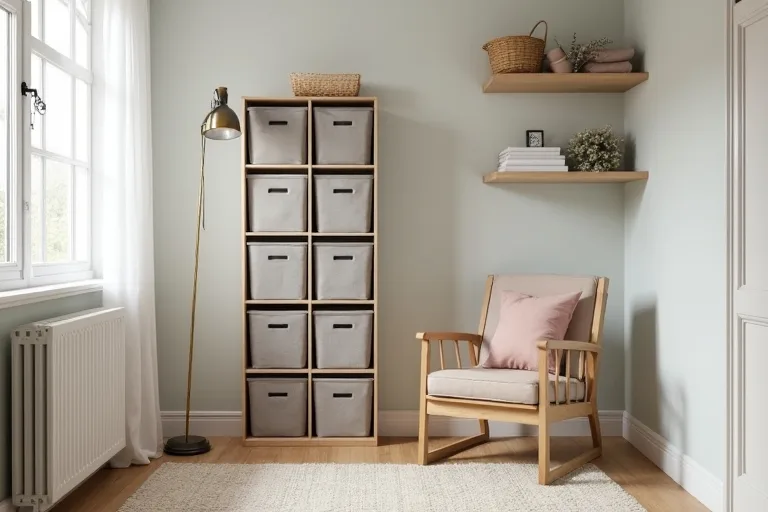
Small rooms often feel full before they are actually functional. The problem is not always a lack of storage; it is usually a lack of useful storage placement.
Vertical storage helps you work with the wall space you already have. When height is planned well, a room can hold more without feeling crowded on the floor.
Use wall height, not floor space, to add storage in small rooms. The best results usually come from a simple plan: measure the wall, keep the lower zone easy to reach, and choose storage that fits the room’s width and daily habits.
What vertical storage means in small spaces
Vertical storage is any storage that uses height more effectively than width. That can mean tall shelving, wall-mounted storage, stackable cubes, or even a narrow cabinet that takes advantage of a slim wall section. The point is not to fill every inch. The point is to move storage upward so the floor stays clearer and the room feels easier to use.
In a small home, this approach matters because low, wide furniture often takes up the same visual space as a larger piece while offering less flexibility. A tall unit can organize books, baskets, games, linens, or office supplies in one place without spreading them across the room.
If you are planning a living room, hallway, bedroom, or multipurpose corner, start by looking at the wall as a storage surface. Even one well-used wall can change how the whole room works.
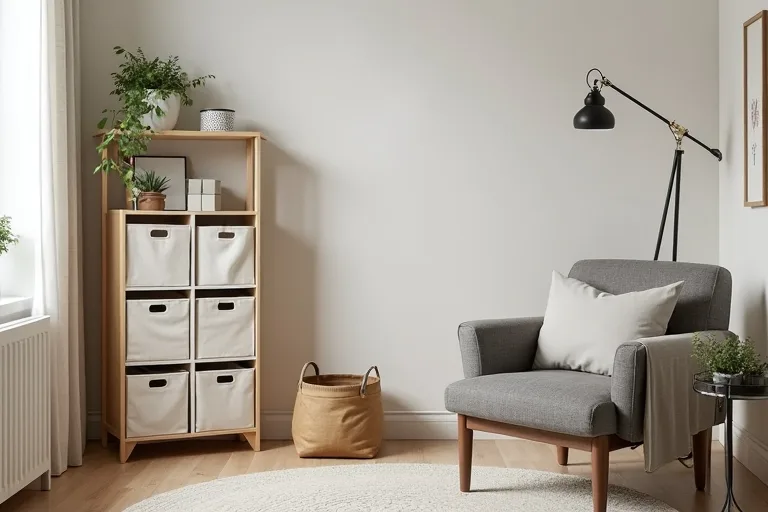
The real decision is not whether a room needs more storage. It is whether the storage should sit on the floor, hang on the wall, or rise upward in a freestanding unit. In a tight room, the safest choice is usually the one that keeps circulation open while still giving you easy access to the things you use often.
When vertical storage works best
Vertical storage works especially well when the room is short on floor area but still has usable wall height. It is also useful when one part of the room has a natural pause point, such as beside a sofa, beside a door, above a desk, or at the end of a hallway. These are the places where a tall piece can add structure without blocking movement.
It tends to work less well when the room already feels visually busy, when there is awkward low clearance, or when you need storage that must be reached very quickly every day. In those cases, a lower, more open solution may be calmer.
Before buying anything, measure three things: wall height, wall width, and the reach zone you are comfortable using regularly. That simple check prevents the most common mistake, which is choosing a piece that fits the room in theory but not in daily life.
How to choose shelves, cubes, and bins
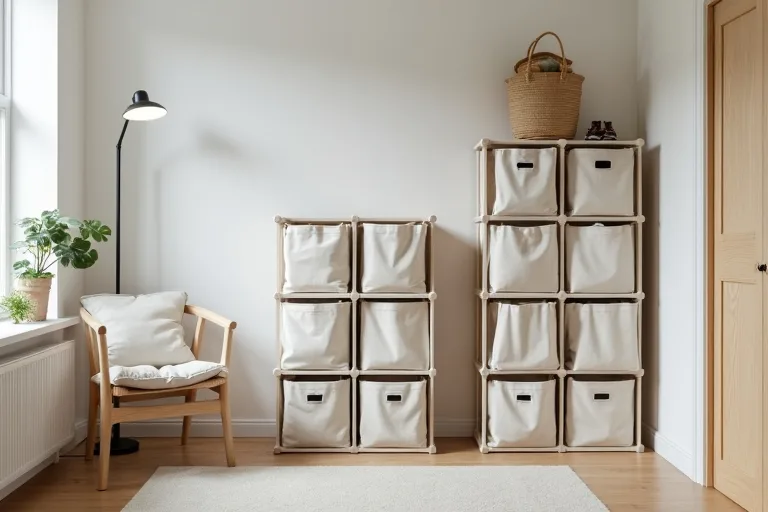
The best vertical storage type depends on what you need to hold and how often you need to reach it. Open shelves are useful when you want visual access and a lighter look. Cube units are better when you want a mix of open and hidden storage. Bins help when the contents are small, mixed, or not especially attractive.
A simple way to choose is to match the storage to the job:
- Open shelves for objects you use often and want to see at a glance.
- Cube organizers for flexible storage that can shift with your routine.
- Fabric bins for items that need grouping, hiding, or easier sorting.
- Wall-mounted pieces for items that should stay off the floor completely.
An 8 cube storage organizer can be a practical middle ground in a small room because it offers structure without looking overly bulky. If you want the unit to feel cleaner and more finished, fabric storage bins set for cube organizer can help you control visual clutter and separate different categories.
For layout planning, it also helps to think in terms of zones. Put everyday items at hand level, lighter or less-used items higher up, and heavier pieces lower down. That keeps the room easier to live in and reduces the feeling that everything is stacked in the wrong place.
Styling and access tips for a calmer layout
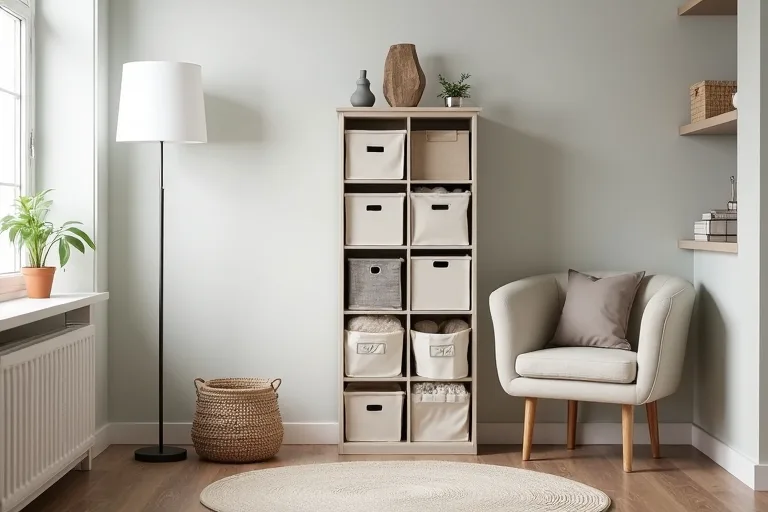
Good vertical storage should make a room feel simpler, not busier. Leave some breathing room around the unit, especially at eye level. If the wall is filled from top to bottom, the room can start to feel compressed even if the storage is technically efficient.
Keep the items you reach most often in the easiest spots. That means no climbing for daily basics and no deep bins for things you use every day. If a storage piece needs constant rearranging, it is probably not the right fit for that zone.
In living rooms and bedrooms, a small balance of closed and open storage usually works best. Closed bins hide the visual noise. Open shelves keep the room from feeling sealed in. Together, they can give a small room a calmer rhythm.
If you are not sure where to start, choose one wall and plan it before you buy anything. A room layout tool can help you test clearance, storage height, and furniture placement in a more realistic way. That is usually better than trying to fix the room piece by piece after the shopping starts.
Best next step
Before you buy shelves or cube units, map the wall height, floor clearance, and the path you need to keep open. A layout planner makes it easier to see whether a tall storage piece will improve the room or make it feel tighter. If you want a concrete example, test an 8 cube storage organizer against your wall plan first, then compare that with the room’s everyday flow.
- Buying a tall unit before measuring wall height and clearance.
- Using vertical storage to cram in more items instead of improving access.
- Choosing open shelves for objects that need hidden storage.
- Blocking walkways with units that are too deep for the room.
- Filling every vertical surface and making the room feel visually heavy.
- Skipping a layout plan and fixing problems only after delivery.
The best vertical storage idea is the one that uses height without making the room harder to live in. Start with one wall, measure carefully, and choose a storage type that matches how often you need access. A calm plan first will usually save you from buying the wrong piece later.
Helpful next tools and planners
If you want to make the decision easier before you buy
These next steps are useful when you want to compare storage ideas against real room dimensions, rather than guessing from a product photo.
FAQ
What is the easiest vertical storage upgrade for a small room?
A tall freestanding unit or simple wall shelf is often the easiest first step because it adds storage without changing the whole room.
How do I know if a cube organizer will fit?
Measure the wall width, the available height, and the walkway around it. Then compare those numbers with the unit and nearby furniture before ordering.
Should vertical storage be open or closed?
Open storage works best for items you use often. Closed bins or cabinet-style storage is better when you want less visual clutter.
Do I need a planner for a small storage project?
If the room feels tight or already has several pieces of furniture, a planner is helpful because it shows whether the storage will improve flow or get in the way.
Three sensible next steps
Some links in this article may be affiliate links. Read more in the Affiliate Disclosure.