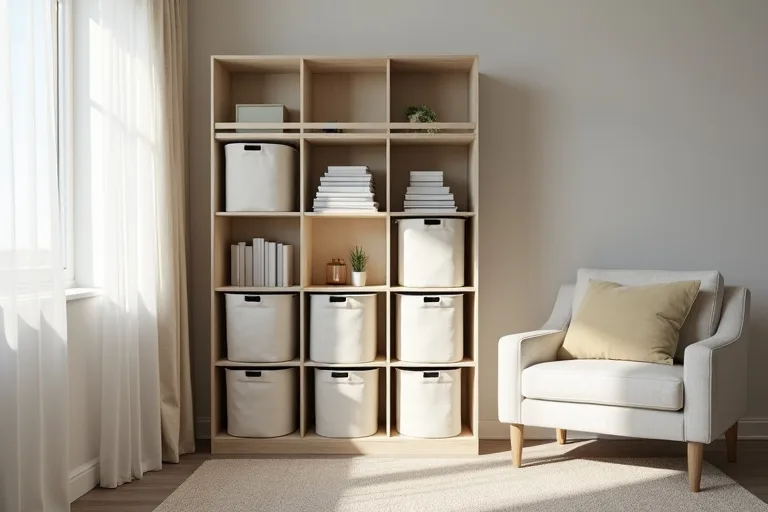
When a small room starts to feel crowded, the answer is not always less storage. Often, it is better storage placed more carefully. Vertical pieces can clear floor space, keep everyday items together, and make the room easier to use.
The key is to choose storage that looks light from a distance and works hard up close. That usually means simple shelving, wall-mounted options, and a cube organizer with bins used in a restrained way.
Use vertical storage that stays visually light, such as narrow shelving, wall-mounted pieces, and a cube organizer with bins. Keep the lowest practical footprint you can, leave some cubbies open if needed, and avoid filling every surface so the room still has breathing room.
Why vertical storage works in small rooms
Small rooms run out of floor space first. Once the floor feels busy, even a tidy room can seem cramped. Vertical storage shifts the load upward so the room can hold more without spreading clutter across every surface.
This works especially well when the room needs to do more than one job. A living room corner may need to hold blankets, books, games, or charging cables. A bedroom may need off-season storage. A hallway may need a landing spot for bags and shoes. In each case, going upward helps protect the walking path.
The best vertical pieces are the ones that solve a specific problem without becoming the whole visual story. That is why a narrow shelf, a tall cabinet, or a cube organizer can feel calmer than several small storage items scattered around the room.
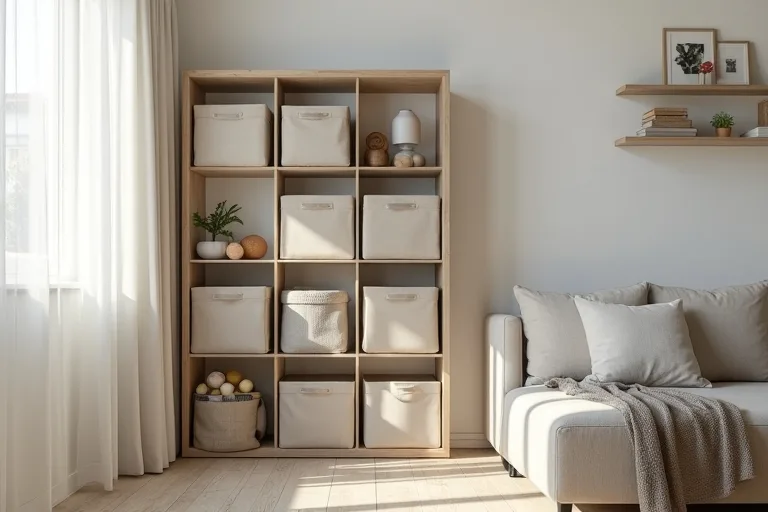
If you want to plan the room before you buy, the Room Layout Planner can help you check clearances and see whether the storage piece will fit without interrupting movement.
The real decision is not whether a piece stores enough. It is whether it stores enough while still leaving the room easy to move through and easy to look at. If a storage unit solves clutter but blocks a corner, crowds a doorway, or forces you to fill every cubby, it may be the wrong size or the wrong style.
What makes storage feel visually busy
Storage feels busy when the eye has too many things to process at once. That can happen with open shelves packed too tightly, mixed bin styles, or a unit that is too wide for the wall it sits on. Even useful storage can start to read as clutter if it lacks a clear visual rhythm.
A calmer result usually comes from reducing contrast and limiting the number of visible categories. One consistent bin style looks easier on the eye than a mix of baskets, boxes, and loose items. A small amount of empty space is also helpful. It gives the room a pause.
- Choose one main storage material or finish so the unit feels cohesive.
- Use bins for items that look messy when exposed.
- Leave some sections open or lightly styled so the piece does not look packed.
- Keep the top surface simple instead of turning it into a display shelf.
That approach lets the storage do its job without making the room feel visually louder.
Where an 8 cube organizer fits best
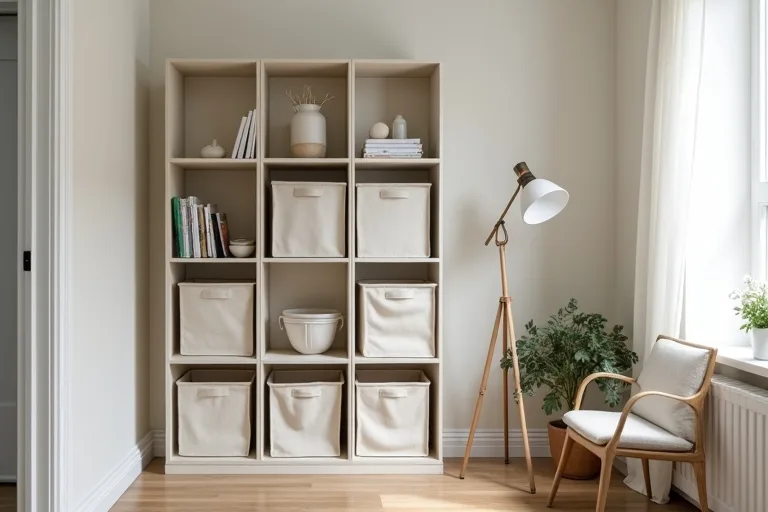
An 8 cube storage organizer is often a good middle-ground option when you need more storage than a small shelf provides, but do not want a heavy cabinet feel. It gives you a clear grid, which helps the room look orderly, and it can be used in more than one way depending on what the room needs.
It works best when the room has enough wall length for the unit to sit without crowding doors, windows, or seating. In a living room, it can hold board games, books, media, and seasonal items. In a bedroom or office, it can separate everyday essentials from less-used storage. In a child’s room, the cube format makes sorting easier and keeps things accessible.
For a cleaner look, use a mix of open cubes and bins rather than filling every slot the same way. That gives the unit some structure while keeping it from feeling boxed in. If you want the inside of the organizer to look neater right away, a fabric storage bins set for cube organizer is the simplest companion piece.
For many small rooms, the 8-cube format is useful because it is substantial enough to matter, but still readable as one piece. That matters when the goal is less clutter, not more furniture.
How to place storage so the room still feels open
Placement changes everything. A well-sized storage piece can still feel intrusive if it is put in the wrong spot. The easiest way to keep a room open is to place vertical storage where it supports the layout instead of interrupting it.
Walls, corners, and the space behind doors are the most common places to look first. These are the zones that often go underused, but they can solve storage problems without taking over the center of the room. Corners are especially useful because they can hold a taller piece without cutting across a main walking path.
Before you commit, check three things: whether the door swing clears the unit, whether the room still has a direct route through it, and whether the storage will feel too deep once it is filled. This is where a layout tool is more useful than guesswork. The Sofa Size Calculator can also help if the storage is going near a seating area and you want to protect comfortable circulation around the room.
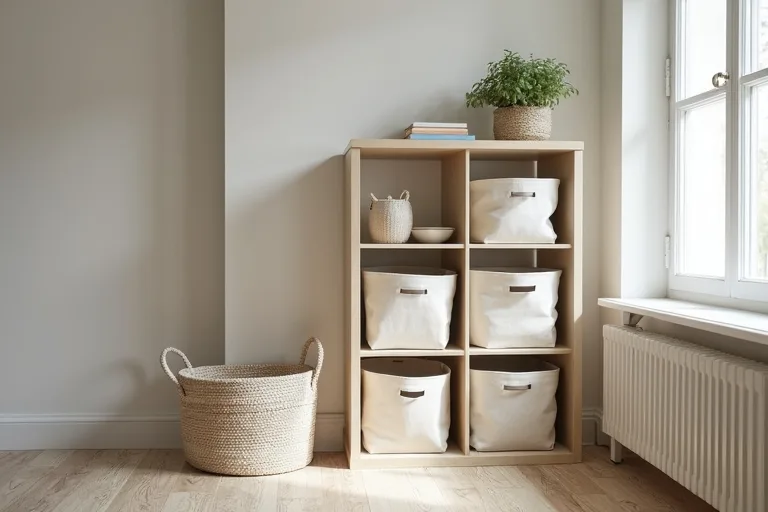
If you are still deciding between pieces, the Small Spaces & Storage hub is a useful place to compare other calm, practical options before you buy.
Best next step
Before you order anything, check the size of the wall, the depth of the unit, and the room flow around it. If the piece fits the layout, it is much easier to keep the room calm after the storage arrives.
- Choosing a unit that is tall enough to store items but too wide for the wall it sits on.
- Mixing too many bin styles, which makes the storage look busier than it needs to be.
- Filling every cube, shelf, or surface so the piece has no visual break.
- Placing storage where it blocks doors, movement paths, or light.
- Using open shelving for items that naturally look messy when exposed.
Vertical storage works best when it solves clutter without taking over the room. Choose a piece that fits the wall, keeps the floor clear, and stays visually simple. For many small rooms, an 8 cube storage organizer is a practical middle ground because it adds real capacity while still feeling orderly. If you want the choice to be easier, plan the layout first, then buy the storage that supports it.
Helpful next tools and planners
If you want to make the decision easier before you buy
These are useful if you are comparing storage options, testing fit, or trying to decide whether a cube-style organizer is the right move for your room.
FAQ
Is vertical storage always better than low storage in a small room?
Not always. Vertical storage is usually better when floor space is tight, but low storage can work well if you need a seat, a landing surface, or a piece that sits under a window. The best choice depends on the layout.
How do I keep open shelving from looking cluttered?
Limit what you display, use repeated containers where needed, and leave some space open. Open shelving looks calmer when it is used for a few categories instead of everything at once.
Should I choose bins for every cube in an organizer?
Not necessarily. A mix of bins and open cubes usually feels lighter. Use bins for small or awkward items, and leave some cubes open if the room can handle it.
What should I check before buying a tall storage piece?
Check wall width, depth, door swing, nearby furniture, and the main walking path. A piece that fits technically can still feel wrong if it interrupts the room flow.
Three sensible next steps
Some links in this article may be affiliate links. Read more in the Affiliate Disclosure.