
A bathroom remodel gets expensive faster than most people expect, not because every part is hard to understand, but because the costs are spread across many small decisions. If you plan those decisions in the right order, the project feels much more manageable.
The goal is not to guess a perfect number on day one. The goal is to set a realistic range, define what matters most, and avoid buying fixtures before you know what the room can support.
Start with your budget, scope, and must-have changes before choosing fixtures or finishes. That gives you a clearer target for labor, materials, and a contingency buffer, and it helps you avoid spending on attractive items that do not fit the real plan.
Start with scope and priorities
The biggest budgeting mistake in a bathroom remodel is treating every decision as equal. A full gut renovation, a partial update, and a simple refresh all live in very different cost ranges, even if they end up with similar-looking finishes.
Before you look at products, write down three things: what must change, what would be nice to change, and what can stay. A dated vanity may be worth replacing, while tile in good condition may be worth keeping. That kind of thinking makes the budget far more honest.
It also helps to think in terms of function. If the shower layout is awkward, that is a planning issue. If the faucet looks tired but works well, that is a finish choice. Separating the two keeps the room from becoming a collection of impulse upgrades.

The real decision is not whether to buy the nicest fixtures you like. It is whether the room needs structural work, plumbing changes, or a refresh that mostly updates the visible surfaces. That difference affects the budget more than any single faucet or light fitting.
Break the budget into real cost categories
A useful bathroom budget is easier to manage when it is divided into categories rather than treated as one lump sum. That way, you can see where money is going and where the pressure points are likely to be.
Most plans need to account for labor, fixtures, finishes, and a contingency. Labor often includes demolition, plumbing, electrical, and installation. Fixtures include the toilet, sink, faucet, shower fittings, and lighting. Finishes include tile, paint, mirror, and storage. Contingency is the part that protects you from surprises behind the walls.
- Labor: the work needed to remove, rebuild, and install.
- Fixtures: the working parts you touch every day.
- Finishes: the surfaces and details that shape the look.
- Contingency: the buffer for hidden issues or changes.
If you are trying to stay calm and avoid overspending, this is the point where a tool helps. Use the bathroom remodel cost estimator to turn your ideas into a more realistic range before you commit to shopping or quotes.

Choose where to save and where to spend
Not every upgrade deserves the same share of the budget. The smartest bathroom plans usually put money into the parts that affect daily use, then keep the decorative choices restrained and easy to coordinate.
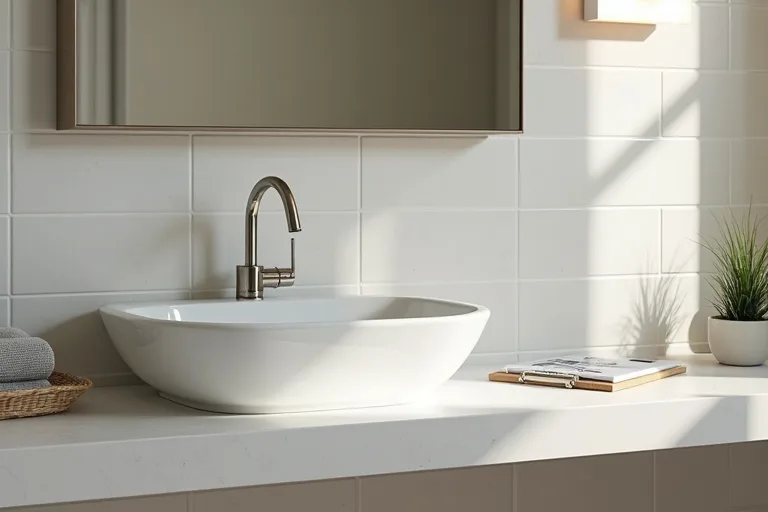
A brushed nickel bathroom faucet with two handles is a good example of a budget-led upgrade. It can refresh the vanity area without forcing a larger redesign, and it tends to work well with a wide range of simple bathroom finishes. The same is true for a clean, energy-conscious LED vanity light fixture, which often improves both function and atmosphere without adding complexity.
If you are trying to keep costs steady, a practical approach is to spend where wear and use are highest, then keep finishes consistent and uncomplicated. That usually means choosing durable basics first, then layering in details only if the budget still supports them.
Spend more on what you touch every day and less on details that only change the look. A reliable faucet, sensible lighting, and a clean layout usually do more for the room than multiple small decorative upgrades.
When style choices start to blur together, it can help to look at layout and visual direction in one place. Browse bathroom ideas after you have set your budget, so the design direction fits the spend instead of competing with it.
Best next step
Before you buy fixtures or book work, use a planning tool to test your budget against the real scope of the remodel. That gives you a clearer decision point and helps you avoid spending in the wrong place.
Turn the plan into a buying decision
Once your budget is set, the next question is not what looks best in isolation. It is what fits the plan without creating extra cost or friction later. That is where a simple product choice can be useful.
If your vanity area needs a straightforward refresh, a brushed nickel bathroom faucet with two handles is a sensible example of a purchase that supports the budget rather than stretching it. Pairing that with a clean LED vanity light fixture bathroom can improve daily use while keeping the room practical and easy to finish.
For readers who like to keep track of every line item, a simple planner can be useful too. The Home Renovation Budget Planner Spreadsheet (Google Sheets, Excel) is the kind of tool that helps keep notes, costs, and change decisions in one place.
- Starting with product shopping before the scope is clear.
- Forgetting labor, disposal, and contingency costs.
- Choosing finishes before confirming what can stay in place.
- Spending too much on decorative details and too little on daily-use items.
- Skipping a budget check when the project changes halfway through.
A calm bathroom remodel budget starts with scope, then breaks costs into clear categories, and only then moves into fixtures and finishes. If you get those steps in order, the project becomes easier to control and much less likely to drift. After that, use the bathroom remodel cost estimator to pressure-test the numbers, then move into bathroom ideas once the spend is realistic.
Helpful next tools and planners
If you want to make the decision easier before you buy
These options fit the planning-first approach in this guide. Use them only after you know the scope and budget range you want to stay within.
FAQ
How do I decide my bathroom remodel budget first?
Start with the total amount you can comfortably spend, then define whether the project is a refresh, a partial update, or a full remodel. That scope sets the rest of the budget.
What costs are easiest to underestimate?
Labor, plumbing changes, electrical work, and contingency are often underestimated. These are the categories that tend to move when the project gets more complex.
Should I buy fixtures before getting estimates?
It is better to wait until you understand the budget range. You can look at options early, but avoid locking in purchases before you know what the project can support.
What should I do after I set the budget?
Use the cost estimator to check whether the plan is realistic, then move into layout and style decisions that fit the spend. That keeps the project consistent from the start.
Three sensible next steps
Some links in this article may be affiliate links. Read more in the Affiliate Disclosure.