
Bedroom layout is usually decided too quickly. A bed gets pushed onto the biggest wall, storage is added wherever it fits, and only then does the room start to feel awkward to use.
A better plan is simpler: measure first, place the bed with walking space in mind, then work out storage, windows, and soft furnishings around that setup. That order makes the room easier to live with and much easier to shop for.
Start with bed placement, then map walking space, storage, and window clearance before buying anything. If the bed, door swings, and curtains all work together on paper, the room usually feels calmer in real life too.
Start with the room, not the furniture
Good bedroom planning begins with the shape of the room, the fixed features, and the movement you need every day. Before you think about a nightstand or duvet cover, note the windows, doors, radiators, built-in storage, and any wall that must stay clear.
Once those fixed points are marked, the layout becomes easier to judge. You can see which wall is best for the bed, which areas are naturally better for storage, and where circulation is likely to feel tight. That is often the difference between a bedroom that works quietly and one that always feels slightly blocked.
If you prefer to plan visually, use the Room Layout Planner before you move anything heavy. It is a simple way to test the room on paper first, especially if you are deciding between more than one bed position.
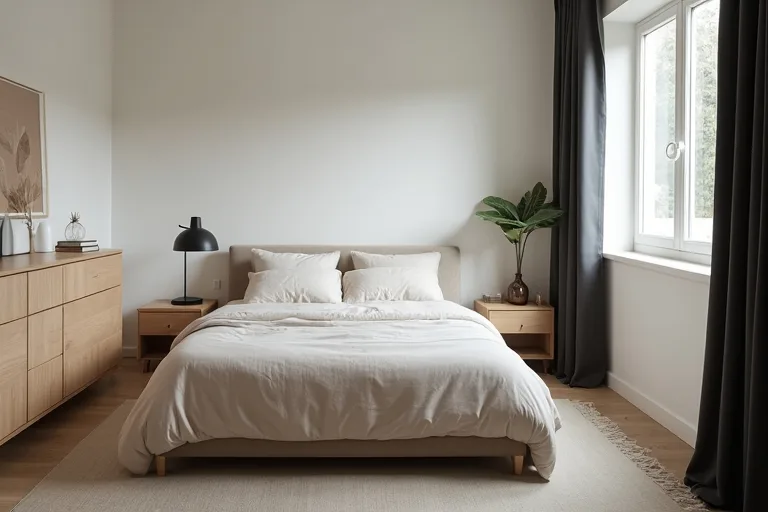
The real question is not whether a bed fits. It is whether the room still feels easy to move through after the bed, storage, and curtains are in place. Leave enough space for the door to open properly, the bed to be made without frustration, and drawers to be used without collision.
Choose a bed position that leaves workable flow
The bed is the anchor of most bedrooms, so its position shapes everything else. In many rooms, the best choice is the wall that allows the clearest path from the door to the other side of the room, while still leaving room to access both sides of the bed.
When you are comparing options, think about what the room needs to do, not just what looks balanced. A centered bed may feel neat, but if it steals the easiest walking route or blocks a wardrobe, it is not the best layout. A slightly off-center bed can be the smarter decision if it frees up better circulation and more usable storage.
A simple order of thinking helps:
- Mark the door swing and any fixed openings.
- Test the bed against the wall with the most practical clearance.
- Check whether both sides of the bed remain usable.
- Make sure the room still supports drawers, wardrobes, or a dresser.
If you are working with a smaller room, keep the layout clean and resist the temptation to overfill it. A smaller bed with better access can be more comfortable than a larger bed that makes the room feel crowded.
Plan storage, windows, and curtains together
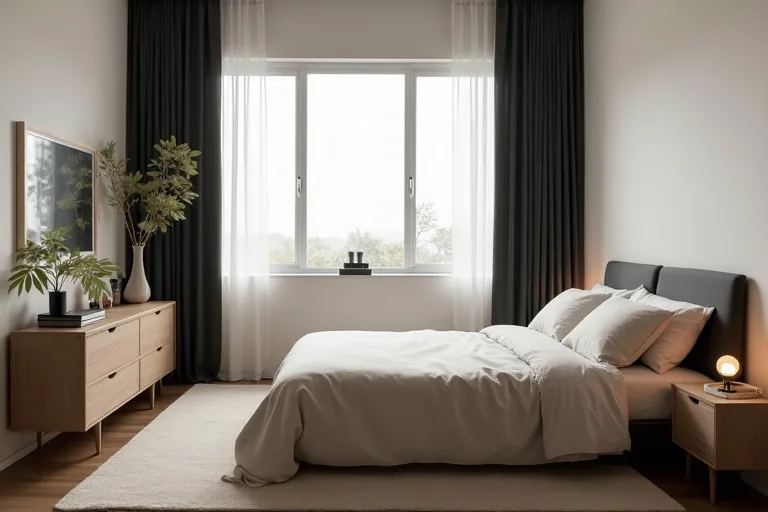
Storage is where bedroom layouts often become difficult. A dresser, wardrobe, or chest of drawers can work beautifully in a room, but only if the placement respects the rest of the layout. If a cabinet blocks a window, competes with the bed, or makes a walkway too tight, the room starts to feel harder to use.
Windows matter too. They affect natural light, privacy, and the way the room feels when you wake up and when you sleep. Curtain choice should follow the layout rather than lead it. If the window sits close to the bed or furniture, you may need a solution that opens cleanly and does not crowd the room.
Blackout curtains are a practical choice when you want better sleep and less glare, especially in rooms where the bed sits near the window. If you are checking window treatment sizing, the Curtain Length Calculator can help you avoid guesswork before you order.
For storage and layout planning, the main goal is to keep heavy furniture on the walls that can support it best, then leave the easiest path open for daily use. That keeps the room from feeling like an obstacle course.
Match bedding and shopping decisions to the layout
Once the layout is settled, soft furnishings become easier to choose. Bedding, curtains, and even the scale of bedside accessories should support the room rather than compete with it. In a calm layout, simple finishes usually work best because they let the structure of the room do the visual work.
If your plan is leaning toward a neutral scheme, a linen-look duvet cover set can suit a wide range of bedroom layouts. It is especially useful when the room already has enough visual activity from windows, storage, or a tighter footprint. The point is not to decorate first; it is to choose finishes that keep the room feeling composed after the practical decisions are made.
That is also why many people find it easier to shop after they map the room. When you know how much wall space is left, whether the bed is centered, and how close the curtains will sit to the furniture, you are less likely to buy things that look right online but feel wrong in the room.
Best next step
If you want to make the room decision easier before buying furniture, bedding, or curtains, use the Room Layout Planner to test the bed position, storage placement, and walking space first. It is the most helpful next step when a room feels close to working but not quite settled.
- Choosing the bed position before checking doors, windows, and walkways.
- Filling every wall with furniture and leaving no visual or physical breathing room.
- Buying curtains before confirming how close they will sit to the bed or dresser.
- Using storage that fits the wall but makes daily movement awkward.
- Shopping for bedding before the layout is settled and then trying to style around the problem.
Bedroom layout works best when you plan in the right order: room dimensions, bed placement, walking space, storage, and then soft furnishings. That sequence reduces waste, avoids cluttered decisions, and makes shopping much easier. If you are not sure where to start, map the room first and let the layout decide what the bedroom needs.
Helpful next tools and planners
If you want to make the decision easier before you buy
These are practical next steps for turning a layout idea into a room plan. Start with the planner, then choose the soft furnishings and storage pieces that fit the finished setup.
FAQ
What is the best first step when planning a bedroom layout?
Start with measurements and fixed features like doors, windows, and radiators. Once those are marked, you can test bed placement and see what kind of storage will realistically fit.
Should the bed always go on the largest wall?
Not always. The best wall is the one that gives you the easiest flow, sensible access on both sides if needed, and the least conflict with doors or windows.
How much space should I leave around the bed?
Leave enough room to move comfortably, make the bed, and open nearby doors or drawers without friction. The exact amount depends on the room, but the layout should feel easy to use, not squeezed in.
When should I buy bedding and curtains?
After the layout is settled. Bedding and curtains are easier to choose when you already know where the bed sits, how much wall space is left, and how close the window treatment will be to other furniture.
Three sensible next steps
Some links in this article may be affiliate links. Read more in the Affiliate Disclosure.