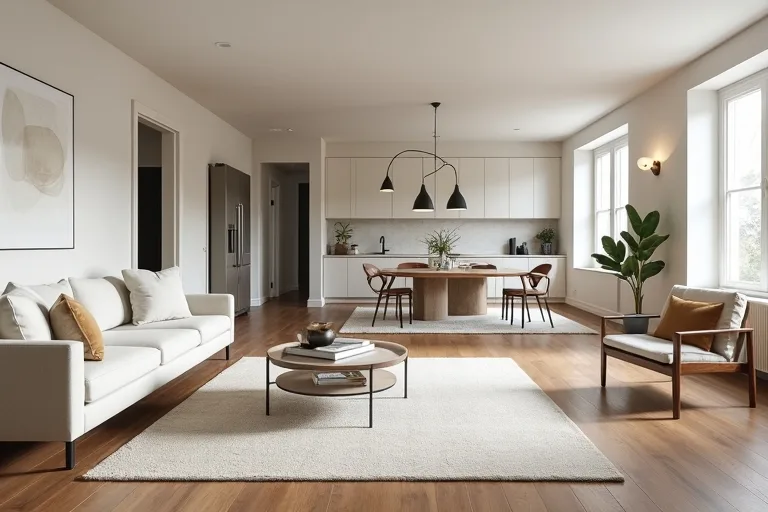
Open concept rooms often feel unfinished for a simple reason: the living area has not been clearly defined. When the seating zone blends into the kitchen or dining space, the room can look scattered even when the furniture is good.
The fix is usually not more decor. It is a better plan. Once the living zone has a clear rug boundary, one or two anchor pieces, and a few repeated finishes, the whole space starts to feel calmer and more intentional.
Use a defined rug zone, repeat a few finishes, and add one strong anchor piece so the space feels intentional.
Start with the living zone, not the shopping list
In an open plan, the first job is to decide where the living room actually begins and ends. If you skip that step, every purchase has to work harder to compensate. A sofa, coffee table, and rug may all be nice pieces, but they still need a clear boundary to feel finished.
Think of the room in zones. The living area should read as its own space even if it shares daylight, flooring, and walls with the kitchen or dining area. That usually means giving it one main visual anchor and letting the rest support that choice.
If you are still working out the layout, start with the broader plan before buying anything. The room layout planner is useful when you want to map the seating zone first and avoid making decisions piece by piece.
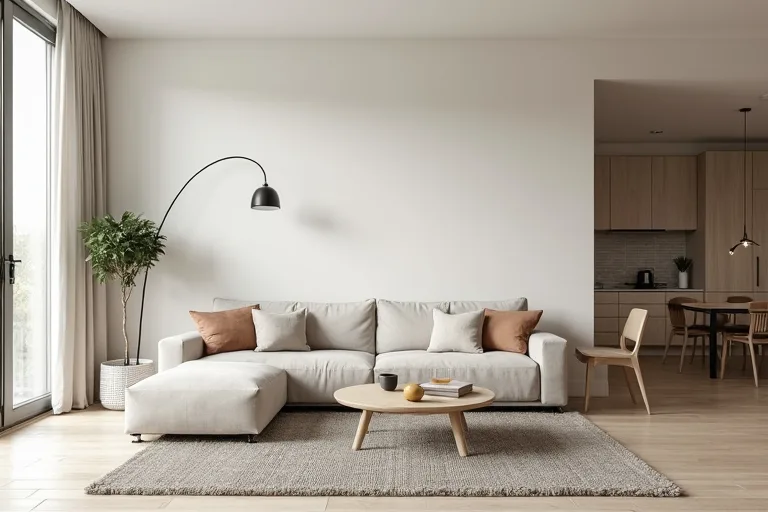
The real decision is usually not which decor to add. It is whether the living area has enough structure to stand on its own. If the room feels floaty, fix the zone first. If the zone is clear but the room still feels busy, then look at finish repetition and spacing.
Use rug size and placement to anchor the room
A rug is often the fastest way to make an open concept living room feel grounded. The right size helps the furniture read as one group instead of several separate items floating in a larger space. In many rooms, that is the difference between an area that looks arranged and one that looks accidental.
The most important choice is not pattern. It is proportion. A rug that is too small can make the seating area feel cramped or disconnected, while a larger rug can quietly pull the whole arrangement together.
When you are sizing the rug, focus on how it relates to the seating group, not just the room size. The living zone should feel comfortably contained, with the front legs of the main furniture usually sharing the same visual field.
- Mark the sofa and coffee table footprint first.
- Check how far the rug needs to extend to hold the seating group together.
- Leave enough room for natural walking paths around the zone.
- Compare the layout before ordering so the rug does not become a guess.
If you want a faster way to compare options, use the rug size calculator before you shop. A neutral rug like an 8×10 neutral living room area rug can work well when you need a simple anchor that does not compete with the rest of the plan.
Add lighting and repeat finishes for structure
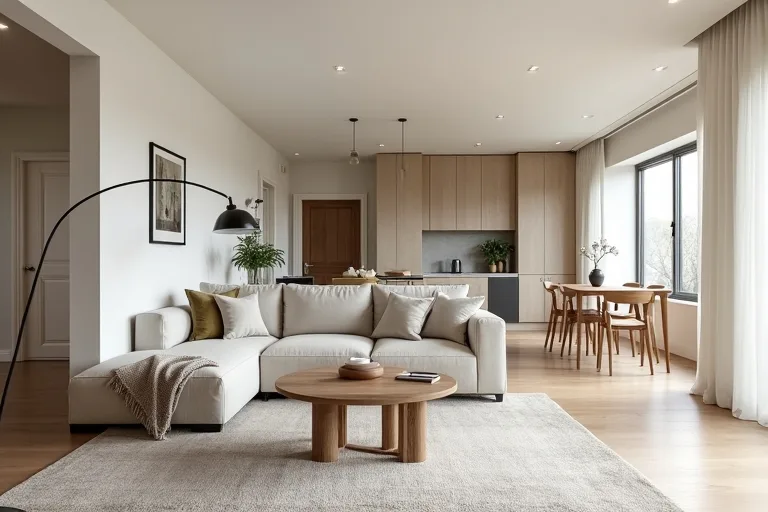
Once the rug defines the base of the room, lighting gives the space a second point of structure. In an open concept layout, a lamp can do more than brighten a corner. It can help mark the living zone, create visual balance, and make the seating area feel deliberately placed.
An arc floor lamp is especially useful when the room needs height on one side without adding another bulky piece of furniture. It can balance a low coffee table, a compact sofa, or a wide rug by bringing a clean vertical line into the layout.
Repeat a few finishes rather than introducing too many new ones. For example, if the coffee table has a warm wood tone, echo that tone in a tray, side table, or frame. If the room already has black metal in the lamp base or table legs, keep that detail consistent so the space feels connected.
The goal is not matching everything. It is giving the eye enough repetition to understand that the room belongs together.
A modern arc floor lamp for living room can be a practical anchor piece when the seating area needs a little more definition. If you are still refining the overall arrangement, the Living Room Ideas hub is a good place to compare related layout decisions in one place.
Check spacing, flow, and the pieces that still feel off
Even a good rug and lamp cannot fix a layout that blocks movement or forces awkward furniture spacing. In open concept rooms, the sightline is as important as the seating itself. The space should feel easy to move through without the living area losing its shape.
Start by looking at the furniture group from three angles: how it reads from the kitchen or dining area, how it works from the sofa, and how it feels when you walk through the room. If any one of those views feels off, the layout probably needs a small correction rather than a full redesign.
The cleanest rooms often have a simple hierarchy: one anchor, one supporting light source, and only a few materials repeated across the zone. When the room still feels unfinished, it is usually because one of those pieces is missing or undersized.
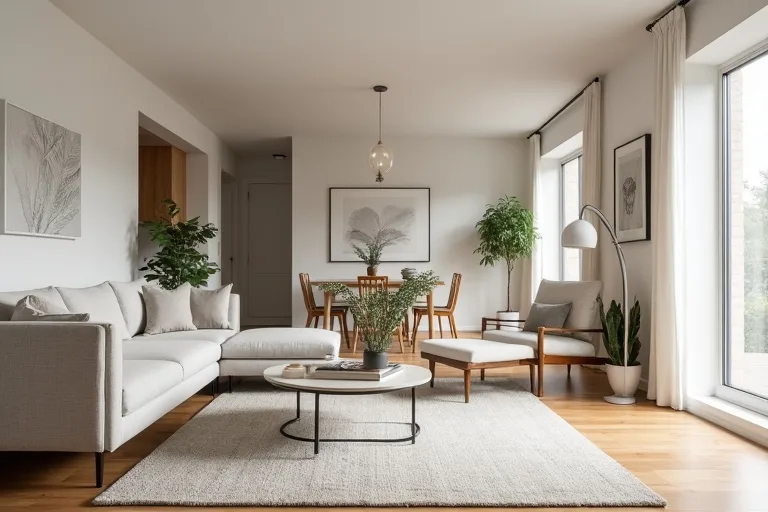
If the space still does not settle, step back and check the plan, not the styling. A room makeover planner can help you compare options before you buy the wrong size or the wrong piece. The Styling Homes tools page is a sensible starting point if you want to keep the process calm and structured.
Best next step
Before you buy a new rug, lamp, or side table, define the living zone on paper first. That makes it much easier to choose the right anchor piece and avoid filling the room with items that do not solve the layout problem.
- Choosing a rug before the seating zone has been mapped out.
- Using too many finishes, which makes the room feel busy instead of balanced.
- Adding decor before the room has a strong anchor piece.
- Ignoring traffic flow between the living area and the adjacent kitchen or dining space.
- Trying to fix a layout issue with accessories instead of adjusting scale or placement.
Open concept living rooms feel more finished when the seating area is clearly defined, the rug is the right scale, and the room has at least one strong visual anchor. If you keep the plan simple and repeat a few finishes, the whole space becomes easier to furnish and easier to live in.
Helpful next tools and planners
If you want to make the decision easier before you buy
These are useful if you are still deciding on scale, budget, or the first piece to anchor the room.
FAQ
What makes an open concept living room feel unfinished?
It usually happens when the seating area does not have a clear boundary. Without a defined rug zone, balanced lighting, and a strong anchor piece, the room can feel like furniture placed in a shared space rather than a complete living area.
Should the rug go under all the furniture?
Not always. The most important thing is that the rug makes the seating area read as one group. In many living rooms, having the front legs of the main pieces on the rug is enough to create that connection.
Do I need an arc floor lamp in an open concept room?
No, but it can help when you need visual height or a second anchor without adding a full-size furniture piece. It is especially useful when one side of the seating area feels empty or unbalanced.
What should I buy first if the room feels off?
Start with the plan, then the rug, then lighting. If the layout is still unclear, use a room planner or rug size calculator before buying anything else.
Three sensible next steps
Some links in this article may be affiliate links. Read more in the Affiliate Disclosure.