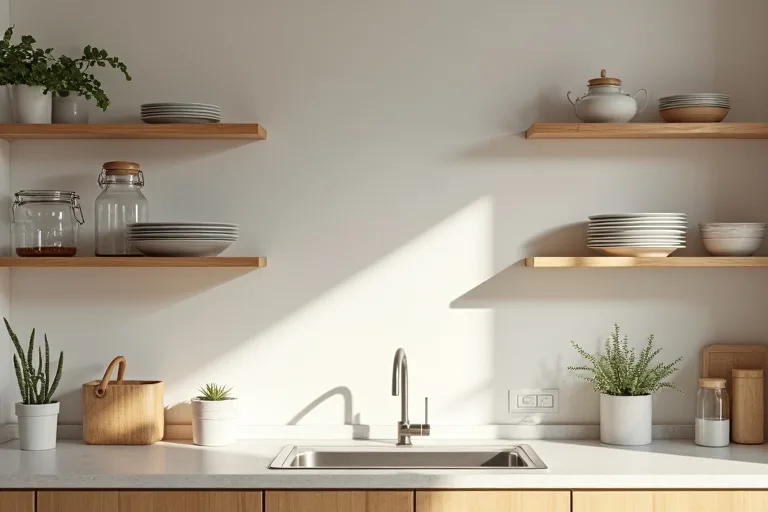
Open shelves look simple, but they work best when the practical parts are settled first. If you buy the shelves, decor, or nearby fixtures before checking the layout, the kitchen can end up feeling busier instead of calmer.
This checklist keeps the decision grounded. It helps you look at wall space, storage needs, shelf depth, and visual balance before you spend money on pieces that may not fit the room or your routine.
Check layout, storage needs, and shelf spacing first, then buy only the pieces that fit your kitchen and daily routine.
Start with the wall, not the shelf style
Open shelf kitchen ideas can look effortless, but the first question is never which shelf looks nicest online. It is whether the wall can support open storage without crowding the work area or interfering with cabinets, windows, lighting, or a sink run.
Measure the usable wall section carefully and think about what sits around it. A narrow strip above a busy counter will behave very differently from a full wall near a quiet prep area. If the shelves sit too close to the cooking zone or block natural movement, they will feel like clutter fast.

If you are planning shelves near a working zone, it helps to confirm the surrounding dimensions first. The Kitchen Island Size Calculator is useful when you want to understand circulation and how much room is actually available around the center of the kitchen. If your kitchen feels tight overall, start with the Room Layout Planner before you shop.
The real decision is not whether open shelves look good in a photo. It is whether they can hold the items you use often, stay easy to clean, and leave the room feeling open instead of exposed.
Decide what deserves to stay visible
Open shelving works best when it is selective. Some items are useful to keep close at hand, while others are better hidden in closed storage. The more honest you are about daily use, the easier the shelves will be to maintain.
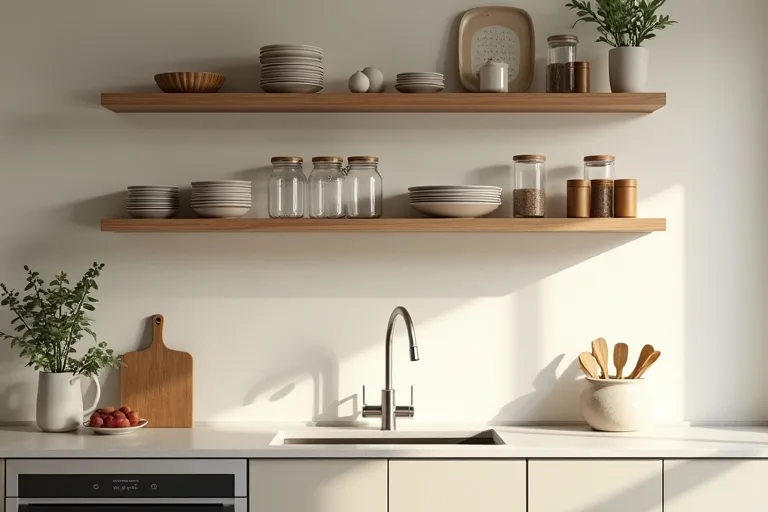
As a rule, open shelves suit the things you reach for often and do not mind seeing every day:
- Everyday dishes and mugs
- Glass jars with dry goods
- A small number of serving pieces
- A plant or two for softness
- One or two simple decorative objects
Items that are mismatched, bulky, or rarely used are usually better kept behind closed doors. The goal is not to display everything you own. It is to make the working part of the kitchen feel lighter and easier to use.
If you are also choosing seating or planning a connected dining area, the Dining Table Size Calculator can help keep the rest of the room from feeling squeezed by the kitchen update.
Choose shelf spacing and materials that fit daily use
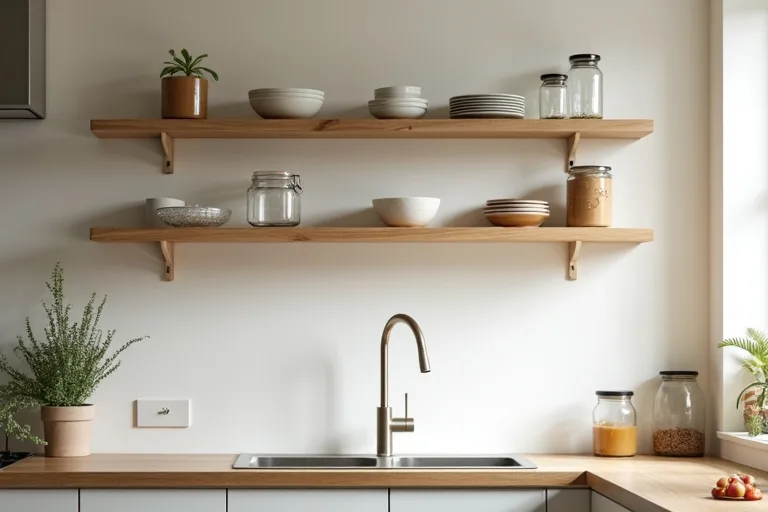
Good shelf spacing is what keeps open shelving useful instead of decorative only. Leave enough room for plates, glasses, and storage jars without stacking everything too high. If the shelves are too close together, the whole wall can start to look compressed.
Material choice matters too. Open shelves collect dust and show splashes, so the finish should be easy to wipe down and suited to the level of use the kitchen gets. A shelf that looks nice but is awkward to clean will quickly become something you avoid using.
Before you buy, check whether the shelves will work alongside the faucet, backsplash, and nearby light fixtures. A brushed nickel pull-down faucet, for example, can help the kitchen feel coherent when the shelf finish and other hardware stay simple. If you are comparing upgrades, a practical faucet like the pull down kitchen faucet brushed nickel is often easier to pair with open shelving than a more visually complicated option.
Open shelves also work better when the kitchen has enough breathing room around them. If the room is still in planning mode, a simple digital workbook such as the Room Makeover Planner, Home Layout Budget Spreadsheet (Digital Download) can help you keep track of layout choices and spending before anything arrives.
Match the shelves to the rest of the kitchen
Open shelving should feel like part of the room, not an add-on. That means looking at the shelves next to the cabinets, counters, lighting, and dining pieces already in view. If the kitchen has too many finishes competing with each other, the shelves will not calm the space the way you hoped.
Keep the color story simple. Repeating one or two materials usually works better than mixing several different tones. A small amount of contrast is useful, but the overall effect should still feel steady and practical.
If your kitchen opens directly into the dining area, the shelves and nearby seating should share the same sense of proportion. Upholstered chairs can soften a hard-working kitchen-adjacent space, but only if they belong in the room plan. For a broader furniture search, upholstered dining chairs set of 4 can be a useful comparison point once the dimensions are clear.
If you are still unsure how the shelves will affect the room, go back to the plan before you buy. Open shelving is easiest to live with when it supports the flow of the kitchen rather than competing with it.
Best next step
Before you order shelves, decor, or a fixture upgrade, confirm the room dimensions and how the open storage will sit in the layout. That one step can prevent most of the common mistakes.
- Buying shelves before checking wall space and clearance.
- Using open shelves for too many mismatched items.
- Choosing shelf depth that is awkward for everyday dishes or jars.
- Ignoring how the shelves will look next to faucets, lighting, and cabinets.
- Adding decor before storage needs are actually solved.
Open shelf kitchen ideas work best when the layout comes first and shopping comes second. Measure the wall, decide what should stay visible, choose practical materials, and make sure the shelves fit the rest of the kitchen before you buy anything. If you want a calmer decision, use a planning tool first and let the room lead the style.
Helpful next tools and planners
If you want to make the decision easier before you buy
These options are most useful after the layout is clear. Use the tools first, then keep the product choices simple and functional.
FAQ
Are open shelves a good idea in a busy kitchen?
Yes, if you keep them limited to items you use often and choose materials that are easy to wipe clean. They work best when the rest of the storage still handles the less attractive essentials.
How many items should I place on open kitchen shelves?
Only as many as the shelf can hold without looking crowded. A few everyday pieces usually create a calmer result than filling the whole surface.
Should open shelves replace all upper cabinets?
Usually not. A mix of open and closed storage is often more practical because it keeps the room lighter without removing all hidden storage.
What should I check before buying shelf decor?
Check the wall space, shelf depth, nearby finishes, and what you actually need to store. Decor should support the layout, not try to fix it.
Three sensible next steps
Some links in this article may be affiliate links. Read more in the Affiliate Disclosure.