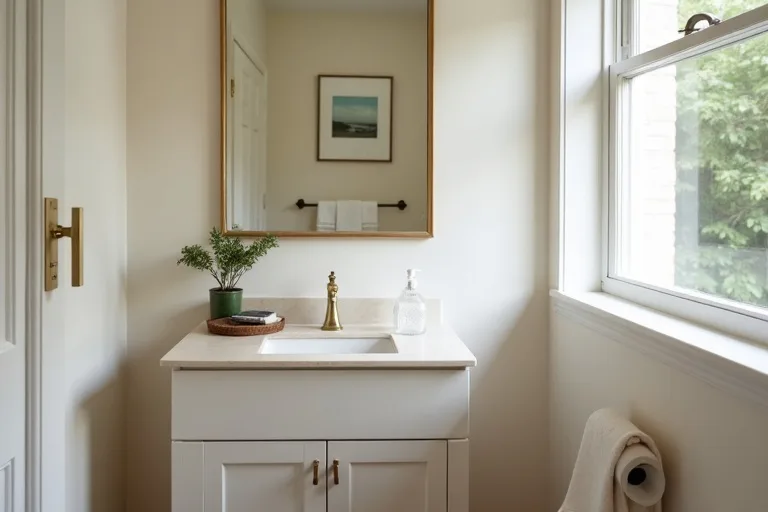
A powder room has a small footprint, but it still has to work hard. When the layout is tight, the light is flat, or every surface is trying to do too much, the room can feel awkward instead of calm.
The good news is that most powder room problems are easy to avoid once you know what matters first. Before you buy anything, look at clearance, lighting, storage, and scale so the room feels balanced and easy to use.
The biggest powder room mistakes are poor layout, weak lighting, too much clutter, and finishes that make the space feel smaller. If you get the spacing and lighting right first, the rest of the room becomes much easier to plan.
Start with layout and clearance
In a powder room, layout issues usually show up before anything else. A door that bumps into a vanity, a sink that feels too close to the wall, or a toilet that sits in an awkward position can make even a neat room feel cramped. Small spaces need breathing room, not just smaller furniture.
Before you choose finishes or decor, map out the fixed elements and check how the room will be used. Ask whether the door opens comfortably, whether the vanity leaves enough walking space, and whether there is a clear place to stand at the sink without brushing against every surface.
When you are planning a refresh, this is the stage where a layout tool helps most. It shows whether the room can actually support the ideas you have in mind, rather than forcing you to discover the problem after you buy the wrong pieces.
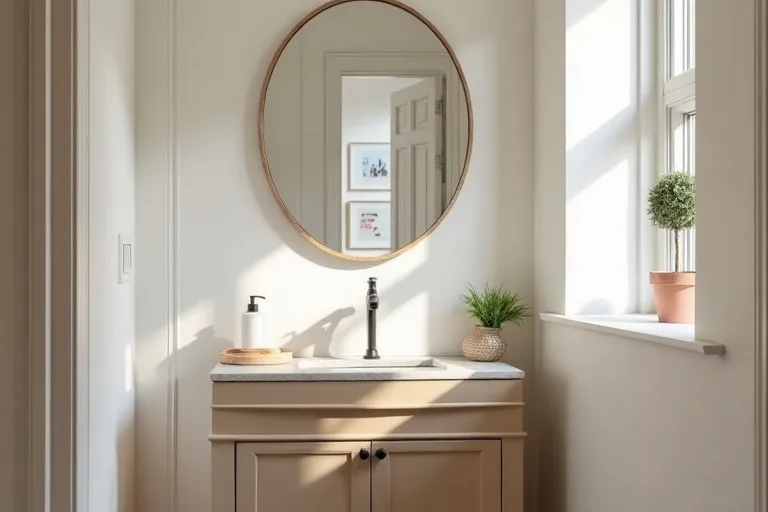
The real decision is not which finish looks nicest online. It is whether your powder room can handle the vanity size, door swing, and circulation you need without feeling crowded. If those basics are off, style choices will not fix the room.
Fix lighting before styling
Poor lighting is one of the fastest ways to make a powder room feel flat or unwelcoming. A single overhead fitting can leave shadows where you want softness, while overly cool light can make finishes look harsher than they are. In a small room, the goal is even light that supports the space instead of flattening it.
Think in layers where possible. A mirror light can help with daily use, while a ceiling fixture provides overall brightness. If you are using one strong source only, choose it carefully so it does not glare or create dark corners. Warm, balanced light usually suits a powder room better than anything overly bright or clinical.

- Check whether the mirror area is bright enough for daily use.
- Look at how shadows fall on the sink and side walls.
- Choose bulbs and fixtures that keep the room calm, not harsh.
- Make sure the light works with your wall color and mirror size.
Keep storage and surfaces simple
A powder room can go from tidy to cluttered very quickly. Because the room is small, even a few extra bottles, soaps, and trays can take over the visual field. That is why countertop planning matters so much: the less you can see, the calmer the room feels.
Use only the storage you actually need. A compact countertop organizer tray can be useful for keeping hand soap and a small hand towel in one place, but it should not become another layer of clutter. If you do not use a product every day, store it elsewhere. The surface should feel easy to clean and easy to reset.
Soft texture can help the room feel finished without adding more objects. A neutral fabric shower curtain set is not for every powder room, but in the right layout it can bring warmth and soften hard surfaces without making the room feel busy. The key is restraint: one or two useful pieces are enough.
For a clearer budget view, it also helps to separate what you need from what you simply want to change. If you are comparing a refresh against a fuller remodel, a planning spreadsheet or budget tool can show where the money is actually going before you start shopping.
Choose scale, color, and finishes with care
Scale matters more in a powder room than it does in a larger bathroom. A mirror that is too small can make the wall feel cut off, while a vanity that is too deep can crowd the doorway. The same is true for hardware and lighting: oversized pieces can overwhelm the room, but pieces that are too small may look accidental rather than intentional.
Color and finish choices should support the room size, not fight it. Dark walls can work, but they need good lighting and balanced materials. Too many competing finishes can make the space feel choppy, while a simple palette often helps the room feel more spacious and composed. If you want the room to feel softer, keep the contrast gentle and repeat materials instead of adding too many new ones.
The most effective powder rooms usually feel edited. They do not try to show everything at once. They rely on a few well-sized elements, calm color, and finishes that are easy to live with.

Best next step
If you are deciding whether your powder room needs a light refresh or a fuller update, plan the room first. A layout or budget check can show what fits, what should be replaced, and where a small change will make the biggest difference.
- Choosing a vanity or toilet without checking door swing and walking space first.
- Relying on one weak light source that leaves the room flat or shadowy.
- Letting countertop items spread across the room instead of giving them one place.
- Using too many finishes, colors, or decor pieces in a space that already feels small.
- Picking mirrors, fixtures, or hardware that are out of scale with the room.
A better powder room starts with the basics: clear layout, enough light, simple storage, and finishes that suit the scale of the space. If you handle those decisions first, the room will feel calmer and more intentional before you add a single decorative touch.
Helpful next tools and planners
If you want to make the decision easier before you buy
A few practical tools can keep a small bathroom update on track. Use them to compare layout options, check your budget, and avoid buying pieces that do not fit the room you actually have.
FAQ
What is the biggest mistake people make in a powder room?
Usually it is starting with style instead of layout. If clearance, door swing, and fixture size are not right, the room will feel awkward no matter how attractive the finishes are.
How do I make a powder room feel less cramped?
Keep the palette simple, reduce countertop clutter, use a well-sized mirror, and make sure the lighting is bright enough to open up the space without creating glare.
Do I need storage in a powder room?
Yes, but only enough to keep daily items out of sight. A small tray or closed storage can be enough if the room is mainly for guests and quick use.
Should I spend more on finishes or planning?
Planning first is usually the better use of time and money. When the layout and budget are clear, finish choices are easier to make and less likely to cause mistakes.
Three sensible next steps
Some links in this article may be affiliate links. Read more in the Affiliate Disclosure.