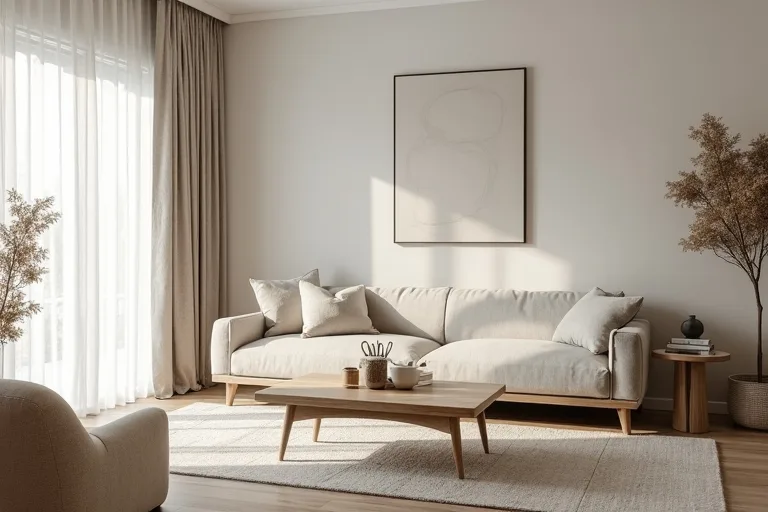
Scandinavian interiors usually look calm because the room plan is doing most of the work. Light, space, and restraint matter more than filling every surface with the “right” objects.
The style starts to feel forced when the room is overmatched, overdecorated, or stripped back without enough warmth or function. A few clear decisions usually fix that faster than buying more decor.
Scandinavian style feels forced when the room is too matched, too bare, or too decorated without a clear layout plan. The easiest fix is to simplify the palette, keep the materials soft and natural, and make sure the furniture scale and circulation suit the room before adding finishing pieces.
Start with the right kind of simplicity
Scandinavian design works best when the room feels considered but not arranged to death. The goal is not perfect symmetry or a strict list of matching pieces. It is a space that looks easy to live in, with enough openness to let the light and the materials breathe.
That usually means fewer items, lighter visual weight, and a layout that leaves clear paths through the room. If the furniture is crowded together or every surface is styled in the same way, the room can lose the quiet, practical feeling that makes the style work.
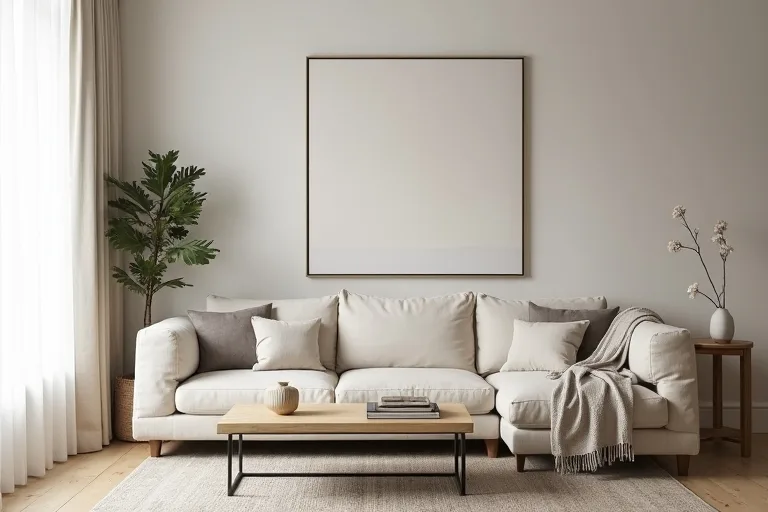
If you are planning a room from scratch, start with the functions first: where people sit, where they walk, where storage belongs, and how much visual space the room needs to feel clear. That approach is more reliable than choosing decor and hoping the style will come together later. If you are working on a bedroom, the same idea applies. A calm layout often matters more than adding more soft furnishings, and you can use the Bedroom ideas hub for a more focused room-by-room starting point.
If the room looks “styled” but not comfortable, ask one question: does the layout support daily use, or is it mostly built around matching finishes and decorative repetition? If the answer is unclear, the room probably needs editing rather than more shopping.
Avoid the neutral-on-neutral trap
Many Scandinavian rooms go too far in one direction: beige on beige, white on white, pale wood everywhere, then a few carefully chosen objects that still do not create much contrast. The result can feel flat and unfinished, even when every piece is technically on style.
The fix is not adding colour everywhere. It is adding enough variation in texture, tone, and shape so the room has depth. Linen, wood grain, matte ceramics, woven materials, and a slightly darker accent can do more for the room than another pale cushion or matching vase.
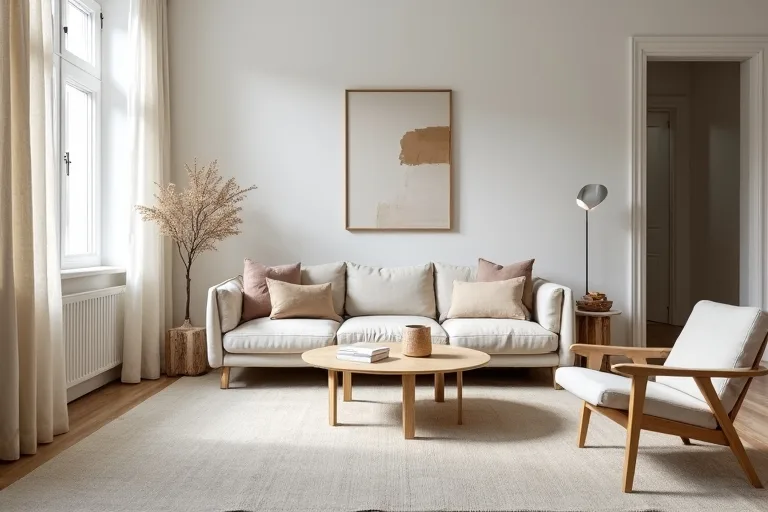
Two finishing pieces can help a room settle without making it feel busy: linen curtain panels neutral and a neutral abstract wall art framed set. Used well, they soften the room and give it a quieter focal point. Used alone, they will not fix a poor layout or a room that is missing contrast.
Watch materials, scale, and circulation
Scandinavian style is often copied as a look, but it really depends on how the room moves. If chairs block the path, the rug is too small, or storage has nowhere to go, the style can feel stiff no matter how good the color palette is.
Scale matters here. Oversized furniture can make a Scandinavian room feel heavy, while pieces that are too small can make it look tentative and fragmented. The goal is a room where the main items relate to each other clearly and the space between them feels intentional.
- Check the walking route first.
- Choose the main furniture based on room size, not just style.
- Leave enough visual breathing room around each piece.
- Add storage where clutter actually lands, not where it looks decorative.
If the room is small, this becomes even more important. A compact Scandinavian scheme can look calm and open, but only when the proportions are right. A planning tool is often more useful than another inspiration search. For a practical next step, the Room Layout Planner can help you test spacing before you commit.
Edit with fewer, better decisions
Once the room has a workable layout, the final styling should be light-handed. Keep the pieces that support the room and remove the ones that only repeat the same idea. In Scandinavian interiors, restraint is not emptiness. It is editing.
That usually means choosing one clear wall moment, one or two natural textures, and a few everyday objects that belong there. A single framed print can be enough if the room already has balance. A tray, a lamp, or a woven basket can be useful if it solves a real storage or function problem.
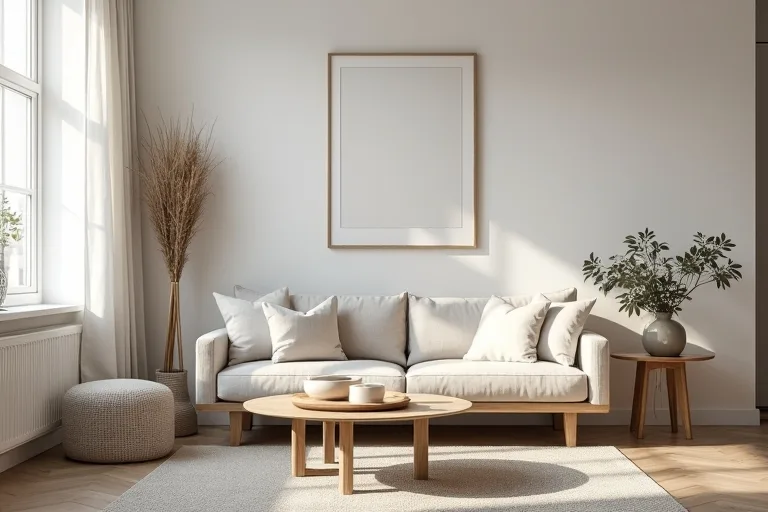
If you want a less guesswork-driven way to make those decisions, a simple planning system helps. The Home Planning System Bundle, Room Makeover, Small Space, Budget Tool (Digital Download) can be useful when you are trying to map the room before buying more decor. It is especially helpful if you are balancing style, budget, and spacing at the same time.
Best next step
If the room still feels uncertain, stop and confirm the direction before you shop. A clearer plan usually saves money and makes the style feel more natural.
- Using too many matching neutral finishes until the room loses contrast.
- Styling before the layout is settled, which makes the room feel forced.
- Choosing decor that looks right online but does not suit the scale of the room.
- Mixing in heavy or overly polished pieces that fight the softness of the style.
- Ignoring storage, which lets clutter undo the calm look.
- Adding more accessories instead of editing what is already there.
Scandinavian interior design feels natural when the room is planned around light, circulation, scale, and a restrained mix of materials. If it feels forced, the problem is usually not the style itself. It is the order of decisions. Get the layout right first, then add only the pieces that support the room.
Helpful next tools and planners
If you want to make the decision easier before you buy
These options are best used as planning support, not as a replacement for the room plan. Start with clarity, then choose the pieces that fit the space.
FAQ
Why does Scandinavian style sometimes look cold instead of calm?
Usually because the room has too little texture, too little contrast, or too much empty white space without enough warmth in the materials.
Do all Scandinavian rooms need white walls?
No. Light walls help, but the style works best when the whole room feels balanced, not when every surface is the same shade.
What should I fix first if the room feels forced?
Start with layout and scale. If the furniture placement and proportions are wrong, styling will not solve it.
Can I mix Scandinavian style with other design styles?
Yes, as long as the mix stays simple and the room still feels light, functional, and uncluttered.
Three sensible next steps
Some links in this article may be affiliate links. Read more in the Affiliate Disclosure.