
If a small living room feels hard to furnish, the problem is usually not style. It is order. Without a clear plan, it is easy to buy pieces that look good alone but fight the room when they arrive.
This checklist keeps the decision simple. Measure the room, define the walking space, choose one anchor, and only then decide on furniture and storage. That sequence saves money and reduces the chance of ending up with a room that feels crowded.
Check the layout, measure the room, size the rug, and plan storage before you buy anything.
Start with the room problem and what to measure
Before you compare sofas, side tables, or storage units, write down what is not working in the room. In a small living room, the issue might be that there is no clear seating zone, not enough closed storage, or awkward space around a doorway. The right purchase depends on which problem you are solving.
Then measure the room in a way that helps you shop. Note the full length and width, the position of windows and radiators, any fixed features, and the exact width of entries and openings. If the room has an odd shape, sketch it roughly on paper or in a planner. That makes it much easier to compare furniture options honestly.
If you want to make the layout clearer before you start buying, use the room layout planner to map the room first. It is easier to spot what fits when the room is on screen or paper instead of in your head.
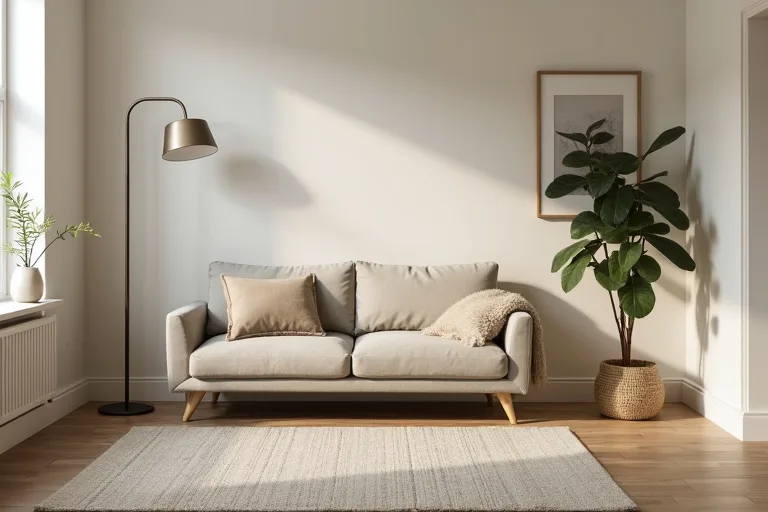
If you cannot answer these three questions, do not buy yet: where will people walk, what is the room’s main anchor, and what needs to be stored out of sight?
Check walking paths and furniture clearances
A small room can handle less furniture than you think, but it cannot handle blocked movement. The goal is not to fill every corner. The goal is to keep the room usable.
Before buying anything, think through how you enter the room, move toward the sofa, reach a window, or open a door. Leave enough space for everyday movement, and avoid pieces that force you to turn sideways each time you pass through.
- Identify the main path through the room.
- Mark any door swing, fireplace edge, or radiator that cannot be blocked.
- Check where a coffee table or ottoman would sit without interrupting movement.
- Make sure storage doors, drawers, and baskets can open fully.
If you are unsure whether the room can support the furniture you want, the rug size calculator is a simple place to start. Once the rug size makes sense, the rest of the layout becomes easier to judge.
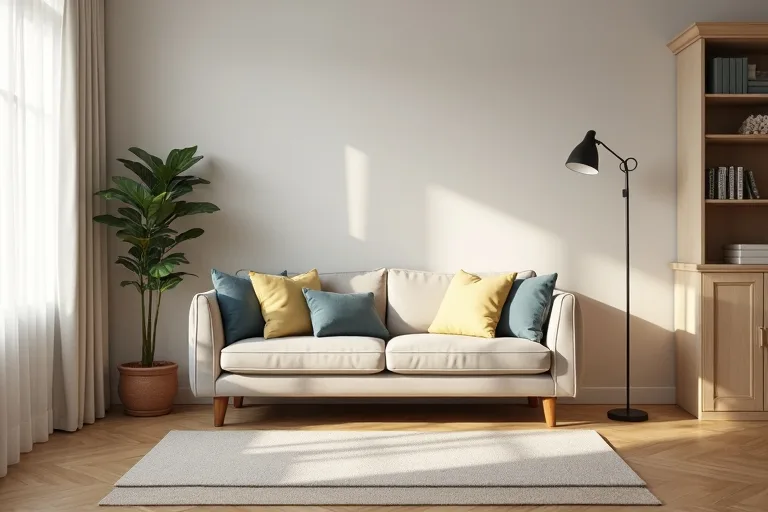
Confirm the anchor piece before you shop
In a small living room, the anchor piece sets the scale for everything else. Most often, that anchor is the rug. It defines the seating zone and helps you see whether a sofa, chair, or table is likely to sit comfortably in the space.
A rug that is too small makes the room feel disconnected. A rug that is closer to the right size helps the layout feel intentional, even if the furniture is modest. That is why it makes sense to decide on the rug before you commit to storage pieces or extra seating.
Use the rug size calculator to narrow the options, then compare the result with the furniture you already own. If you are still planning the room from scratch, the calculator helps you avoid choosing a sofa or table that overpowers the space.
For a simple buying option, an 8×10 neutral living room area rug can work as a calm starting point when the room needs a clear visual base. Neutral does not mean bland; it often means easier to live with while you sort out the rest of the layout.
Plan seating, storage, and lighting together
Once the anchor is set, the rest of the room can be decided in a more sensible order. Start with seating scale, then storage, then lighting. That sequence keeps the room from becoming overcrowded with individual pieces that do not relate to each other.
For seating, a smaller sofa plus one chair may be enough. In some rooms, two smaller pieces are easier to place than one large sectional. For storage, think about what needs to be hidden and what can stay visible. Closed storage is useful for clutter, while open shelves or a tray can keep the room from feeling heavy.
Lighting matters more than many people expect in a small room. A slim floor lamp can add light without taking up much visual space. If you need one that fits a straightforward layout, a modern arc floor lamp for living room may suit a compact corner where table space is limited.
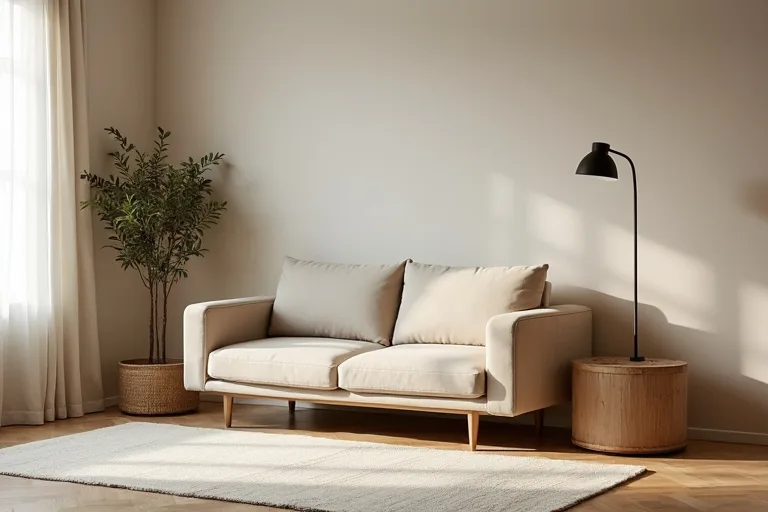
If you want to budget the room update before buying, the Room Makeover Planner, Home Layout Budget Spreadsheet can help you keep furniture, storage, and small extras in one place while you compare options.
Best next step
If the room still feels hard to picture, begin with the rug. It is the easiest anchor for defining the seating area and deciding whether the furniture you want will fit the room without crowding it.
- Buying a sofa before deciding where the room’s main walking path goes.
- Choosing a rug that is too small to hold the seating area together.
- Adding storage before checking whether doors and drawers can open cleanly.
- Filling every corner so the room feels tighter than it needs to.
- Mixing too many individual pieces instead of choosing one clear layout anchor.
Small living room ideas work best when you decide the layout before you shop. Measure the room, protect the walking paths, choose the rug size first, and then build seating, storage, and lighting around that anchor. If you want a calmer way to start, use the rug size calculator first, then move to the room layout planner before making any purchases.
Helpful next tools and planners
If you want to make the decision easier before you buy
These are the most useful next steps when you are trying to turn a small room into a workable layout. Start with the tool that matches where you are in the process, then use the planner if you need a clearer budget and shopping list.
FAQ
What should I measure first in a small living room?
Start with the full room dimensions, then note openings, fixed features, and the space needed for walking paths. That gives you a more realistic view of what can fit.
Should I buy the sofa or the rug first?
In most small rooms, the rug is the better first anchor because it defines the seating area and helps you judge scale before you commit to larger pieces.
How do I know if a storage piece is too big?
If it blocks movement, crowding door swings, or leaves no clean space around it, it is too large for the room even if the measurements technically fit.
What if I want the room to hold more than one function?
Choose one clear main function, then add only the extra pieces that support it. A small living room works better when each item earns its place.
Three sensible next steps
Some links in this article may be affiliate links. Read more in the Affiliate Disclosure.