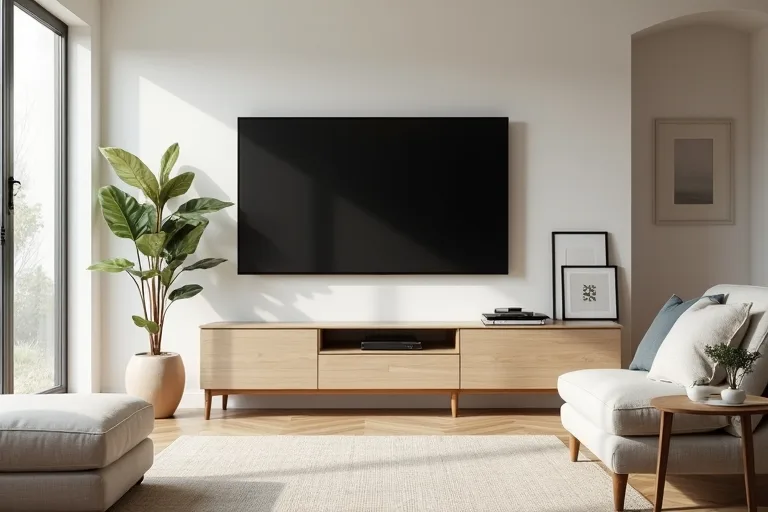
A TV wall can look pulled together with only a few good decisions, or it can feel like the rest of the room was arranged around an afterthought. The difference is usually not about buying more decor. It is about scale, alignment, and whether the screen fits the room plan.
If a living room feels random or flat, the TV wall is often where the problem starts. Once the screen size, mounting height, and nearby furniture are working together, the room usually feels calmer right away.
Most TV walls feel flat when the TV, wall, and surrounding decor are not sized or aligned as one layout. Fix the height, check viewing distance, and give the screen a clear visual frame before adding more styling.
Why TV walls look unfinished
A TV wall usually feels unfinished for one simple reason: the eye cannot tell what the main structure is. The TV may be centered on the wall, but if the console is too small, the seating is off angle, or the decor is scattered, the whole wall starts to look accidental.
This is especially common in living rooms where the TV was added after the furniture. The screen becomes the starting point, but the room still needs a layout that makes the wall feel deliberate.
Start by looking at the wall as a complete composition. The screen, console, artwork, lighting, and seating should all support the same center of attention. If one part feels oversized or disconnected, the wall reads as unfinished instead of intentional.
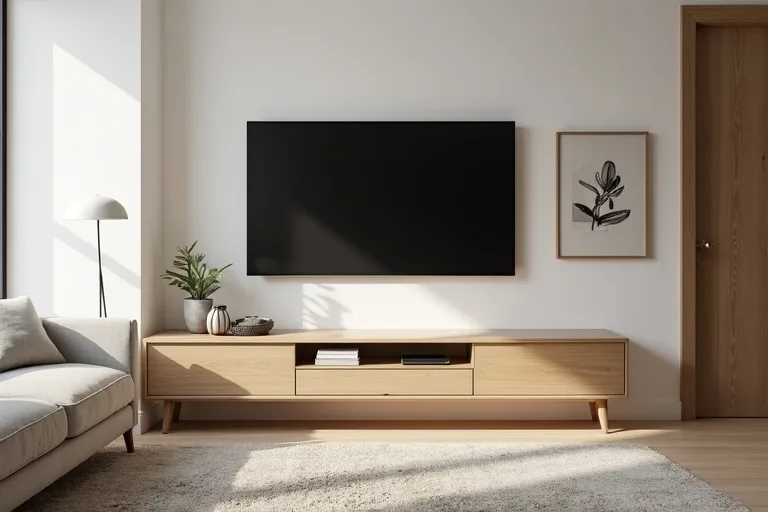
Ask one question before adding more decor: is the TV wall lacking structure, or is it already structured but missing finishing touches? If the layout is wrong, styling will not fix it. If the layout is right, a few restrained details can finish the room.
Getting the height, mount, and screen position right
One of the most common TV wall mistakes is mounting the screen based on the wall alone instead of the seating position. A TV that sits too high can make the room feel awkward, while one placed too low may look compressed. The right height depends on how you actually use the room.
The mount matters too. A fixed mount can work well when the sofa and TV are in a direct line. A full motion tv wall mount gives more flexibility when the seating is angled, the room has glare, or the viewing position changes from one side of the room to another.
- Check the main seating position first, not the wall alone.
- Confirm how far the sofa sits from the screen.
- Decide whether the TV needs to tilt or swivel for comfortable viewing.
- Only then choose the mount and final height.
If you want a simple way to make that decision, use the TV Size Distance Calculator before you buy the mount or commit to a location. It is much easier to style a TV wall after the screen is correctly sized for the room.
Balancing the wall around the TV
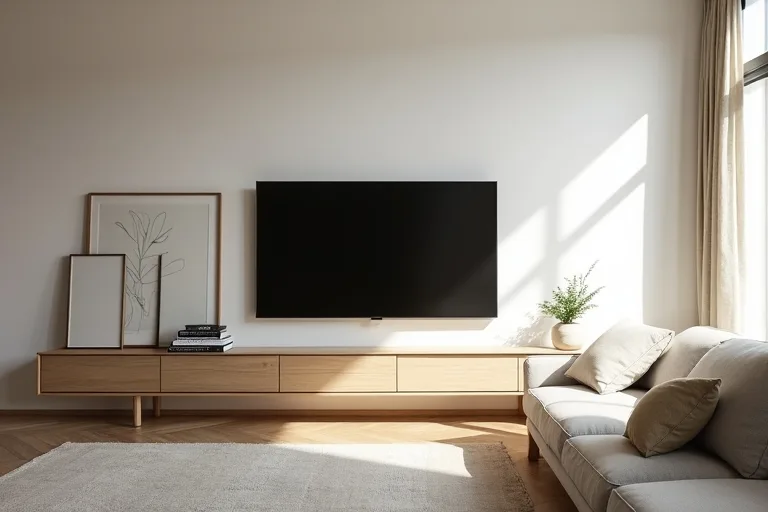
A TV wall often feels flat when the screen is the only visual weight on the wall. The answer is usually not to cover every inch. It is to give the TV some company in a controlled way so the wall feels balanced rather than bare.
One of the easiest fixes is to use art or shelving to create a quieter frame around the screen. A set of neutral framed wall art set for living room can work well when the goal is to soften the TV wall without competing with it. Keep the framing simple and the palette close to the room’s main finishes.
Good balance usually comes from restraint. Too much decor makes the wall look busy, but too little leaves the TV floating in space. If the room already has strong pieces elsewhere, the TV wall may only need one or two supporting elements.
Finishing the wall without overdoing it
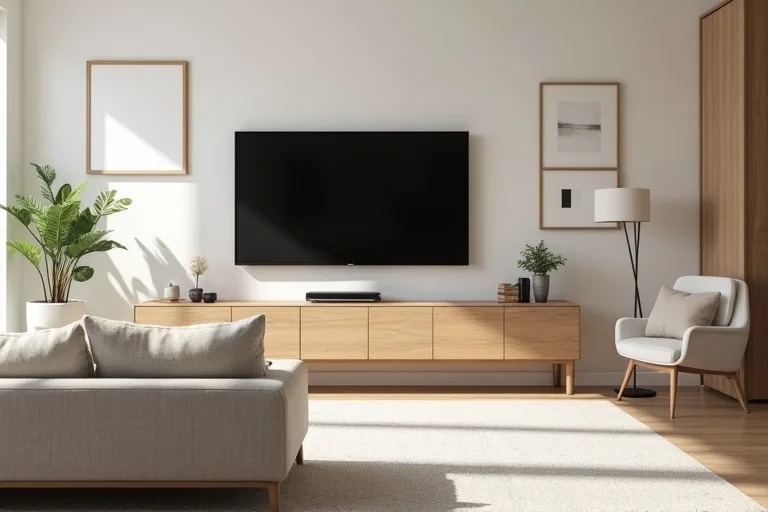
The final step is where many TV walls go wrong. People notice the wall feels plain and start adding objects one by one, but without a plan the result can feel crowded instead of finished. A better approach is to choose one clear finishing layer: art, lighting, texture, or a simple console arrangement.
Light is especially useful because it adds depth without adding visual noise. A lamp on a nearby table, a wall light, or even a softer glow from the console area can help the TV wall feel integrated into the rest of the room.
If you need a way to map the room before you buy anything else, the Room Layout Planner can help you see how the TV wall connects to seating, circulation, and the rest of the furniture. That is usually where the room starts to feel more intentional.
A simple room plan also keeps the shopping list under control. If the layout is working, you may only need one finishing detail instead of a full wall refresh.
Best next step
Before you buy another shelf, frame, or mount, confirm the screen size, viewing distance, and mounting height. That one decision will tell you whether the wall needs a layout fix or just a styling pass.
- Mounting the TV before checking the sofa distance and viewing angle.
- Choosing a console or art piece that is too small for the wall.
- Adding decor in layers without deciding on a clear visual balance.
- Using too many small objects, which makes the wall feel busy.
- Ignoring glare, seating position, or the way people actually use the room.
- Styling the wall before the TV size and layout are confirmed.
A good TV wall is less about decoration and more about alignment. When the screen size, mount height, seating distance, and surrounding pieces all work together, the room stops feeling random and starts feeling planned.
If you want the calmest route, begin with sizing, then shape the layout, and only then decide how much styling the wall really needs.
Helpful next tools and planners
If you want to make the decision easier before you buy
A few practical tools can save you from ordering the wrong screen, mount, or furniture scale. Use the calculator first, then the planner, and only then decide whether a product bridge makes sense.
FAQ
What makes a TV wall feel random?
It usually happens when the TV is placed without enough attention to scale, seating, and the surrounding wall elements. The screen may be mounted correctly, but the rest of the wall does not support it.
Do I need art around a TV?
Not always. If the wall already has strong structure from the console, built-ins, or lighting, the TV may not need much else. If the wall feels empty, a small amount of neutral art can help.
Is a full motion mount worth it?
It is useful when the viewing angle changes, glare is a problem, or the seating is not perfectly centered. If the TV faces one main sofa head-on, a fixed mount may be enough.
What should I plan first: the TV or the furniture?
Plan both together. The TV size and mount should work with the seating distance, and the furniture should support the wall instead of competing with it.
Three sensible next steps
Some links in this article may be affiliate links. Read more in the Affiliate Disclosure.