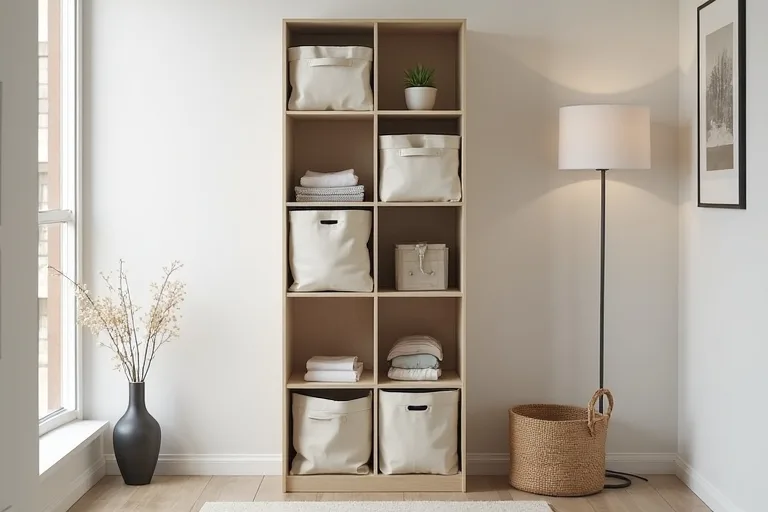
Vertical storage can make a small room feel calmer, but only if it fits the wall, the floor plan, and the things you actually need to store. A shelf that looks efficient in a photo can still block a door, crowd a walkway, or leave you with bins that are the wrong depth for the job.
This checklist keeps the decision simple. Measure first, sort your items by use, then choose the storage type that works with the room instead of against it.
Measure the wall, check clearance, and match the storage type to what you need to store before buying anything.
Start with the wall, not the product
Before you compare bins, shelves, or cabinets, look at the wall you want to use. Vertical storage works best when it is sized to the actual space available, not the idea of the space. A narrow wall beside a door needs a different solution from a full-height living room corner or an entryway alcove.
Start by noting the usable wall width, the full wall height, and anything that interrupts the space: skirting, outlets, switches, radiators, vents, windows, or trim. Then think about the floor area you can spare in front of the unit. The more compact the room, the more important that floor footprint becomes.
If you are planning a bigger room update at the same time, it helps to map the whole layout before you buy storage. The Room Layout Planner is useful when you want to see how storage, seating, and circulation fit together.

If you cannot move comfortably past the storage unit, the wall is too crowded even if the dimensions technically fit. Leave enough space for doors to open, bins to slide out, and daily movement to stay easy.
Choose open, closed, or mixed storage
The best vertical storage depends on what you are storing and how often you need to reach it. Open shelves are useful when items are used often and need to stay visible. Closed cabinets are better when you want visual calm or need to hide mixed household items. Cube storage sits between the two, which is why it often works well in small rooms.
A simple way to decide is to sort your items into three groups:
- Everyday items: things you reach for often, such as bags, books, toys, or chargers.
- Occasional items: things you use sometimes, such as seasonal accessories or spare linens.
- Hide-away items: things that look messy when left open, even if they are useful.
If you need a flexible option, an 8 cube storage organizer is often a practical middle ground. You can use it open, add bins to part of it, and adjust the look as your storage needs change. For a tidier finish, the fabric storage bins set for cube organizer can help separate small items without making the whole unit feel heavy.
For people who want a room plan on paper first, the Small Space Furniture Planner, Room Layout Spreadsheet (Digital Download) can be a useful way to test storage ideas before buying anything.
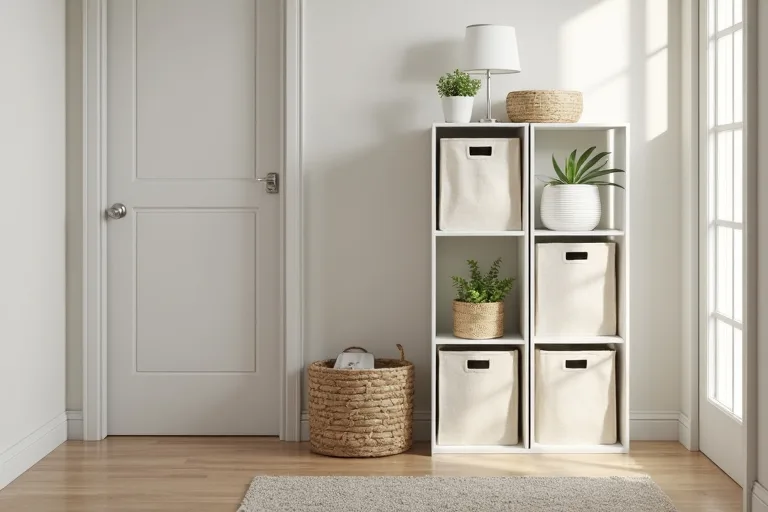
Check clearance, weight, and access
Many storage mistakes happen because the unit fits the wall but not real life. A shelf may be deep enough for the bins you want, but too deep for the walkway. A cabinet may hold enough, but its doors may swing into the room. A tall unit may look slim, yet still feel awkward if items stored at the top are hard to reach safely.
Before you buy, check these points carefully:
- Depth: Make sure the unit does not push too far into the room.
- Door swing: Leave space for cabinet doors, nearby room doors, and drawers.
- Reach: Keep the items you use most between waist and shoulder height when possible.
- Weight: Heavier items need a sturdier shelf or cabinet than decorative storage does.
- Access: Bins should slide out easily without lifting or twisting.
If you are pairing storage with other furniture, checking dimensions together can save you from a cramped result. The Sofa Size Calculator is helpful when the same room also needs seating and you want to protect walkway space.
Match the layout to the room
Vertical storage is not only about height. It is about where the storage sits in relation to the rest of the room. In an entryway, a tall narrow unit can handle shoes, bags, or seasonal extras without taking over the floor. In a living room, a cube organizer can work as both storage and a visual divider if it stays low enough to preserve light and openness. In a bedroom, closed storage often creates a calmer result than open shelves.
Think about the room in layers: what needs to stay clear, what can sit against a wall, and what should remain easy to reach. That keeps the layout practical and reduces the chance of buying storage that forces the rest of the room to adjust around it.
A unit like the 8 cube storage organizer can be a strong choice when you need one piece to do several jobs. It can hold bins, books, toys, or folded items without demanding a full built-in cabinet. If you want to soften the look, fabric inserts can help the unit feel more finished and less utility-focused.
Best next step
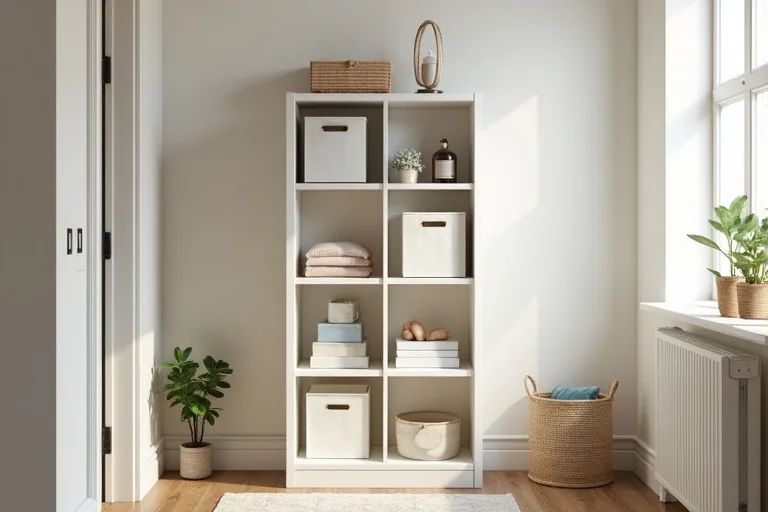
If you want to avoid buying the wrong unit, map the wall and the surrounding furniture first. The Room Layout Planner helps you test where bins, shelves, or cabinets can actually work before you spend money.
- Buying storage before measuring wall width and height.
- Choosing a unit that blocks a door, outlet, or walkway.
- Using open shelves for items that look cluttered unless hidden.
- Picking bins that do not fit the shelf depth or opening size.
- Overloading a unit with heavier items than it was meant to hold.
- Ignoring how the storage will affect the rest of the room layout.
The smartest vertical storage choice is the one that fits your wall, clears your walkways, and suits what you store most often. Measure first, decide whether you need open or closed storage, and check clearance before you buy. That approach usually leads to a calmer room and fewer returns.
Helpful next tools and planners
If you want to make the decision easier before you buy
These are the most useful next steps when you are planning vertical storage in a small space. Start with the layout, then compare products once the fit is clearer.
FAQ
How do I know whether I need shelves or a cabinet?
Choose shelves when you want visibility and quick access. Choose a cabinet when you want a calmer look or need to hide mixed items. If you need both, a cube unit with bins can work well.
What should I measure before buying vertical storage?
Measure wall height, usable wall width, depth available on the floor, and any obstacles such as outlets, doors, windows, or radiators.
Are cube organizers good for small spaces?
Yes, when the size fits the wall and the items inside are organized. They are especially useful when you want one piece that can stay open or take bins later.
What is the safest first step if I am not sure what will fit?
Map the room layout first. A planner or sizing tool is usually more useful than shopping right away, especially in a tight room.
Three sensible next steps
Some links in this article may be affiliate links. Read more in the Affiliate Disclosure.