Small bedroom decisions are rarely about style first. They are usually about whether the room feels crowded, whether storage is easy to use, and whether the layout gives you enough breathing room to live in it without constant clutter.
The cleanest fix is often not a full makeover. In many rooms, a few budget changes solve the problem well enough. But if the room still feels tight after you clear the floor and simplify the layout, a bigger space-saving upgrade may be the better use of money.
Start with hidden storage and layout fixes; upgrade only if the room still feels cramped after clearing floor space. In other words, remove what is visually blocking the room before you replace furniture.
What budget fixes can solve fast
Budget-friendly small bedroom ideas work best when the room is already mostly functional, but feels messy, tight, or visually busy. In that case, the goal is not to add more furniture. It is to make the room work harder without making it look fuller.
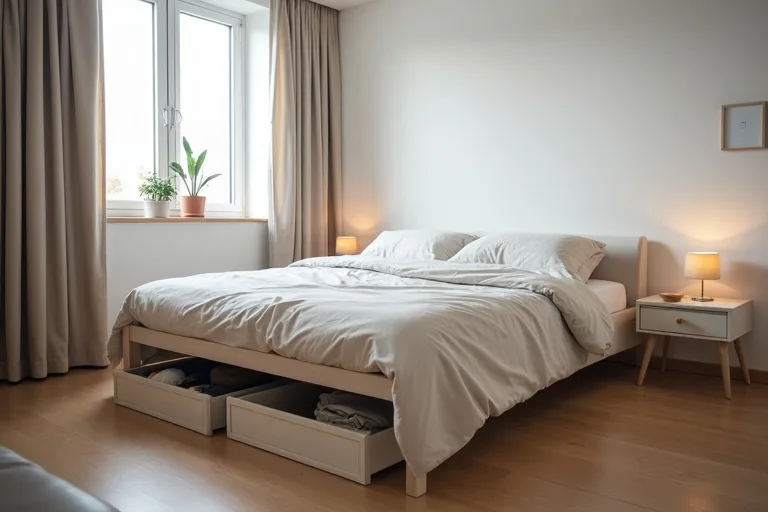
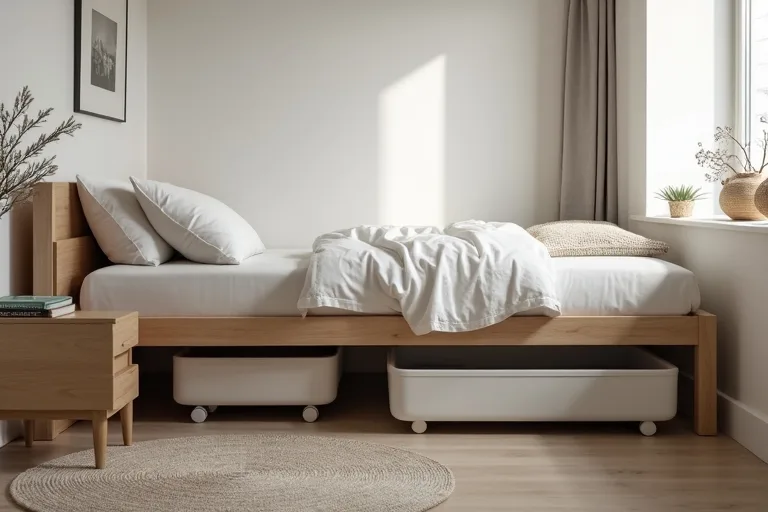
The most useful low-cost changes are the ones that reduce visual clutter. A bed with room underneath can hold storage containers. A narrow nightstand can keep bedside items contained without taking much floor space. Even a simpler layout can make the room feel larger if it gives you a clearer path around the bed.
For many bedrooms, that means starting with what you already own. Remove anything that does not earn its place, group smaller items into drawers or boxes, and keep surfaces clear. If a room feels calmer after that, you may not need a major purchase at all.
If the bed, dresser, and door swing already leave enough clear walking space, the room probably needs better storage organization before it needs new furniture. If moving around the room still feels awkward after clearing surfaces, the layout is the issue.
When a bigger upgrade starts to pay off
Sometimes the cheaper fixes help, but not enough. That usually happens when the room has one of three problems: bulky furniture, poor circulation, or too little concealed storage. In those cases, a space-saving upgrade can make the room easier to use every day.
A bigger upgrade does not have to mean a full renovation. It may simply mean replacing oversized bedside tables, choosing a bed frame with integrated storage, or using a more deliberate layout so the room stops wasting its corners and edges.
The rule is simple: if the room only feels crowded because the surfaces are busy, budget fixes are probably enough. If the room feels crowded because the furniture itself is too heavy or too large for the space, a smarter purchase may save more frustration than a series of small adjustments.
Before buying, step back and ask whether the room needs:
- less visible clutter,
- better use of under-bed or vertical space,
- smaller furniture footprints, or
- a new layout that improves walking space.
How to choose hidden storage that actually helps
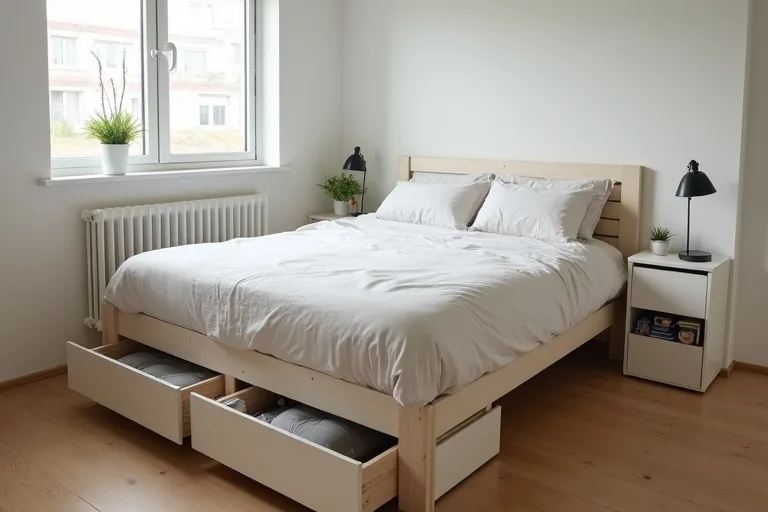
Hidden storage is one of the most practical ways to improve a small bedroom because it protects floor space and keeps visual clutter down. The best choices are the ones you can access easily, without turning storage into a daily chore.
Under-bed storage containers with wheels are a good example. They work best when the bed has enough clearance and the items stored there are things you do not need every day, such as spare bedding, seasonal clothing, or backup linens. If the containers are hard to pull out, they will quickly become dead space.
Bedside storage should be just as thoughtful. A nightstands set of 2 bedroom can help if you need matching compact pieces on both sides of the bed, but only if the footprint stays narrow and the drawers or shelves are genuinely useful. In a small room, size matters more than symmetry.
If you want a simple planning tool before you buy, a room budget spreadsheet can help you compare what you already own against the cost of a better layout. That makes it easier to decide whether one stronger purchase is more useful than several smaller ones.
Choose storage based on access, not just capacity. If you cannot reach it easily, or if opening it blocks circulation, it will not solve the layout problem for long.
Measure first, then buy
The fastest way to overspend in a small bedroom is to buy furniture before checking the room layout. A piece can look compact online and still overwhelm the space once it is placed beside the bed, dresser, and doorway.
Before you purchase anything, measure the bed, the wall length beside it, the depth of the closet door swing, and the space you need to walk comfortably. Then map where storage belongs: under the bed, beside the bed, or above it. That quick check often makes the right choice obvious.
If you want to keep the process calm, use a planner instead of guessing. A simple layout worksheet can show whether your room needs better storage distribution, smaller furniture, or a cleaner spending plan.

Best next step
If you are still deciding between a budget fix and a bigger upgrade, map the room first. A layout planner or budget spreadsheet will show where storage, circulation, and furniture size are actually working against you.
- Buying storage first, then discovering it blocks the room.
- Choosing furniture by width alone and ignoring depth and clearance.
- Using every flat surface for storage, which makes the room feel busier.
- Relying on large furniture to solve a layout problem that should be solved with smaller pieces.
- Keeping items under the bed that you need too often, which makes storage harder to use.
Budget fixes are the right starting point when the room mainly needs decluttering and smarter use of hidden storage. A bigger space-saving upgrade makes sense when the furniture itself is the problem or when the layout still feels cramped after you clear the floor. Measure first, then choose the smallest change that truly improves how the room works.
Helpful next tools and planners
If you want to make the decision easier before you buy
These options fit the planning stage: one storage product for hidden capacity, one compact bedside option, and one budget tool to help you compare the cost of different room setups.
FAQ
What is the cheapest way to make a small bedroom feel bigger?
Start by clearing visible clutter, reducing bulky bedside pieces, and using hidden storage under the bed or in drawers. A room often feels larger as soon as the floor and surfaces stop competing for attention.
Are space-saving furniture upgrades worth it in a small bedroom?
Yes, if your current furniture is too large, too deep, or not storing enough. The best upgrades save floor space and reduce the number of items you need to manage.
Should I buy under-bed storage or a new dresser?
If the room already has enough furniture, under-bed storage is usually the more efficient first move. A new dresser only makes sense if you have the floor space and the old storage is genuinely failing.
How do I know if my room needs a full layout change?
If you still have awkward circulation after decluttering and simplifying bedside storage, the layout probably needs a rethink. Measure first so you can confirm the problem before replacing furniture.
Three sensible next steps
Some links in this article may be affiliate links. Read more in the Affiliate Disclosure.