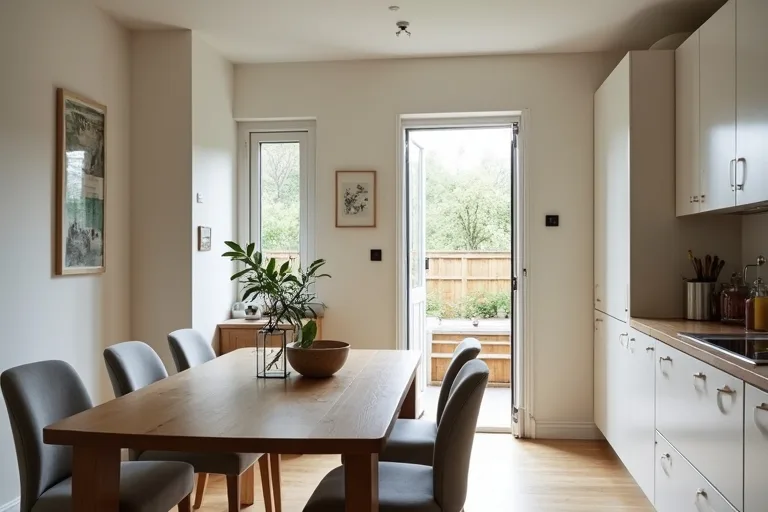
Dining table decisions get easier when you stop starting with style and start with the room. The right table should leave enough space for chairs, allow people to pass through without squeezing, and still feel comfortable on an ordinary Tuesday night.
That is why the best dining table ideas are usually simple ones: choose a shape that suits the room, size it to the number of people you really need to seat, and keep flow in mind before you commit to anything permanent.
Choose a table shape and size that leaves enough clearance for chairs and movement, then match seating to the room’s daily use. If the room is small or the layout has to flex, an extendable dining table is often the smartest choice because it keeps everyday circulation easier while giving you more capacity when needed.
Start with the room you actually have
The most useful dining table ideas begin with the layout, not the finish. A table that looks good but blocks a doorway or forces chair legs into a tight corner will feel wrong every day. Before you compare materials or styles, look at the room’s fixed points: walls, windows, door swings, walkways, and the path people take between kitchen, dining, and living areas.
If the dining area sits inside an open-plan space, the table has to do two jobs at once. It needs to define the dining zone without interrupting the rest of the room. In a narrow room, the main goal is often simple circulation. In a square room, the challenge is usually keeping the table centered enough to feel balanced while still leaving room to pull out chairs comfortably.
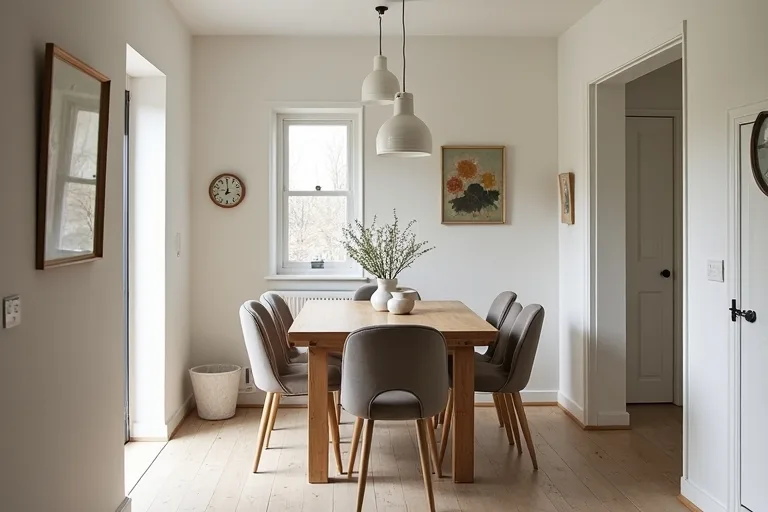
If you are unsure where to begin, use the room as the brief. Measure the available footprint, note the door and doorway locations, then decide how much space you need for everyday movement. That is the point where a good table choice starts to become obvious.
The real decision is not just how many people the table seats. It is whether the table lets the room work on an average day. If people have to turn sideways, push chairs in awkwardly, or avoid one side of the table altogether, the size or shape is probably wrong.
Choose a table shape that supports movement
Table shape changes how a room feels and how people move through it. Round tables can soften a tight layout and make conversation feel easier, especially when the seating count is modest. Rectangular tables often make the most sense in longer rooms because they follow the shape of the space and line up neatly with walls or a central walkway. Square tables can work well in compact, balanced rooms where you want a more contained dining zone.
The practical question is not which shape is most popular. It is which shape leaves the cleanest route through the room. A shape that suits the room’s geometry usually makes the whole space feel calmer, even before you add chairs or accessories.
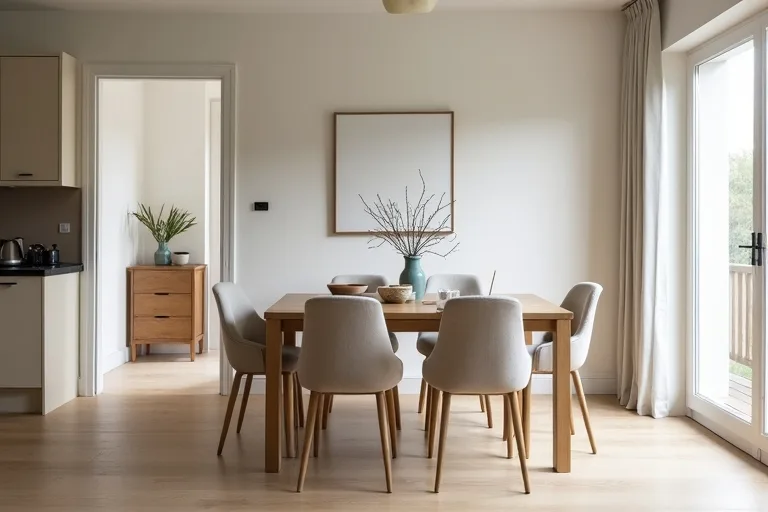
Use this simple decision order when shape is still uncertain:
- Measure the room’s longest usable span.
- Mark the main walking route first.
- Check how much space remains for chair pull-out.
- Choose the table shape that leaves the least conflict with the room’s traffic.
If the room has multiple entry points or the table sits near a passage, shape matters even more than style. A slightly smaller table in the right shape often works better than a larger table that interrupts movement every day.
Match table size and seating to daily use
Size is where many dining room plans go off track. People often buy for the occasional dinner party rather than the everyday routine. A table that is too large can make a room feel crowded, while one that is too small can make meals feel improvised and underplanned.
Think in terms of how the room is used most of the time. A table for two that doubles as a work surface has different needs from a table that regularly seats four or six. An extendable dining table can be especially useful when you want a smaller footprint on normal days but need extra capacity from time to time. That flexibility is often more valuable than a larger fixed table in a small dining room.
Seating matters just as much as the tabletop. Upholstered dining chairs can add comfort for longer meals, but they also need enough clearance to slide in and out without catching on walls or furniture. If the room is tight, slimmer chair profiles or a lighter frame may work better than deep, bulky seating.
Before you shop, compare the table size with the room’s actual circulation. If the result feels like a compromise, that is usually a clue to reconsider either the shape, the seating style, or whether an extendable option would solve the problem more cleanly.
Make the room work after the table is in place
Once the table is chosen, the rest of the room should support it instead of competing with it. Sideboards, rugs, pendant lights, and nearby storage all affect how comfortable the dining area feels. A room can have the right table and still feel awkward if the surrounding pieces crowd chair movement or interrupt the path to the kitchen.
In open-plan spaces, it helps to treat the dining table as part of a larger circulation plan. The table should help define the zone, not block it. That may mean keeping the chair backs clear of walkways, leaving visual breathing room around the table, or choosing a layout that respects the natural movement between zones.
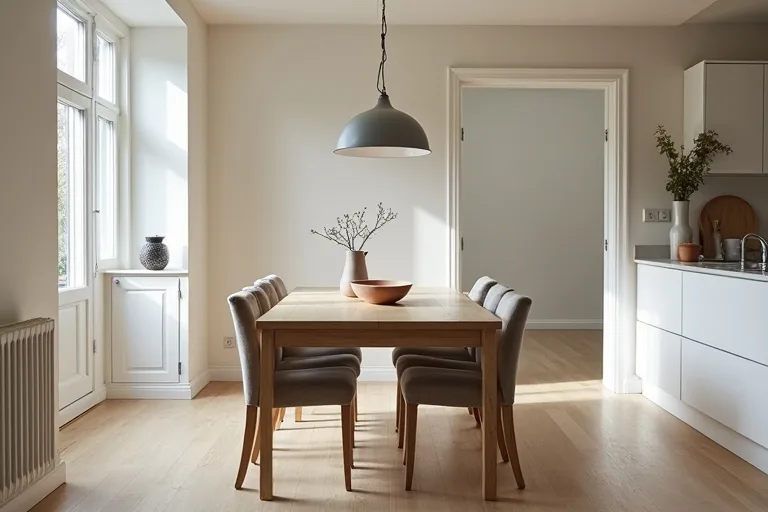
If you want a calmer buying process, pair your measurements with a simple layout or budget plan before making the purchase. That way you are not just choosing a table that looks right online. You are choosing one that will actually fit the room and the way you live in it.
Best next step
Use the dining table size calculator to confirm the right table dimensions before you buy, especially if you are considering an extendable dining table for a small dining room. If the room is still in planning mode, it also helps to map the layout and budget before you compare final options.
- Buying a table based on seating count alone instead of checking clearance around it.
- Choosing a shape that fights the room’s natural circulation.
- Forgetting that chairs need space to pull out, not just space to sit still.
- Picking bulky seating that makes a small dining room feel tighter than it needs to.
- Skipping the layout step and trying to solve fit after the purchase.
The best dining table ideas are the ones that improve comfort and flow at the same time. Start with the room’s layout, choose the shape that moves well through the space, and size the table for everyday use rather than occasional maximum capacity. If the room is small or flexible, an extendable dining table is often the most practical way to keep the space usable without limiting future seating.
Helpful next tools and planners
If you want to make the decision easier before you buy
These options can help you move from planning to purchase with more confidence. The first two are practical product searches, and the planner is useful if you want to work out layout and budget together before committing.
FAQ
How do I know what size dining table will fit my room?
Measure the room, then check how much space remains after allowing for chair pull-out and walking paths. A table that fits on paper but blocks movement is too large for the space.
Is a round or rectangular dining table better for a small room?
It depends on the room shape. Round tables can feel easier to move around in compact square spaces, while rectangular tables often fit narrow rooms more naturally.
When should I choose an extendable dining table?
Choose one when you want a smaller everyday footprint but need the option to seat more people sometimes. It is especially useful in rooms where a fixed larger table would crowd the layout.
Do upholstered dining chairs make a dining room feel too bulky?
Not necessarily. They can be very comfortable, but the frame and depth matter. In tighter rooms, choose a slimmer style so the chairs do not overpower the table area.
Three sensible next steps
Some links in this article may be affiliate links. Read more in the Affiliate Disclosure.