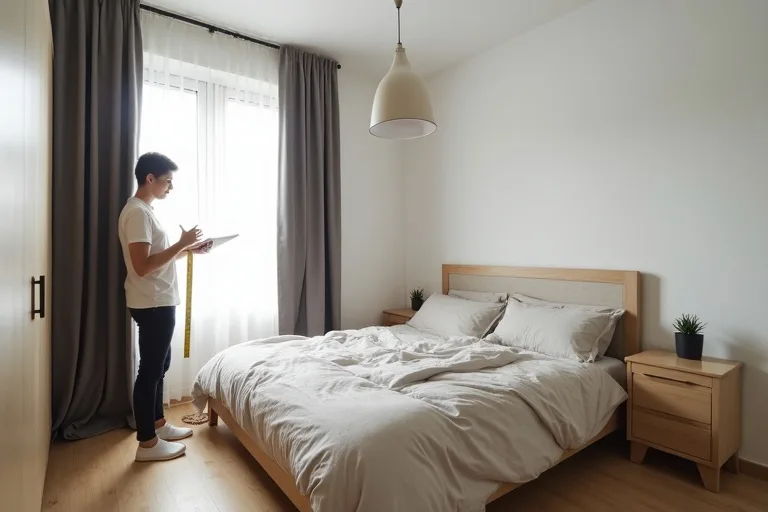
Bedroom layout gets easier when you treat it like a planning problem first. Once the bed wall, traffic path, and clearances are set, the room starts telling you what belongs there and what does not.
That approach saves time, money, and a lot of second-guessing. It also makes shopping simpler, because you are choosing pieces to fit a real plan instead of hoping they will work after delivery.
Measure first, map the traffic flow, then choose furniture sizes and placements before you buy anything new.
Start with the room, not the shopping list
The best bedroom layout ideas usually begin with subtraction. Before you buy a new dresser, bedside table, or bedding set, look at what the room already has room for. A good layout should make the bedroom easier to use, not fuller.
Start by identifying the main purpose of the room. If it is mainly for sleep and storage, the layout can stay simple. If you also need a reading corner, a vanity, or more drawer space, those needs should be built into the plan before you commit to new pieces.
It also helps to think about the room as a path map. You should be able to move from the door to the bed, wardrobe, and windows without awkward squeezes or corners that catch on furniture. If the route feels tight on paper, it will usually feel tight in daily use.
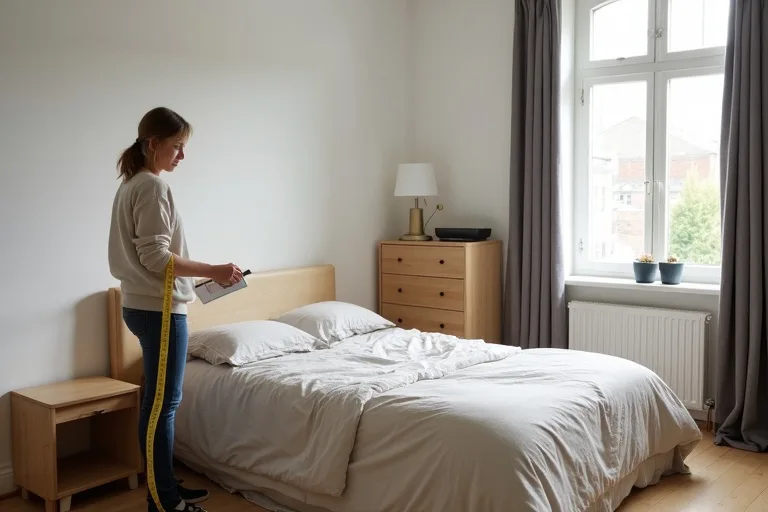
The real decision is not whether a piece looks right online. It is whether the room can still function around it once doors open, drawers pull out, and you walk through the space every day. If you are unsure, keep the layout simpler and test it on paper before buying.
Measure what affects placement
Room measurements matter most where furniture and movement overlap. That means wall lengths, window positions, door swings, radiators, wardrobes, outlets, and any built-in features that limit where the bed or storage can go.
For a bedroom layout checklist, these are the measurements that usually matter first:
- The full room dimensions, so you know the true footprint.
- Door clearance and swing direction, so furniture does not block access.
- Window width and height, especially if you plan to add curtains.
- Available wall space for the bed, dresser, or wardrobe.
- Space needed to open drawers, closet doors, and bedside storage.
If you want a cleaner way to test the plan, use the Room Layout Planner. It is easier to spot a problem on a simple layout than after a package arrives. You can also compare the plan against the rest of the Bedroom Ideas hub if you are deciding between several room directions.

Decide what the room can actually hold
Once you have the measurements, the next step is to decide what should stay and what should go. A bedroom often feels cluttered because it is carrying too many roles at once. Not every room needs a full dresser, two nightstands, a chair, extra storage, and decorative pieces all at the same time.
Use the room to guide the edits. If one side of the bed has little clearance, a smaller bedside table may be better than a bulky matching pair. If a dresser blocks the walking path, it may need to move to another wall or be replaced with something more compact.
This is also where bedding and window treatments become part of the layout plan. A duvet cover in a calm neutral tone can help the room feel pulled together once the bigger decisions are set, especially if the rest of the space is doing a lot of practical work. For a simple foundation, the linen look duvet cover set queen neutral is a useful example of a bedding choice that supports a measured, uncluttered bedroom plan.
If the room gets early light or street glare, curtains are not just a styling decision. They affect comfort, sleep, and how the window wall fits into the layout. That is why it is worth considering blackout curtains bedroom set of 2 panels alongside the furniture plan rather than after everything else is in place.
Choose the right pieces for the plan
When the layout is clear, buying becomes much less risky. You are no longer guessing whether a piece will fit; you already know where it belongs and what job it has to do. That makes it easier to choose scale, finish, and function with confidence.
For some rooms, the best next purchase is not another furniture item but a simple planning tool. A budget and layout tracker can help you keep the update realistic and stop small decisions from turning into costly changes. The Room Makeover Planner, Home Layout Budget Spreadsheet (Digital Download) is a practical option if you want to compare layout ideas, purchases, and budget in one place.
Once the room plan is settled, you can shop with more clarity. That may mean a smaller bedside table, a different dresser width, or bedding that matches the room’s scale instead of competing with it. The goal is not to fill every wall. The goal is to make the room work better every day.

Best next step
Before you order anything new, map the room in a simple layout and check the clearances against your actual measurements. If you want an easier way to do that, start with the Room Layout Planner, then compare your plan with the bedroom guides in the hub.
- Buying furniture before checking door swings and walkway space.
- Choosing a bed size first and leaving no room for bedside storage.
- Forgetting about window height, curtain clearance, or radiator access.
- Keeping too many pieces in the room and making the layout feel tighter than it needs to be.
- Picking bedding or curtains before the main furniture plan is settled.
A good bedroom layout starts with measurements, then traffic flow, then furniture choices. If you plan the room before you shop, you are much more likely to buy pieces that fit the space, support the way you live, and avoid unnecessary returns. Keep the plan simple, test it on paper, and let the room decide what deserves to stay.
Helpful next tools and planners
If you want to make the decision easier before you buy
These options are useful when you are moving from layout planning into real purchasing decisions. Start with the room map, then use the planner or products that match the space you actually have.
FAQ
How do I know if my bed is too large for the room?
If the bed blocks the main walking path, makes bedside storage awkward, or leaves little room to open doors and drawers, it is probably too large for the current layout.
Should I buy furniture before measuring the room?
No. Measure first so you know what can fit without crowding the room or blocking everyday movement.
What matters most in a bedroom layout?
Bed placement, traffic flow, and clearances around doors, windows, and storage usually matter more than decorative choices.
Can bedding affect the layout plan?
Yes, indirectly. Bedding does not change the floor plan, but it does affect how finished and balanced the room feels once the main pieces are in place.
Three sensible next steps
Some links in this article may be affiliate links. Read more in the Affiliate Disclosure.