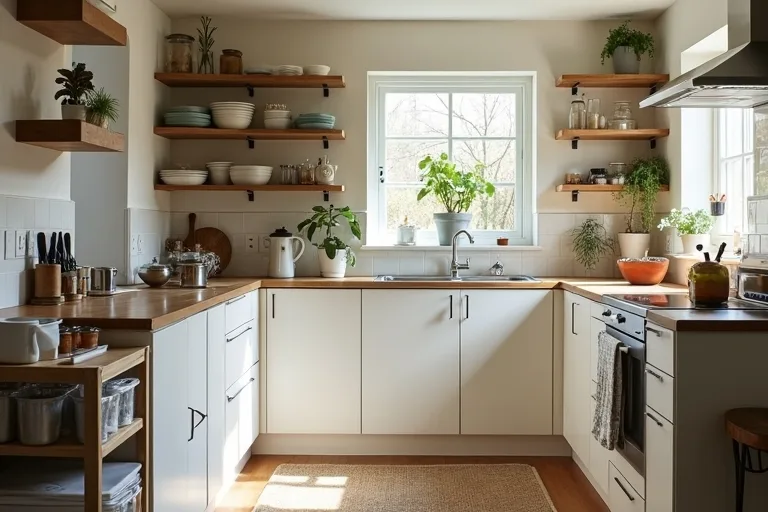
Kitchen storage decisions get easier when you stop thinking in terms of “better” and start thinking in terms of fit. Some kitchens only need a few smarter pieces to work well. Others need a more permanent change because the layout itself is doing the damage.
This guide compares practical budget storage ideas with built-in upgrades so you can match the solution to the real problem, not just the one that looks neat in a shopping cart.
Start with budget storage if your layout still works; choose built-in upgrades when you need better fit, flow, and long-term capacity.
What budget kitchen storage is actually good for
Budget storage works best when your kitchen is under-organized, not fundamentally undersized. If you have wasted shelf height, awkward pantry items, or a corner that never got a proper job, simple pieces can make a noticeable difference without a remodel.
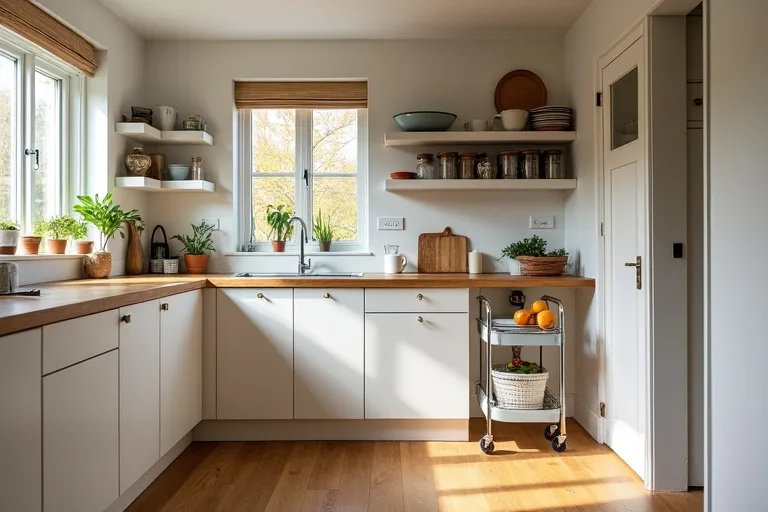
A rolling kitchen cart with storage is one of the most useful low-commitment fixes because it adds surface area and holding space without changing the room itself. It can act as a prep spot, a snack station, or a place for bulky items that never seem to fit neatly in cabinets. Pantry containers help in a different way: they reduce visual clutter, stack more efficiently, and make dry goods easier to group by type.
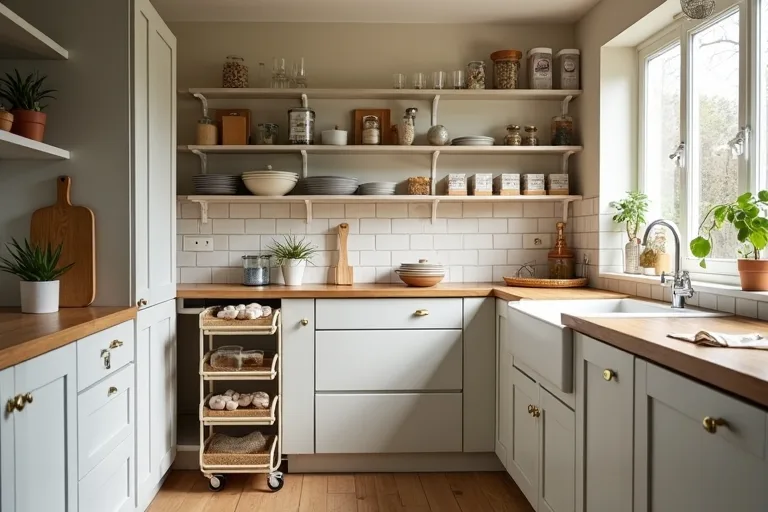
These budget fixes are especially useful in rentals, smaller homes, and kitchens that are otherwise workable. They give you room to test how you use the space before you commit to anything more permanent.
If the room functions well once the clutter is controlled, budget storage is probably enough. If you still bump into bad traffic flow, deep dead corners, or cabinets that waste too much space, the problem is more structural than stylistic.
When a built-in storage upgrade is worth the effort
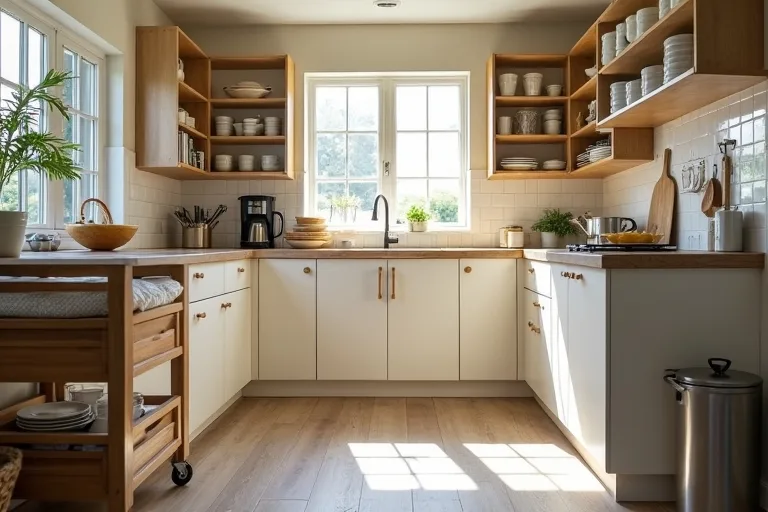
Built-in storage makes more sense when the kitchen layout itself is the issue. That might mean a narrow pantry niche, a fitted cabinet run, a blind corner that never gets used properly, or a lack of storage where you need it most. In those cases, add-on products can help only so much.
A built-in upgrade usually gives you three advantages: it uses space more precisely, it looks more settled over time, and it can improve how the kitchen moves day to day. That matters most in homes where the kitchen sees a lot of use and the current setup creates friction every time you cook or put groceries away.
It also tends to be the better choice if you are already planning a larger update. Once you are opening walls, replacing cabinetry, or reworking the layout, storage should be designed as part of the room rather than added later as an afterthought.
Budget storage vs built-in upgrade: cost, effort, and flexibility
The clearest way to compare the two options is by what you give up and what you gain.
- Budget storage is lower commitment. It is easier to buy, move, adjust, or remove. It is ideal when you are still learning what the room needs.
- Built-in storage is higher commitment. It takes more planning and usually more effort, but it can solve recurring layout problems that products cannot fully fix.
- Budget storage offers more flexibility if you expect your needs to change, such as moving soon or switching how you use the kitchen.
- Built-in storage offers better long-term fit if the kitchen is staying the same and the pain point is clearly tied to the structure of the room.
A useful middle ground is to test the layout first with temporary solutions. A planner or layout tool can help you see whether a cart, a pantry system, or a built-in niche is the right use of space before you spend money in the wrong place.
How to choose based on kitchen size and storage pain point
If you are not sure where to begin, match the solution to the size of the room and the type of frustration you feel most often.
For small kitchens, budget storage usually comes first because every square foot needs to work harder, and flexibility matters. A cart, shelf inserts, clear containers, and careful category grouping can make a small room feel much more manageable without crowding it further.
For medium kitchens, the decision often comes down to whether the existing layout supports a natural workflow. If it does, add-ons may be enough. If it does not, a built-in solution may actually reduce clutter by giving each zone a clearer job.
For kitchens with one stubborn problem area, such as a useless corner or a too-shallow pantry, a built-in upgrade can be worth it even if the rest of the room is fine. The point is not to remodel everything. It is to fix the part of the layout that keeps creating the same daily annoyance.
Best next step
Before you buy a cart, pantry system, or fitted storage upgrade, map the room first. A simple layout check helps you see what will actually fit, what will block circulation, and whether the best answer is a temporary fix or a more permanent change.
- Buying storage products before checking where they will sit in the room.
- Choosing a built-in upgrade for a problem that would be solved by better sorting and grouping.
- Filling every open surface until the kitchen feels more crowded than before.
- Ignoring circulation around carts, pantry doors, and work zones.
- Matching storage to appearance first instead of to the way the kitchen is actually used.
Use budget storage when the kitchen layout is basically fine and you need better organization, better containment, or a little extra surface area. Choose a built-in upgrade when the room itself is creating the problem and you want a solution that fits the space more precisely. The smartest move is to plan the layout first, then buy only what the room can genuinely support.
Helpful next tools and planners
If you want to make the decision easier before you buy
These are useful if you want to test your kitchen plan, set a budget, or try a simple storage fix before committing to a bigger change.
FAQ
Is budget kitchen storage enough for a small kitchen?
Often, yes. In a small kitchen, better grouping, vertical use, and one or two flexible pieces can make the room work much better without a built-in project.
When should I skip storage products and choose a built-in upgrade?
When the layout is the problem. If the room has awkward corners, poor traffic flow, or storage that cannot be used efficiently, built-in changes are usually the more lasting fix.
What is the best first purchase for kitchen storage on a budget?
A rolling kitchen cart with storage is a strong first choice if you need extra function fast. For pantry items, clear containers are useful because they help you see and group what you already own.
Should I plan the kitchen before I buy storage?
Yes. A quick layout check helps you avoid buying pieces that block movement, waste space, or solve the wrong problem.
Three sensible next steps
Some links in this article may be affiliate links. Read more in the Affiliate Disclosure.