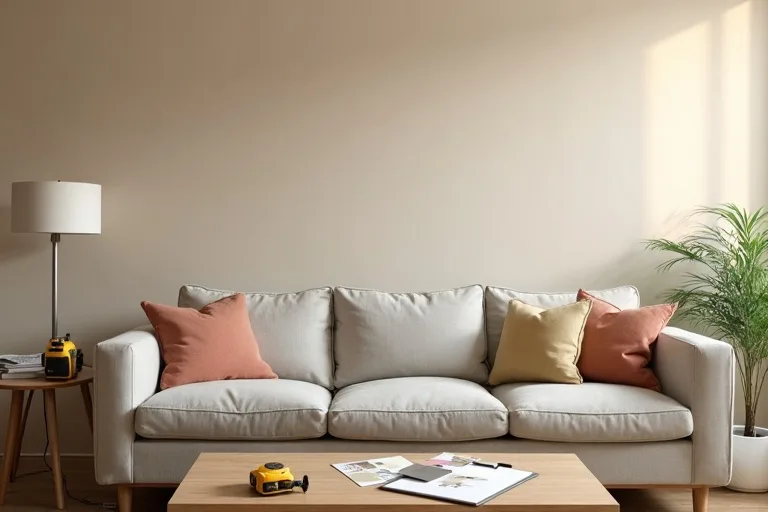
When a room feels off, the first fix is not always a new purchase. Sometimes the fastest way to make it feel calmer is simply to reduce visual noise with paint and a clearer color plan.
Other times, the problem is not the finish at all. If a piece is the wrong size, worn out, or blocking the layout, replacing it will do more than any new color can. The trick is knowing which problem you are actually solving.
Paint first if the room just needs visual unity; replace first if the item is oversized, damaged, or blocking the layout.
When paint is enough to calm the room
Paint is usually the better first step when the room is structurally fine but feels scattered. A wall color change can help a mixed set of furniture read as intentional, soften strong contrasts, and make busy edges feel quieter. This is especially useful when the sofa, table, and storage pieces all work well enough, but they do not currently belong together.
If the room already functions, look for signs that the main issue is visual rather than physical. Clashing undertones, too many competing finishes, or a wall color that makes the room feel smaller can often be corrected with a cleaner palette. In that case, paint is the highest-impact low-cost update.
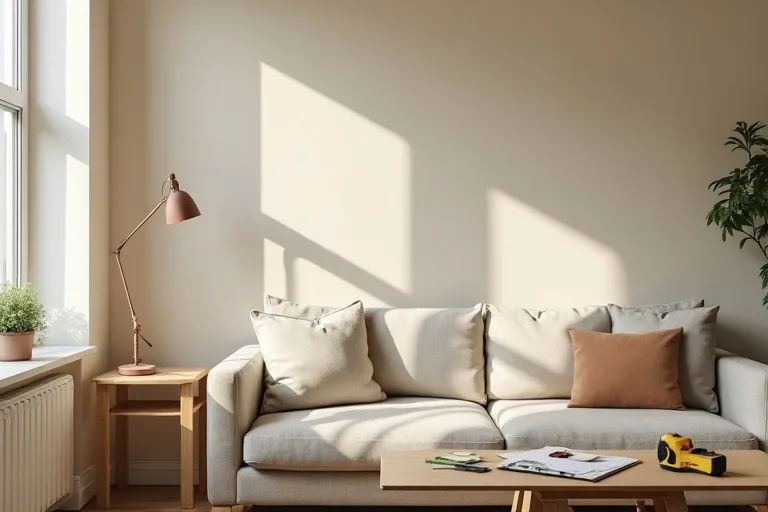
Before choosing a color, use the room’s natural light, fixed finishes, and the largest upholstered piece as your anchors. If those pieces already stay in place, paint can help them feel more connected without forcing a bigger budget decision.
If the room would feel better with the same furniture in a calmer palette, paint is likely the right first move. If the room would still feel awkward after a repaint because one item is too large, too small, or in the wrong place, replacement should come first.
When replacement is the smarter choice
Replace first when the item is carrying the problem, not just showing it. A sofa that blocks circulation, a table that overwhelms the room, or storage that creates awkward pinch points will keep the space from feeling settled no matter what color is on the walls.
Replacement also makes sense when something is visibly worn in a way that affects how the room feels. If upholstery sags badly, finishes are damaged, or a piece simply no longer suits the scale of the room, paint will not fix the underlying imbalance. The room will still read as crowded, awkward, or tired.
A useful way to decide is to compare the item against the room’s movement paths and the furniture it needs to support. If the room works only when you avoid one corner, squeeze past one side, or leave no clear landing area, the item is probably the issue. In that case, replacing it will improve the room more than repainting it.
How to check measurements before you buy anything
A calm decision starts with basic measurements. Many paint-vs-replace mistakes happen when a room is judged by feeling alone, then the budget goes to the wrong fix. Measuring the problem area first makes the next step much clearer.
Use this order:
- Measure the room’s key clearances, especially walking paths and the space around major furniture.
- Measure the item you are considering replacing, then compare it to the area it needs to occupy.
- Check whether paint alone would remove the visual problem, or whether the size and placement are still wrong.
- Estimate the cost of both paths before you commit to either one.
If you are not sure what the room can hold, a quick measurement check often reveals the answer. The paint calculator is a sensible place to start, and a simple tools page can keep the rest of the planning process from turning into guesswork.
For rooms with multiple possible updates, a laser measure can make this step much faster and less error-prone. If you need one, laser measure tool for home projects can help you confirm scale before you spend.
A simple order that keeps the room and budget calmer
The easiest way to avoid overspending is to solve the room in the right order. Start with layout and scale, then surface changes, then styling. That sequence keeps you from repainting around a bad plan or buying new pieces before you know what the room actually needs.
In practice, that means you first check whether the layout is creating the stress. If the room feels cramped, blocked, or imbalanced, fix that before any finish work. If the layout is fine, move to paint and other surface updates that reduce visual clutter. Only after that should you add styling pieces that support the room rather than distract from it.
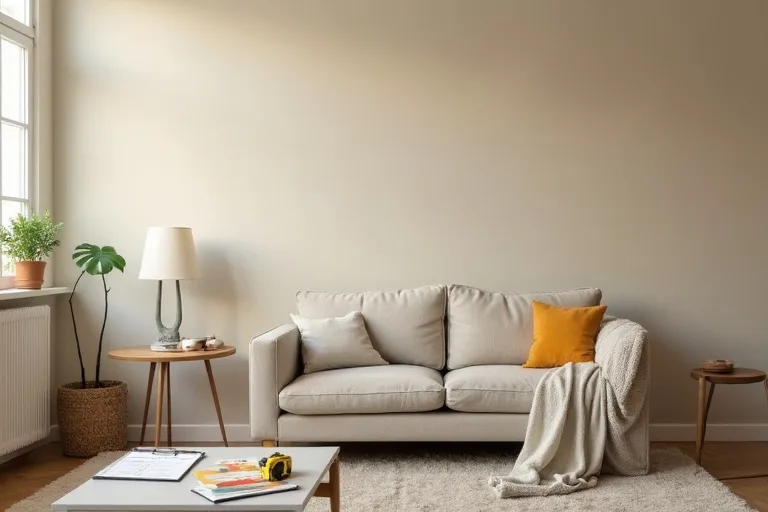
A paint roller kit is useful once you know the room really only needs a finish update. If you are ready to move forward, a paint roller kit for walls and ceilings is a practical purchase for a straightforward repaint. If you are still deciding between paint and replacement, the bigger win is to compare your options against a clear budget plan first. A Home Renovation Budget Planner Spreadsheet (Google Sheets, Excel) can help you keep the next update focused on the highest-impact change.
Best next step
Use the paint calculator first, then compare the room’s biggest visual issue against your budget before you buy anything. If the room still feels wrong after that, move through the Remodel & Budget hub and decide whether the next update should be a replacement, a repaint, or a smaller adjustment that clears the layout.
- Painting before checking whether the room has a scale problem.
- Replacing furniture that is functional just because the color feels wrong.
- Ignoring clearances, walkways, and door swing when judging a room.
- Choosing a new item before deciding what the room needs most.
- Spending on styling pieces before the layout and surfaces are settled.
Choose paint first when the room already works and only needs more visual unity. Choose replacement first when an item is too large, damaged, or blocking the flow. The calmest, smartest update usually comes from fixing the real problem first, then spending only where the room will feel the difference.
Helpful next tools and planners
If you want to make the decision easier before you buy
These are simple planning tools that fit the paint-or-replace process. Use them to check size, budget, and surface needs before committing to a bigger purchase.
FAQ
How do I know if paint will be enough?
If the room functions well and the main issue is that the finishes or colors feel busy, a paint update is often enough to make it feel calmer and more cohesive.
When should I replace furniture instead of repainting?
Replace furniture when it is the wrong scale, blocks movement, or is damaged enough that the room will still feel unsettled after a repaint.
What should I measure first?
Start with clearances around major furniture, then measure the piece you may replace, and finally check whether a paint change alone would solve the visual problem.
What is the best order for small remodel decisions?
Fix layout first, then surfaces like paint, and then add styling pieces. That order keeps you from spending on the wrong layer too early.
Three sensible next steps
Some links in this article may be affiliate links. Read more in the Affiliate Disclosure.