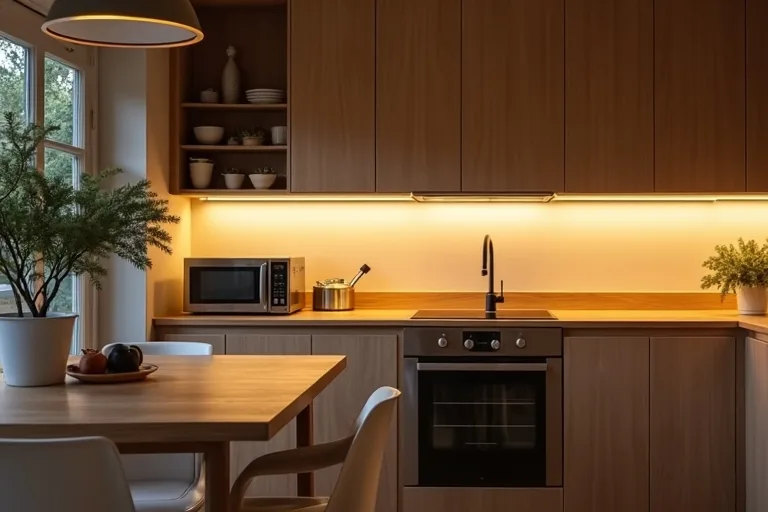
If your kitchen feels gloomy, flat, or harsher than it should, lighting is usually the first thing to adjust. The goal is not simply brighter light. It is clearer work areas, softer evening use, and a room that feels balanced from morning to night.
The easiest way to get there is to plan lighting around how the kitchen is actually used: prep, cooking, washing up, and any eating space nearby. When those zones are clear, fixture choices become much easier.
Use layered lighting: task lighting for work zones, ambient lighting for overall comfort, and a small amount of accent lighting if you want more depth. Start with counters, sink, and stove, then check how the room feels at night before choosing decorative fixtures.
Start with the tasks your kitchen has to support
Good kitchen lighting begins with the work you do most often. A bright ceiling light alone can leave counters shadowed, especially when upper cabinets, tall people, or open shelving block the light. That is why task lighting matters so much in real homes.
Look first at the places where mistakes are most likely: chopping food, reading a recipe, rinsing vegetables, washing dishes, and standing at the stove. These are the areas that need the clearest light, not just the most light overall.
Under-cabinet lighting is often the most useful upgrade because it puts light where your hands are working. If you have a sink under a window or a dark corner near the fridge, that area may need its own dedicated fixture or a small wall light.
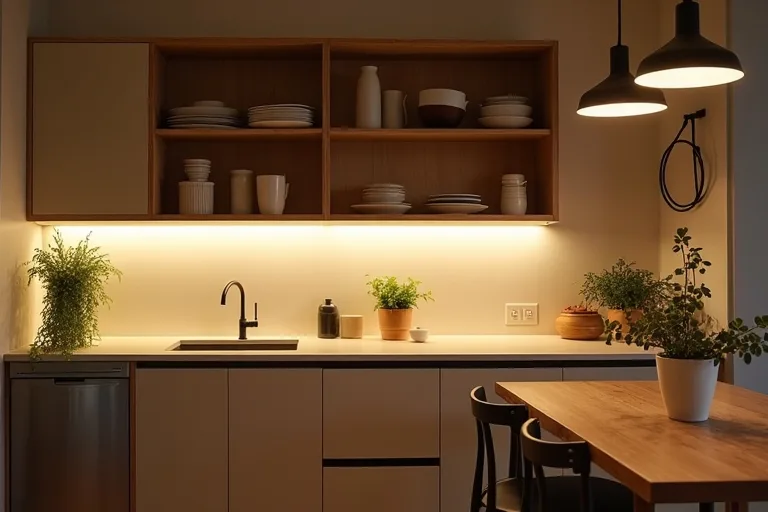
If a counter is hard to use after sunset, the problem is usually placement, not style. Before buying decorative fixtures, map the room into work zones and decide which areas need direct light, which need soft overall light, and which can stay lower-key.
Layer light so the room feels useful and calm
Layered lighting simply means using different kinds of light for different jobs. In kitchens, that usually means three layers working together instead of one fixture trying to do everything.
- Task lighting for prep surfaces, sink areas, and the stove.
- Ambient lighting for general brightness and a more even feeling.
- Accent lighting for shelves, niches, glass cabinets, or architectural details.
Ambient light should make the room easy to move through without feeling flat. Ceiling fixtures, flush mounts, recessed lights, or a simple pendant can all work, depending on the layout. The trick is to avoid relying on ambient light alone if your counters sit in shadow.
Accent lighting is optional, but it can help a kitchen feel more finished. It does not need to be dramatic. Even a small amount of light near open shelving or above a breakfast nook can add depth without making the room feel busy.
Choose bulb color, brightness, and placement carefully
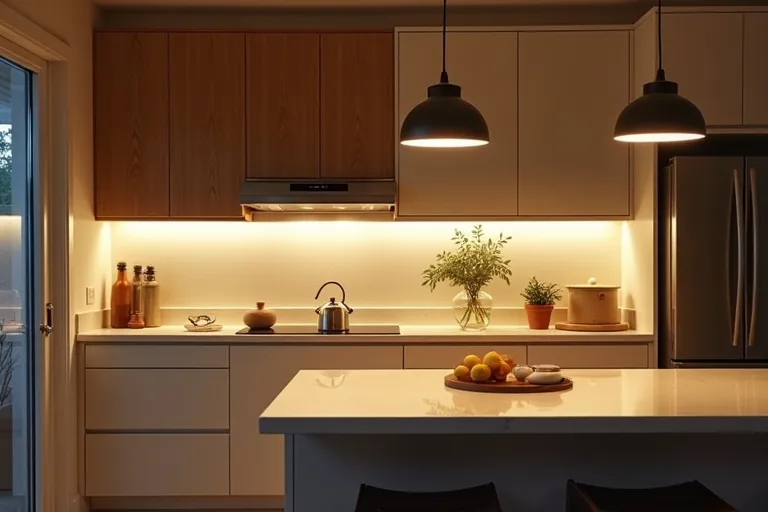
Fixture style matters, but bulb choice often decides whether the room feels inviting or stark. In a kitchen, a warmer bulb tone usually feels more comfortable in the evening, while a cooler one can make prep areas feel more clinical. The right choice depends on the room, but most homes need a balance rather than extremes.
Brightness should support the task without creating glare. If light feels harsh on shiny counters or stainless steel, the issue may be the angle or number of fixtures rather than the bulb alone. Dimmable lighting is useful because kitchens rarely need the same level of light all day.
Placement also changes how the room works. A pendant centered over a table can look good, but if it hangs too low it may block sightlines or feel awkward for daily use. Recessed lights can help with spread, but if they are too far from the counters they may not solve the real problem.
When the kitchen also includes a dining area, treat that space separately. Dining light should feel softer than prep light, and the table should sit comfortably within the room rather than being forced into a leftover corner.
Match lighting to layout, ceiling height, and dining space
The best lighting plan is shaped by the room itself. A long narrow kitchen needs different coverage than a square one. Low ceilings usually call for flatter fixtures or careful recessed placement. Higher ceilings can handle more visual presence, but only if the fixture proportions still suit the room.
If your kitchen includes a small dining zone, the table size and clearance matter just as much as the light above it. A pendant may look right on paper, but if the table is too large, too small, or too close to a wall, the whole area can feel awkward. That is why it helps to plan the layout first and choose fixtures second.
This is also where practical sizing decisions become valuable. The right table or stool height can make a breakfast zone feel easy to use, while the wrong scale can make even good lighting feel off. If the room is tight, measure circulation paths before you decide on a decorative piece.
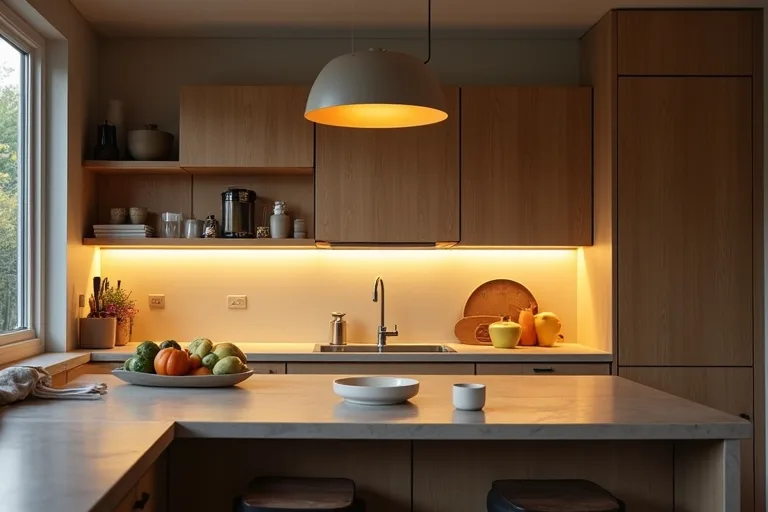
If you want help before buying anything, start with the room plan. The Kitchen & Dining hub is the best place to compare layout ideas, and the tools page can help you choose the next step if you are still working out sizes and clearances.
Best next step
Before you choose fixtures, map the room around the way you actually use it. That keeps lighting decisions tied to cooking zones, table placement, and the clearances you need for daily movement.
- Relying on one ceiling fixture for the whole kitchen.
- Putting decorative lights in place before checking work zones.
- Choosing a bulb that feels too harsh for evening use.
- Ignoring shadows from cabinets, shelves, or tall appliances.
- Skipping layout measurements around a dining table or island.
The most useful kitchen lighting is usually the least complicated to live with: task lighting where you work, ambient light to keep the room comfortable, and a small amount of accent light if the space needs more depth. If you plan the layout first, the lighting choices become calmer, clearer, and easier to get right.
Helpful next tools and planners
If you want to make the decision easier before you buy
These options are useful when you are still sorting out room size, table placement, and budget before choosing lighting or dining pieces.
FAQ
What is the best lighting setup for a kitchen?
Layered lighting is usually the most practical setup: task light for prep areas, ambient light for general brightness, and optional accent lighting for depth.
Should kitchen lights be warm or cool?
Many kitchens work best with a balanced, slightly warm feel for comfort, especially in the evening, but the right choice depends on the room finishes and how much natural light you have.
Where should under-cabinet lighting go?
It should sit where it lights the work surface without causing glare, usually aimed evenly across the counter rather than directly into your eyes.
How do I plan lighting for a kitchen with a dining area?
Treat the dining zone separately from the cooking zone. The table area usually needs softer light, while the prep areas need clearer task lighting.
Three sensible next steps
Some links in this article may be affiliate links. Read more in the Affiliate Disclosure.