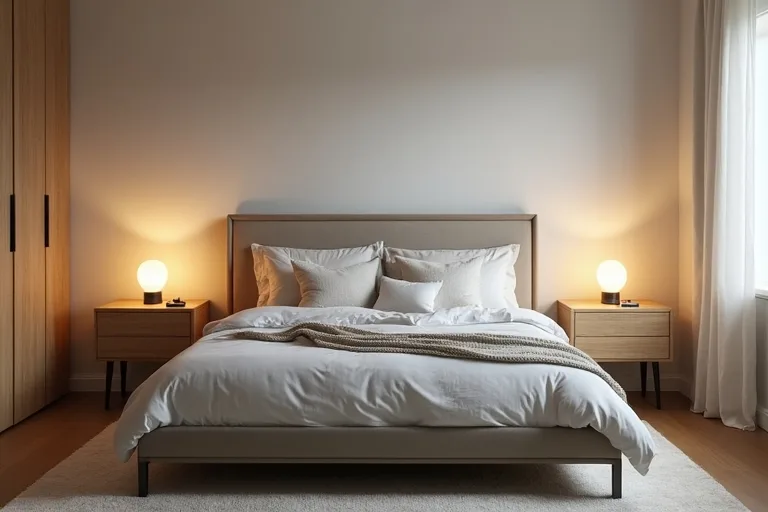
Bedroom lighting is often what makes a room feel finished, but it is also one of the easiest things to get wrong. A lamp that looks good in the store can feel too dim, too harsh, or oddly placed once it is in the room.
The goal is not to add more fixtures for the sake of it. It is to make the bedroom feel warm at night, usable during daily routines, and visually balanced so the space works from both sides of the bed.
Use layered lighting, balance both sides of the bed, and choose warm task lighting where you actually need it. In most bedrooms, that means a mix of ambient light, bedside lamps, and one or two extra sources for reading, dressing, or soft evening light.
Start with the light you need most
The easiest way to plan bedroom lighting is to begin with function, not fixtures. Think about what happens in the room after dark. Do you read in bed, get dressed in the bedroom, or just want the space to feel calm before sleep? Each of those uses asks for a different kind of light.
Most bedrooms need three layers. Ambient light lights the room as a whole. Task light helps with reading, dressing, or finding things. Accent light adds depth so the room does not feel flat once the main overhead light is off.
If your bedroom only has one ceiling light, the room may feel bright in the middle but dark at the edges. That is why bedside lamps, wall lights, or a small floor lamp can make such a visible difference. They soften the room and create zones that feel more comfortable to use.
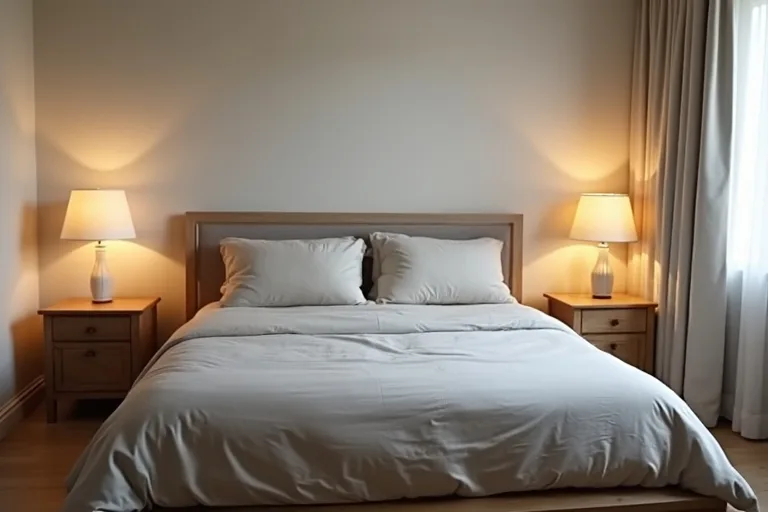
If you want the room to feel more relaxed at night, start by reducing the dependence on a single overhead source. A warm bedside lamp often does more for the mood of a bedroom than a stronger ceiling fixture ever will.
The real decision is not whether the lamp is decorative enough. It is whether the light reaches the place you need it, without glare, shadows, or one side of the bed feeling under-supported.
Balance both sides of the bed
One of the most effective bedroom lighting choices is also the simplest: make both sides of the bed feel equally considered. Even if one person reads more than the other, uneven lighting often makes the room feel unfinished.
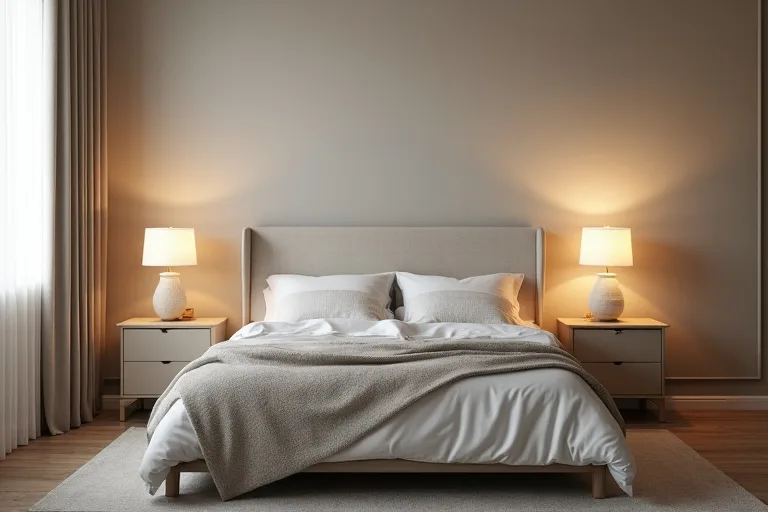
That is where a matched pair of bedside table lamps and a pair of nightstands can help. The symmetry creates calm, and it also makes daily habits easier. Each side gets its own light source, its own surface, and its own sense of place.
If your room is small, you do not need oversized pieces to get this result. A smaller matched pair can still solve the imbalance. The point is consistency, not size for its own sake.
A good way to approach the purchase is to think in pairs:
- Decide whether both sides need the same lighting function.
- Choose nightstands that leave enough surface for a lamp and the items you actually use.
- Pick lamps that feel visually similar in height and brightness.
- Check that switches are easy to reach from bed.
When one side of the bed has a lamp and the other does not, the room can feel as though it was arranged in a hurry. Matching lamps and nightstands are not the only solution, but they are one of the clearest ways to restore balance.
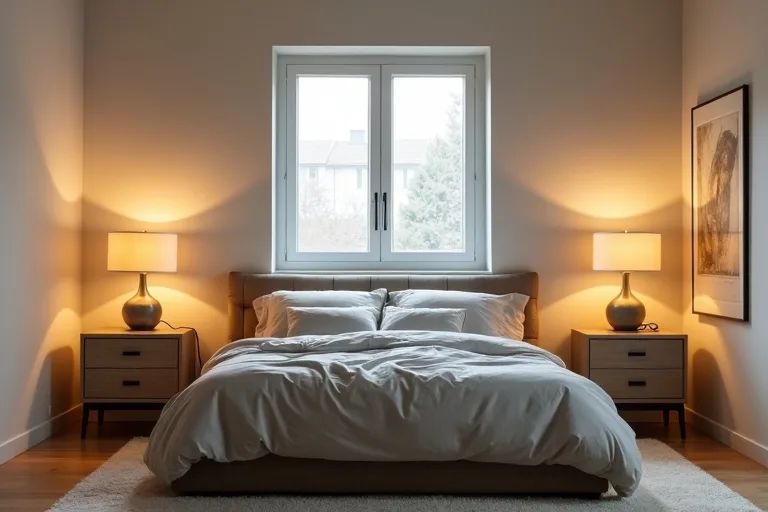
Choose lamp size, bulb warmth, and placement with care
The best-looking lamp can still feel wrong if it sits too high, throws light into your eyes, or overwhelms the nightstand. Bedroom lighting works best when the scale feels related to the bed and the furniture around it.
As a general rule, bedside lamps should feel proportionate to the nightstand and to the headboard. A lamp that is too small can disappear. One that is too large can crowd the surface and make the room feel busy. If you are unsure, stand back and look at the room as a whole rather than focusing on the lamp in isolation.
Bulb choice matters just as much. A warm bulb usually feels better in a bedroom than a cool bright one, especially in the evening. If you need the light for reading, look for a setup that is bright enough for the task but still soft enough to avoid a stark, office-like effect.
Dimming is worth considering if you can use it. A dimmer or a lamp with multiple settings gives you more flexibility without needing extra fixtures. That makes the room easier to live in because the same space can work for winding down, reading, or getting dressed.
Best next step
If you are trying to balance both sides of the bed, it helps to plan the nightstands and lamps together instead of shopping for them one at a time. Start with the room layout, then choose pieces that fit the space and the way you use it.
Build a lighting plan for reading, dressing, and rest
A bedroom rarely needs one perfect light. It needs a few simple choices that each solve a different moment of the day. That is why the most useful lighting plan is often the most ordinary one.
For reading, bedside lamps should direct light where you need it without flooding the whole room. For dressing, a brighter and more even source helps with mirrors, closets, or full-length views. For rest, the room benefits from lower, softer light that signals the day is ending.
If your bedroom has a window, natural light can support the room during the day, but it should not be asked to do all the work after dark. Layered lighting makes the room more flexible and prevents the evening from feeling too stark.
For people who are planning from scratch, a simple room map can help before any buying starts. That is especially useful if you are deciding where the bed should sit, how much space the nightstands need, and whether lamps should sit on the tables or on the wall. A quick layout pass now can prevent a lot of second-guessing later.
- Relying on one overhead light and expecting it to do every job.
- Choosing bedside lamps that look good but do not provide enough task light.
- Making one side of the bed more functional than the other.
- Buying lamps before checking nightstand size and placement.
- Using bulbs that feel too cool or too bright for a bedroom.
- Ignoring switches, cords, and reach from bed until after the purchase.
The best bedroom lighting feels calm, practical, and balanced. Start with the tasks you need to do in the room, then build a simple mix of ambient, bedside, and accent light around that. If the bedroom feels uneven, the first thing to fix is usually the balance between both sides of the bed.
Helpful next tools and planners
If you want to make the decision easier before you buy
A matched pair of bedside pieces usually solves more than lighting alone. These options can help if you are planning the layout first, then choosing the products that fit the room.
FAQ
How many light sources does a bedroom need?
Most bedrooms work better with at least two or three layers of light, usually a main ambient source plus bedside task lighting and, if needed, a softer accent light.
Are bedside lamps better than ceiling lights in a bedroom?
They serve different jobs. Ceiling lights help light the whole room, while bedside lamps are usually better for reading, relaxing, and making the room feel warmer in the evening.
Should both sides of the bed have the same lamp?
Not always, but matching or closely related lamps usually make the room feel more balanced. If the sides serve different needs, the lamps can vary as long as the room still feels even overall.
What is the best next step before buying bedroom lamps?
Check the layout first. Measure the nightstand space, think about where the bed sits, and decide whether you need table lamps, wall lights, or another option before you shop.
Three sensible next steps
Some links in this article may be affiliate links. Read more in the Affiliate Disclosure.