
Bedroom lighting is one of those details that seems simple until the room starts to feel strangely flat, too bright, or out of balance. The problem is usually not the style of the lamp. It is the way the light is placed, layered, and shared across the room.
If the bed area feels harsh at night or dull in the daytime, the fix is usually a planning issue rather than a decorating one. A calmer result starts with the layout, the bedside surfaces, and how both sides of the bed work together.
The biggest mistake is using only one light source or uneven bedside lighting. Bedrooms usually feel better when the bed area is planned as a pair, with matching or well-balanced lamps, sensible nightstand sizes, and at least one softer layer of light beyond the ceiling fixture.
Why one overhead light makes a bedroom feel flat
A single ceiling light can be useful for cleaning or quick tasks, but it rarely creates a comfortable bedtime atmosphere on its own. When all the light comes from above, shadows can feel harder, the bed can look less inviting, and the room often loses depth.
The better approach is to treat overhead lighting as the general layer, not the whole plan. A soft ceiling fixture or pendant can support the room, while bedside lamps or other lower light sources make the space feel calmer and easier to use in the evening.
That is especially important in bedrooms with neutral finishes, because flat lighting can make even a well-styled room look unfinished. A little contrast at eye level gives the room shape.
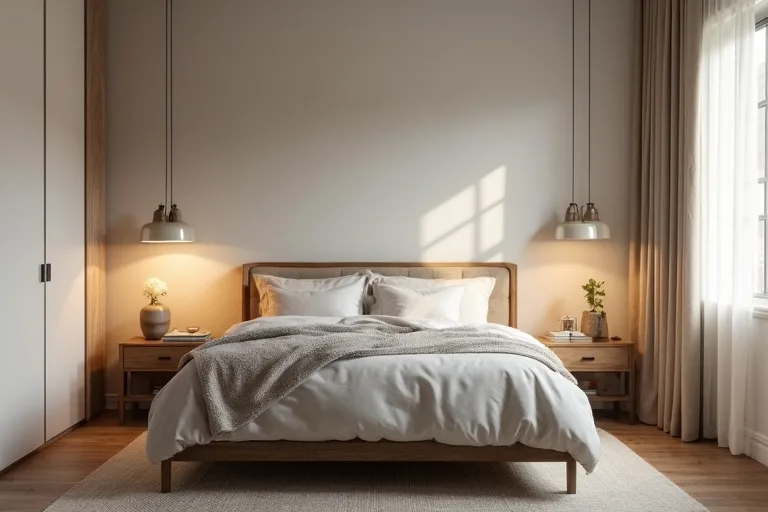
If the room only looks good when every light is on, the lighting plan is probably too dependent on one source. Try to separate general light, bedside light, and any softer accent light so the room has more control at night.
Why bedside lamps can feel wrong even when they look right
Many bedroom lighting problems come down to bedside lamps that are the wrong height, too bright, or placed without enough room around them. A lamp can look attractive on its own and still fail in the room if it overwhelms a small nightstand or sits too high beside the pillow.
The aim is not to match everything perfectly. It is to make the bedside area feel easy to use from both sides. When one lamp is larger, brighter, or much closer to the mattress than the other, the room can feel slightly off even if no one can explain why.
Use this simple order of checks before buying:
- Measure the nightstand top so the lamp base will not crowd the usable surface.
- Check the lamp height against the bed and headboard so the shade sits comfortably near eye level when seated.
- Look at the bulb direction and brightness so the light is soft enough for evening use.
- Compare both sides of the bed together so the room feels balanced, not accidental.
If you are still choosing furniture, it helps to think about the nightstand and lamp as one unit rather than two separate purchases. That is where a balanced setup usually starts.
Why both sides of the bed need to be planned together
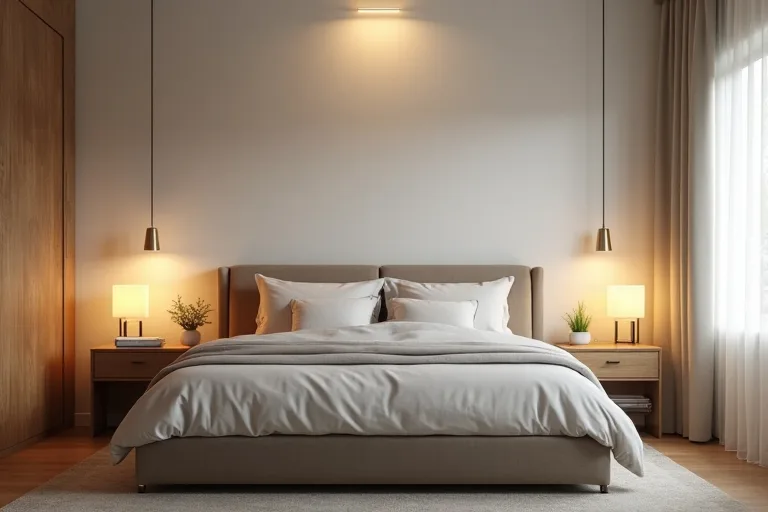
Bedrooms often feel most uneven when one side of the bed is fully finished and the other is still being improvised. One nightstand may be larger, one lamp brighter, or one side left without proper surface space. That creates visual tension, and it also makes the room less practical to use.
Planning both sides together does not mean they need to be identical. It means they need to feel equally considered. If one person needs more surface area, then the lighting, height, and proportions on that side should still be close enough to the other side to keep the room calm.
This is where layout matters more than decoration. If the bed is centered well, the lamps have room to breathe, and the nightstands suit the width of the wall, the whole room usually feels more settled.
Before you buy anything, stand at the foot of the bed and look at both sides together. If one side feels heavier, tighter, or brighter than the other, the room is telling you the plan is not finished yet.
What to measure before you buy lamps or nightstands
Bedroom lighting decisions get easier when you measure the setup before shopping. That prevents the most common mismatch: a lamp that is too large for the nightstand, or a nightstand that leaves no useful room for the lamp, book, or glass of water.
Start with the bed width, the wall space on both sides, and the top surface area of each nightstand. Then check how much height the lamp will add above the tabletop and whether the shade will block sightlines or feel too low beside the pillow.
If you want a calmer decision, plan the bedside grouping as a small layout problem instead of a quick decor purchase. That is especially helpful when you are choosing between a new nightstand, a pair of lamps, or both.
Best next step
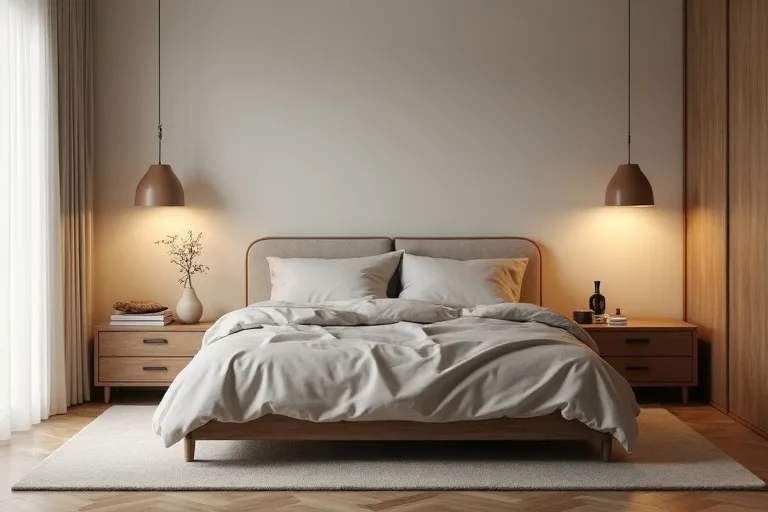
If the room feels off, pause before shopping and map the bedside layout first. A simple room plan helps you check proportions on both sides of the bed, choose the right nightstand size, and avoid buying a lamp that looks good online but fails in the room.
- Relying on one bright overhead light and expecting the room to feel cozy.
- Choosing bedside lamps before checking nightstand width and height.
- Making one side of the bed much brighter or heavier than the other.
- Buying lamps that crowd the tabletop or sit too high beside the bed.
- Skipping a layered plan for reading, winding down, and general room light.
Bedroom lighting works best when it is planned as part of the room layout, not treated as a last-minute accessory. If the room feels flat or harsh, the answer is usually better balance, softer layering, and more careful planning on both sides of the bed before you buy.
Helpful next tools and planners
If you want to make the decision easier before you buy
These can help you compare bedside proportions, keep the layout balanced, and plan the room without guessing.
FAQ
Should bedroom lamps match on both sides of the bed?
They do not need to be identical, but they should feel balanced in height, brightness, and visual weight so the room stays calm.
Is one ceiling light enough for a bedroom?
It can be enough for general light, but most bedrooms feel better with bedside lighting or another softer layer for evening use.
How tall should a bedside lamp be?
It should work with the height of the bed and nightstand so the shade does not feel too high or too low when you are sitting up in bed.
What should I buy first, nightstands or lamps?
In most cases, choose the bedside surface first. Once the nightstand size is clear, it is much easier to choose a lamp that fits properly.
Three sensible next steps
Some links in this article may be affiliate links. Read more in the Affiliate Disclosure.