
If your kitchen feels too tight to cook in, the problem is usually not a lack of style. It is a layout problem, a storage problem, or both.
The best small kitchen ideas are the ones that make everyday tasks easier first. When the room has clearer work zones, better storage, and fewer interruptions, it starts to feel bigger without a full remodel.
Focus on layout, storage, and clear work zones before buying anything new. In a compact kitchen, the fastest gains usually come from freeing up counters, using vertical and corner space better, and adding one flexible piece that supports prep or storage.
Start with the real problem in the room
Before you shop for containers, carts, or organizers, look at what is actually making the kitchen feel cramped. In many small kitchens, the main issue is not the number of cabinets. It is that the usable space is broken up by clutter, awkward corners, or a prep area that is too small to work on comfortably.
Walk through the room and notice where you naturally set down groceries, prep food, and unload dishes. Those are your true work zones. If one of them is missing, blocked, or doubled up, the kitchen will always feel harder to use than it should.
A simple way to judge the room is to ask three questions: where do I prep, where do I store, and where do I move? If the answer is not obvious, the layout needs attention before the decor does.
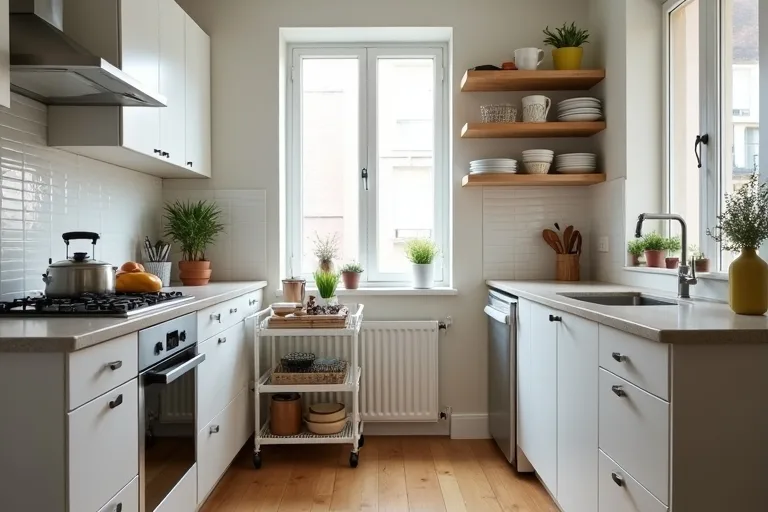
If you want a structured way to think through the room, the Room Layout Planner can help you map what fits, what feels crowded, and what needs to stay out of the space.
The real decision is usually not whether to add more storage. It is whether the room has enough clear floor, counter, and wall space to support daily cooking without creating new bottlenecks. If a new item takes away more usable space than it gives back, it is probably the wrong fix.
Free up storage by moving the right things off the counter
Small kitchens feel larger when counters are used for active work, not long-term storage. That often means moving less-used items into cabinets, using inside-cabinet organization more carefully, and keeping only the tools you reach for often within easy reach.
A good next step is to group items by task. Keep cooking tools together, baking items together, and everyday dishes together. That makes the room easier to use because you are not crossing the kitchen just to finish one simple job.
Airtight storage also helps more than people expect. Clear, stackable containers make pantry items easier to see, and they reduce the loose packaging that tends to spill across shelves and counters. A set like airtight pantry food storage containers set can support a neater system if you already know what you want to store and how much space you have.
If you are still deciding what belongs in the kitchen at all, start with your actual cooking habits. The goal is not perfect matching storage. The goal is a setup that keeps the busiest items closest to where they are used.
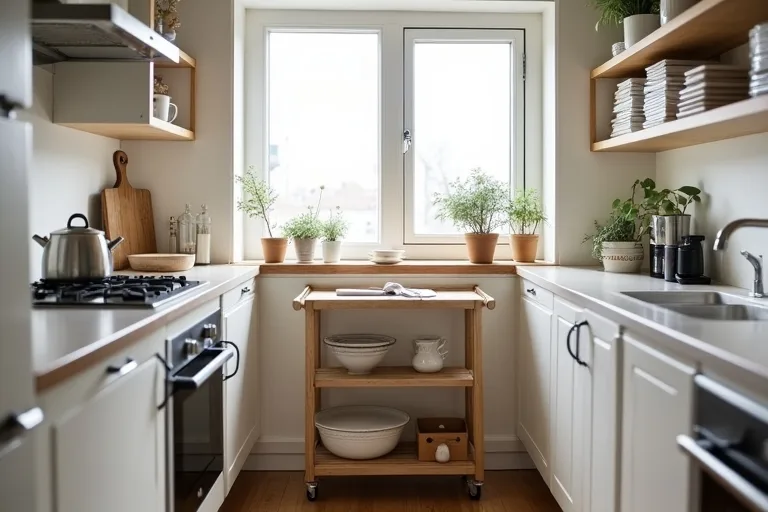
Add flexible pieces that do more than one job
In a compact kitchen, movable furniture can be more useful than a fixed change. A rolling kitchen cart can act as extra prep space, a landing zone for groceries, or overflow storage when the main counters are full. Because it moves, it gives you flexibility without committing to a permanent layout change.
A rolling kitchen cart with storage works especially well when you need one more surface but do not have space for an island. It can also help define where prep happens, which matters in rooms where the work triangle is tight or unclear.
If you like to plan before you buy, a simple budget and layout tool can make these decisions easier. The Room Makeover Planner, Home Layout Budget Spreadsheet is useful if you want to compare ideas, keep spending under control, and avoid buying pieces that do not fit the room plan.
- Measure the open floor area where a cart or slim storage piece could sit.
- Check whether the piece would block drawers, doors, or the fridge.
- Decide if it supports prep, storage, or both before you add it.
- Keep the item easy to move if the room needs to flex for cooking or cleaning.
Used well, a cart is not extra clutter. It is a way to add function only where the kitchen can handle it.
Use light, color, and visual calm to make the room feel bigger
Once the layout is easier to use, the room can start to feel calmer too. That is where visual choices help. Light colors, simple cabinet fronts, and fewer items left out in view can all make a small kitchen feel less busy.
You do not need a full redesign to get that effect. Even small changes can help: clear one section of countertop, keep frequently used items grouped together, and avoid filling every open surface. A little negative space goes a long way in a compact room.
Natural daylight also matters. If the kitchen has a window, avoid blocking it with tall items or heavy accessories. If it does not, use lighting that makes work areas easy to see so the room feels more open and practical during real use.

For more planning ideas across compact cooking spaces, the Kitchen & Dining hub is a good place to continue once you know what your room needs most.
Best next step
If you want the kitchen to feel easier to use without a remodel, map the layout first and decide what the room can realistically hold. Then add only the storage and prep pieces that support that plan.
- Buying organizers before deciding what the kitchen actually needs.
- Adding storage that blocks doors, drawers, or walkways.
- Leaving too many items on the counter because they are convenient.
- Choosing decorative pieces that do not improve prep space or flow.
- Filling every cabinet shelf instead of keeping the room easy to access.
The best small kitchen ideas are the ones that make the room simpler to use, not just prettier to look at. Start by clarifying the layout, then free up counters, add flexible storage where it fits, and keep the visual field calm. That approach usually makes a compact kitchen feel bigger, even when nothing structural changes.
Helpful next tools and planners
If you want to make the decision easier before you buy
These are useful when you are comparing layout options, storage needs, or a small purchase that should solve a real problem rather than add more clutter.
FAQ
What is the first thing to change in a small kitchen?
Start with flow. If you can clear counters, define work zones, and make movement easier, the room will usually feel better before any larger upgrade.
Should I add more cabinets in a small kitchen?
Only if the new storage truly improves access. In some rooms, better organization and one flexible storage piece are more useful than adding more fixed cabinetry.
Is a kitchen cart worth it in a compact space?
Yes, if it adds prep or storage without blocking movement. A rolling cart is most useful when the room needs one extra function and cannot support a built-in solution.
How do I make a small kitchen look less cluttered?
Keep counters mostly clear, group similar items together, use closed storage for visual calm, and avoid leaving out objects that do not support daily cooking.
Three sensible next steps
Some links in this article may be affiliate links. Read more in the Affiliate Disclosure.