
A studio apartment can feel smaller than it really is when the layout works against the room. The problem is not always the amount of space available. More often, it is the way furniture, storage, and walking paths have been placed.
If you are trying to make a studio feel calmer and easier to live in, it helps to think in terms of flow first. Once the circulation, scale, and storage plan are clear, the room usually becomes much easier to furnish well.
The biggest mistakes are oversized furniture, poor zoning, blocked walk paths, and weak storage planning. If you fix those four things before you buy anything, a studio apartment usually feels more open, easier to use, and less cluttered.
Start with circulation, not shopping
In a studio, the walking path matters as much as the furniture. If you have to sidestep a chair, squeeze past the bed, or turn sideways to reach a window or closet, the room will feel tight even if it is not especially small.
Before you decide where anything goes, trace the main routes through the room. Think about the path from the entry to the bed, from the bed to the bathroom, and from the sofa to storage or a kitchen area. Those routes should stay easy and clear.
A good studio layout usually leaves one main path open and avoids placing bulky furniture in the middle of it. That does not mean the room has to be bare. It means the largest pieces should support movement instead of interrupting it.

If a piece of furniture makes the room harder to cross, it is probably in the wrong place even if it looks good. A studio feels larger when movement is simple, not when every wall is filled.
Choose furniture that fits the room, not the wish list
One of the most common studio apartment layout mistakes is bringing in furniture that belongs in a larger room. A deep sofa, a wide coffee table, or a dining table that is too heavy visually can take over the entire space.
That does not mean you have to go tiny with everything. It means every piece should earn its place. Look for furniture that has a smaller footprint, lighter visual weight, or built-in function. A narrow console table with storage can work better than a bulky sideboard if you need a surface near the entry or behind a sofa. The same logic applies to beds, chairs, and tables.
When in doubt, test the full layout before you commit. A simple room plan is often more useful than guessing in the store.
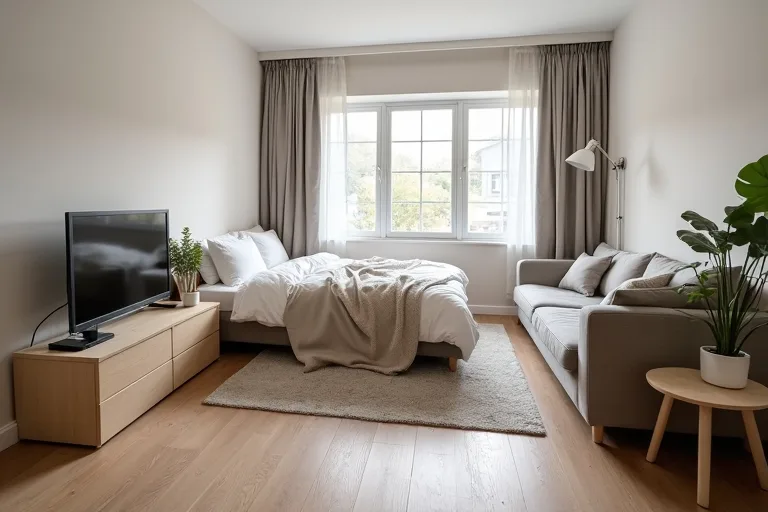
- Measure the main furniture pieces you already own.
- Map the entry, bed, seating, and storage zones.
- Check that doors, drawers, and walk paths still open comfortably.
- Only then decide whether you need smaller pieces or different storage.
Zone the space without making it look crowded
Studio zoning is helpful, but only when it stays calm and simple. The goal is to show where one function ends and another begins without adding too many visual barriers. Too many screens, shelves, rugs, and dividers can make the room feel busy instead of organized.
Use only the zoning elements that actually solve a problem. A rug can define a seating area. A console or low shelf can separate the entry from the living zone. A bed can feel more intentional if it is placed with one clear side for access and one side for storage or a small bedside table.
If every corner needs a separate divider, the room is probably over-zoned. In a studio, clean edges and predictable flow usually work better than trying to create too many mini rooms.
Plan storage where the room can support it
Storage is often the difference between a studio that feels workable and one that feels like it is always full. But storage only helps when it is placed in the right spot. A storage piece in a walkway creates a new problem. Storage on an empty wall or in a dead corner can solve one.
Think about what the room can actually carry. Vertical storage is useful when floor space is limited, but only if the room still feels balanced. Low, narrow pieces are often better near entry areas or behind seating because they add function without blocking the view.
If you need to store a range of small items, an 8 cube storage organizer can be a practical option in the right spot, especially when you need flexible bins or open-and-closed storage. For a tighter entry or sofa edge, a narrow console table with storage may fit the layout better because it keeps the room lighter and preserves movement.

Best next step
Before you buy anything, test your layout on paper or in a simple planner. That makes it much easier to see whether your furniture is too large, whether the zones work, and whether storage belongs on a wall, behind seating, or near the entry.
Styling Homes' Room Layout Planner is a useful next step if you want to check circulation and scale before spending money on new pieces.
- Buying a sofa or bed before checking the walking path.
- Using furniture that is too deep or too wide for the room.
- Adding too many dividers and making the studio feel chopped up.
- Putting storage in places that block doors, drawers, or natural movement.
- Choosing storage by capacity alone instead of by placement and scale.
A studio apartment feels smaller when the layout interrupts movement, the furniture is too heavy for the room, or storage is placed without a clear plan. If you want the space to feel calmer, start with circulation, then check furniture size, then decide where zoning and storage actually belong. A little planning before buying usually saves both space and money.
Helpful next tools and planners
If you want to make the decision easier before you buy
These options are most useful when you are comparing layout ideas, testing furniture fit, or deciding which storage piece makes sense for the room.
FAQ
What makes a studio apartment feel smaller than it is?
Usually it is blocked circulation, oversized furniture, and too many visual obstacles. When the room is hard to move through, it feels smaller right away.
Should I zone a studio apartment with dividers?
Only if the divider solves a real problem. In many studios, rugs, furniture placement, and a clear walk path are enough.
What furniture should I size down first?
Start with the biggest pieces that affect movement most, usually the sofa, bed, coffee table, or storage units near the entry.
How do I know if storage is in the wrong place?
If the storage blocks a door, narrows the path, or makes the room harder to use, it is probably better somewhere else.
Three sensible next steps
Some links in this article may be affiliate links. Read more in the Affiliate Disclosure.